

Many people who take opioids for pain end up with itchy skin. They assume it’s an allergy - and often get labeled as allergic to all opioids. But here’s the truth: itching from opioids is rarely a true allergy. In fact, up to 80% of these reactions are pseudoallergies - not immune responses at all. They’re just your body’s reaction to histamine being dumped into your system. And confusing the two can cost you effective pain relief, more money, and even lead to unnecessary suffering.
What’s Really Happening When You Get Itchy on Opioids?
When you take morphine or codeine, your mast cells - the same cells that trigger hay fever or hives - get directly activated. No antibodies. No immune system involvement. Just a chemical reaction. These cells release histamine, which causes itching, flushing, sweating, or mild dizziness. It’s not dangerous in most cases, but it’s uncomfortable. And because it looks like an allergic reaction, doctors and patients often jump to the wrong conclusion.
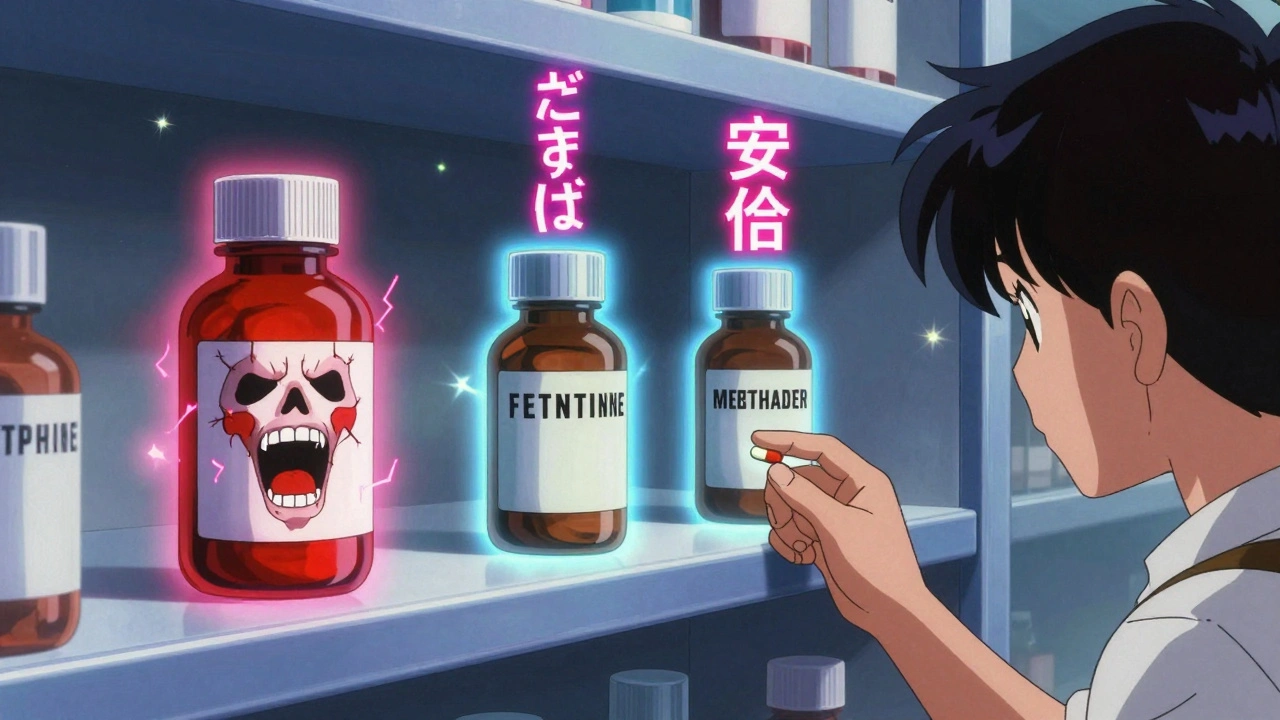
This isn’t new science. Back in the 1980s, researchers like M. Church and D. Church showed that opioids like morphine can trigger histamine release without involving IgE antibodies. Fast forward to today, and we know morphine releases 3 to 4 times more histamine than hydromorphone at the same pain-relieving dose. That’s why one person gets itchy on morphine but has zero issues with fentanyl or methadone. It’s not about being allergic - it’s about which opioid you’re taking.
True Opioid Allergy: Rare, But Serious
True opioid allergies do exist - but they’re rare. Only about 0.1% to 0.3% of people who take opioids have a real immune reaction. These aren’t just itchy skin. They’re life-threatening: swelling of the throat, trouble breathing, dropping blood pressure, hives that spread fast, or even anaphylaxis. These reactions usually happen within minutes of the first dose, and they’re tied to the immune system recognizing the drug as a threat.
One case from Mayo Clinic involved a 44-year-old woman who went into anaphylaxis five minutes after her first morphine shot. Her blood pressure crashed to 70 mmHg. She needed epinephrine and ICU care. That’s a true allergy. And if you’ve had something like that, you must avoid that opioid - and possibly others in the same class.
But here’s the catch: most people who say they’re allergic to opioids have never had anything this severe. A 2022 study at the University of Michigan looked at over 1,200 patients who claimed opioid allergies. Eighty-seven percent of them only reported itching, nausea, or dizziness - all common side effects, not allergies.
How to Tell the Difference: Itching vs. Allergy
Here’s a simple way to tell if you’re dealing with a pseudoallergy or a real allergy:
- Pseudoallergy (histamine reaction): Itching, flushing, mild sweating, sneezing, or stuffy nose. Symptoms get worse with higher doses. Often appear within 30 minutes to an hour after taking the drug. Doesn’t involve breathing problems or swelling.
- True allergy: Hives that spread, swelling of lips/tongue/throat, wheezing, chest tightness, dizziness, low blood pressure, or fainting. Usually happens fast - within minutes. May occur even on a very small dose.
If you’re only itchy and nothing else is wrong, you likely don’t have a true allergy. But if you feel your throat closing or can’t breathe - stop the drug and get help immediately.

What to Do If You Get Itchy on Opioids
You don’t have to suffer through itching - and you don’t have to quit opioids altogether. Here’s what works:
- Reduce the dose. Lowering the opioid amount by 25% to 50% often cuts itching in half. Pain control stays strong, but histamine release drops.
- Take an antihistamine. Diphenhydramine (Benadryl) 25-50 mg, taken 30 minutes before the opioid, stops itching in 80-90% of cases. It’s simple, cheap, and effective.
- Switch opioids. If itching continues, try a different one. Morphine and codeine are the worst offenders. Fentanyl, methadone, and hydromorphone release far less histamine. Fentanyl patches, for example, cause itching in only 10-15% of users - compared to 30-40% with morphine.
Why does this work? Morphine has a chemical structure with a tertiary amine group that directly triggers mast cells. Fentanyl and methadone don’t. That’s why they’re better choices for people who get itchy. You’re not allergic - you just need a different tool.
Why Mislabeling Opioid Allergies Is a Big Problem
Labeling someone as allergic to opioids because they got itchy isn’t harmless. It’s expensive and dangerous.
A 2020 study in JAMA Internal Medicine found that people wrongly labeled as opioid-allergic cost the U.S. healthcare system about $1,200 per person. Why? Doctors avoid the most effective painkillers and turn to weaker ones - or worse, non-opioid options that don’t work as well. That means more trips to the ER, longer hospital stays, and more nerve damage from uncontrolled pain.
In cancer care, where pain is constant, this is especially harmful. A Harvard study found that 78% of cancer patients with an opioid allergy label were able to safely use other opioids after pre-treating with antihistamines. Only 5% had true allergic reactions.
And it’s not just patients. Hospitals are catching on. Epic Systems added alerts to electronic health records in 2021 that flag whether a reaction is likely a side effect or a true allergy. In 1,200 hospitals, this cut wrong allergy labels by 45%.
New Options on the Horizon
Science is catching up. In 2023, researchers at Stanford and other labs found that a drug called nalfurafine - already approved in Japan for dialysis patients - reduces opioid-induced itching by 70% without dulling pain. It works by targeting a different pathway in the spinal cord, not histamine. The FDA is reviewing it for U.S. use.
Another breakthrough? Genetic testing. Some people have a variation in the HTR7 gene that makes them more likely to release histamine when they take opioids. In the future, a simple blood test could tell you if you’re at high risk - before you even take the drug.
And there are new opioids in development that don’t trigger itching at all. Two candidates, CR845 and NOP receptor agonists, are in late-stage trials. Early results show 80% fewer cases of itching.
What Patients Should Do Right Now
If you’ve been told you’re allergic to opioids because you got itchy:
- Don’t assume you can’t use any opioid again.
- Ask your doctor: Was this a true allergy, or just histamine release?
- Request a trial with a different opioid - like fentanyl or methadone - along with diphenhydramine.
- If you’ve had swelling, trouble breathing, or low blood pressure - get evaluated by an allergist.
- Update your medical records. If you’ve never had a true allergic reaction, don’t let a label stop you from getting proper pain relief.
And if you’re a provider: Stop calling itching an allergy. Teach your patients the difference. Use the Opioid Allergy Assessment Tool developed by MD Anderson - it correctly identifies pseudoallergies in 92% of cases.
Bottom Line
Itching from opioids is common. A true allergy is not. You don’t need to avoid all opioids because one made you itchy. You need a smarter approach: lower the dose, try an antihistamine, or switch to a different drug. The right opioid can still work for you - safely and effectively. Don’t let a misunderstanding rob you of pain relief.
Is itching from opioids a sign of a true allergy?
No, itching from opioids is rarely a true allergy. In fact, 70-80% of cases are pseudoallergic reactions caused by histamine release from mast cells, not immune system activation. True allergies involve swelling, trouble breathing, or low blood pressure - not just itching.
Can I still use opioids if I get itchy on morphine?
Yes. Many people who get itchy on morphine tolerate fentanyl, methadone, or hydromorphone just fine. These opioids release far less histamine. Adding diphenhydramine (Benadryl) before the dose can also prevent itching in most cases.
Which opioids cause the most itching?
Morphine and codeine cause the most itching because they trigger strong histamine release. Fentanyl, methadone, and hydromorphone cause significantly less - often less than half the rate. Switching from morphine to fentanyl can cut itching from 30-40% down to 10-15%.
Should I get tested for an opioid allergy?
Routine skin testing isn’t recommended unless you had a severe reaction like anaphylaxis. Skin tests for opioids have high false-positive rates - up to 30%. Instead, doctors often use a therapeutic trial: give a low dose of a different opioid with antihistamine support and monitor for reactions.
What’s the safest opioid for someone who gets itchy?
Fentanyl and methadone are the safest choices for people prone to itching. They don’t trigger histamine release the way morphine does. Fentanyl patches are especially useful for chronic pain, and methadone works well for long-term management - though it requires careful dosing due to its long half-life.
Can I take Benadryl with opioids to prevent itching?
Yes. Taking diphenhydramine (Benadryl) 25-50 mg orally or IV about 30 minutes before your opioid dose reduces itching in 80-90% of cases. It’s safe, inexpensive, and widely used in hospitals and palliative care settings.
Why do some people get itchy but no one else does?
It’s partly genetics. Some people have variations in the HTR7 gene that make their mast cells more sensitive to histamine release. Others may have higher opioid doses or faster IV infusions, which increase histamine dumping. It’s not about being "allergic" - it’s about individual biology and how the drug is given.
Will I outgrow an opioid allergy if I was mislabeled?
If you were mislabeled - meaning you never had a true allergic reaction - you never had the allergy to begin with. You can safely try another opioid under medical supervision. Many people who were told they’re allergic to all opioids end up tolerating fentanyl or methadone without issues.






Comments
Kristen Yates
December 2, 2025My grandma was told she was allergic to morphine because she got itchy after surgery. Turned out she just needed Benadryl. She’s been on methadone for years now with zero issues. Why do doctors still treat itching like a death sentence?
Victoria Graci
December 3, 2025It’s fascinating how medicine still clings to binary thinking-either you’re allergic or you’re not. But biology doesn’t work that way. Histamine release is a physiological quirk, not a moral failing or a flaw in the drug. We’ve labeled discomfort as danger for so long that we’ve forgotten how to listen to the body’s nuanced whispers.
Saravanan Sathyanandha
December 3, 2025This is one of those rare posts that actually bridges science and real-life suffering. In India, many patients are denied adequate pain relief because a single episode of itching gets documented as an 'opioid allergy.' The consequences ripple through families-chronic pain leads to depression, job loss, and isolation. We need protocols, not panic.
Fern Marder
December 5, 2025Benadryl before morphine = game changer. 🙌 Why isn’t this standard practice everywhere? Also, fentanyl patches are magic for chronic pain-no itch, no drama. Stop overcomplicating this.
Carolyn Woodard
December 5, 2025The neuropharmacological distinction between IgE-mediated hypersensitivity and non-immunologic mast cell degranulation remains grossly underappreciated in clinical practice. The persistence of misclassification stems from cognitive biases in diagnostic reasoning, compounded by inadequate education in pain medicine curricula. This is not merely a knowledge gap-it’s a systemic epistemological failure.
Anthony Breakspear
December 6, 2025I used to think I was allergic to everything that made me itch. Then my pain doc said, 'Try fentanyl with a Benadryl.' Done. No itch. No panic. No label. I’ve been on it for three years. You don’t have to suffer. You just have to ask the right questions.
Saket Modi
December 7, 2025So… you’re telling me I don’t have to suffer through morphine? I could’ve been on fentanyl this whole time?? 😑
Chris Wallace
December 9, 2025I’ve been dealing with this for over a decade. First, I got itchy after my back surgery-doctor said 'allergy,' so I got stuck with NSAIDs and gabapentin. Didn’t work. Pain got worse. Then I found a pain specialist who actually read the literature. We tried hydromorphone with diphenhydramine. Within a week, I was sleeping again. It’s not about being allergic-it’s about being heard. And most doctors aren’t listening.
william tao
December 10, 2025While the clinical data presented is statistically robust and empirically validated, the casual tone and colloquial framing of this article are profoundly regressive in the context of medical communication. Such simplifications risk eroding the epistemic authority of clinical science and may inadvertently encourage patient self-diagnosis. A more rigorous, peer-reviewed dissemination model is warranted.
Sheryl Lynn
December 10, 2025How quaint. A blog post with bullet points and Benadryl recommendations. Did you forget we have double-blind, placebo-controlled trials? Or are we just going to trust anecdotal relief over decades of pharmacological nuance? I mean, really-how many times must we relearn that medicine is not a DIY project?
Paul Santos
December 11, 2025Let’s be real-this is just another case of 'science says it’s fine, but my grandma says it’s not.' The real issue? We’ve outsourced medical decision-making to Google and Reddit. I’ve seen patients refuse opioids because they read this exact post. We need more regulation, not more feel-good myths.
Eddy Kimani
December 11, 2025From a translational research perspective, the HTR7 polymorphism data is particularly compelling. The genetic predisposition to histamine hyperresponsiveness could serve as a biomarker for preemptive opioid selection. Future clinical algorithms should integrate pharmacogenomic screening-especially in oncology and palliative care settings where polypharmacy is the norm.
Chelsea Moore
December 12, 2025Wait-so you’re saying people who get itchy on opioids are just… being dramatic?? And we should just give them Benadryl and call it a day?? What about the opioid crisis?? What about addiction?? This is dangerous! People are already using this to demand stronger meds!!
Write a comment