
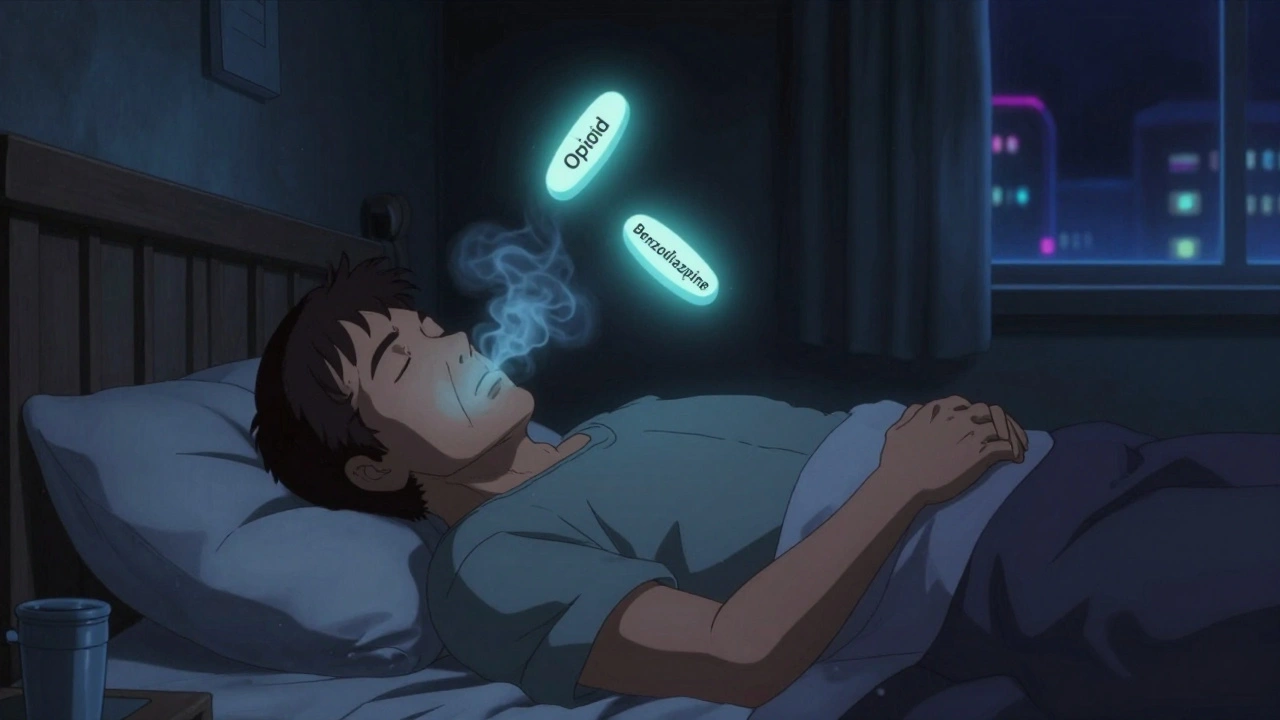
When opioids and benzodiazepines are taken together, the risk of stopping breathing doesn’t just go up-it explodes. This isn’t a theoretical concern. It’s a leading cause of accidental death in the U.S., and it’s happening to people who thought they were following their doctor’s orders.
Why This Combination Is So Dangerous
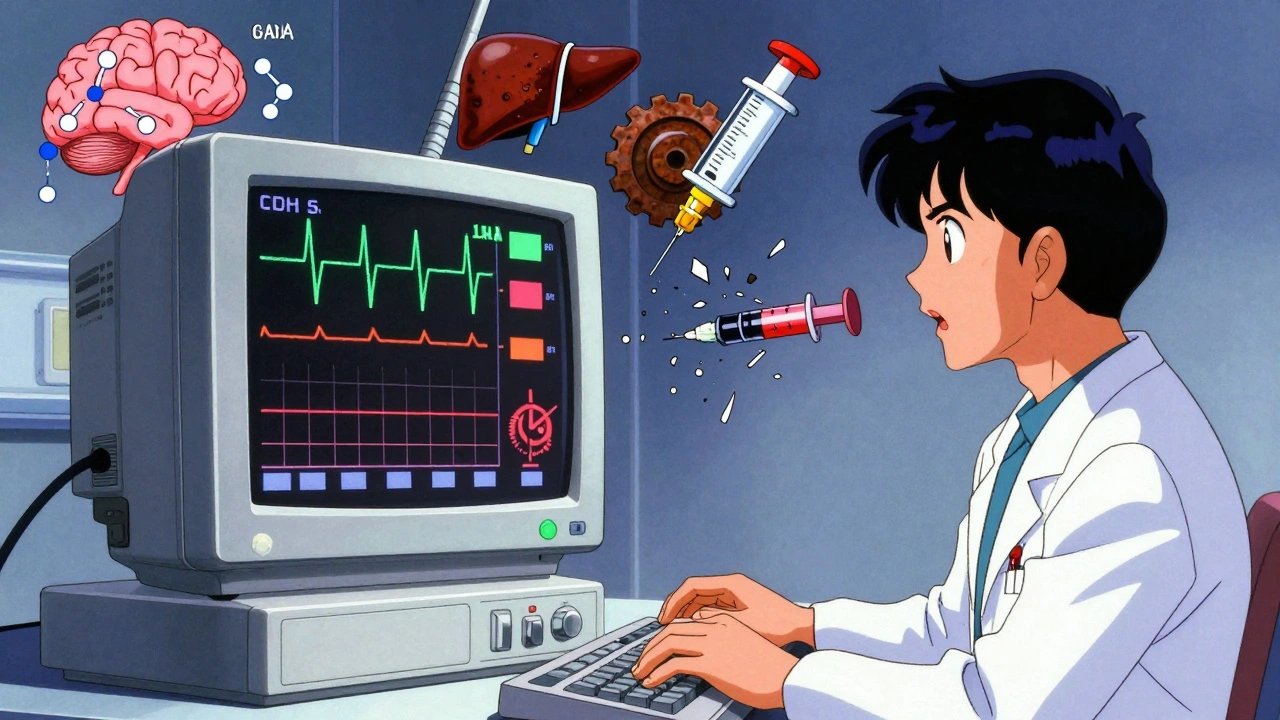
Opioids like oxycodone, hydrocodone, and fentanyl slow breathing by targeting mu-opioid receptors in the brainstem. Benzodiazepines like alprazolam, lorazepam, and diazepam do something similar but through a different pathway-they boost GABA, the brain’s main calming chemical. Alone, each drug can suppress breathing. Together, they don’t just add up-they multiply. The result? A deep, silent shutdown of the respiratory system that can happen without warning.Studies show the overdose death rate for people taking both drugs is 10 times higher than for those taking opioids alone. In 2020, benzodiazepines were involved in 16% of all opioid-related overdose deaths, according to the CDC. That’s about 220 Americans dying every day from opioids, and nearly one in six of those deaths included a benzodiazepine.
What makes this even more terrifying is that people often don’t feel it coming. Someone might take their usual dose of oxycodone for back pain and a lorazepam for anxiety, and feel fine during the day. But at night, when they’re asleep, their breathing slows to dangerous levels. Oxygen drops. Carbon dioxide builds up. And because the brain’s alarm system is also suppressed, they don’t wake up.
How the Body Fails: The Science Behind the Collapse
The danger isn’t just about sedation. It’s about the body’s ability to respond to low oxygen and high carbon dioxide. Normally, when your blood oxygen drops, your brain tells you to breathe harder. But both opioids and benzodiazepines blunt that reflex.One study found that 85% of people who took both drugs together had oxygen saturation fall below 90%-a level considered unsafe. Only 45% of those taking opioids alone hit that threshold. Even more alarming, some patients showed normal oxygen levels during brief clinical checks but collapsed hours later while sleeping.
There’s also a hidden chemical trap. Some opioids, like fentanyl and methadone, are broken down by the liver enzyme CYP3A4. Certain benzodiazepines, especially alprazolam, block that same enzyme. That means the opioid sticks around longer, building up in the bloodstream. A dose that was safe yesterday becomes lethal today.
Who’s at Highest Risk?
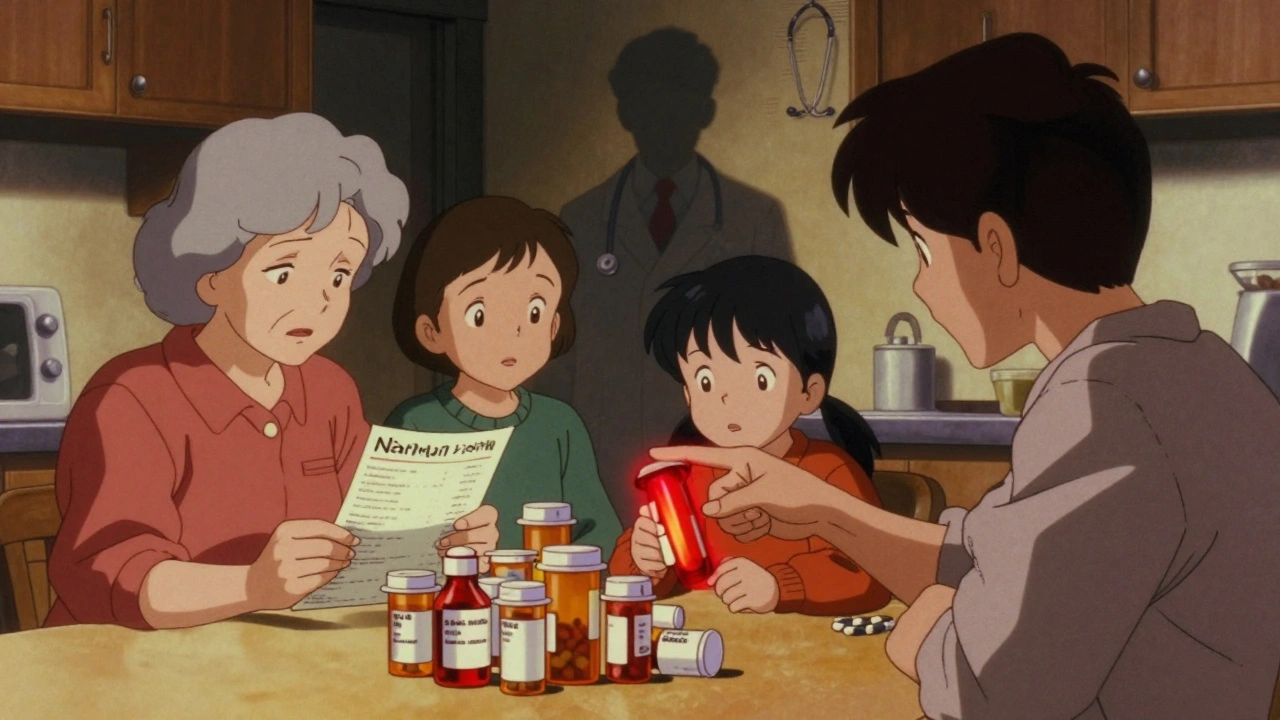
This isn’t just a problem for people who misuse drugs. It’s happening to older adults, chronic pain patients, and people with anxiety or PTSD who are prescribed both medications by different doctors.The American Geriatrics Society lists this combination as potentially inappropriate for older adults because of the combined risks of falls, confusion, and breathing failure. In one study, nearly 15% of Medicare patients on long-term opioids were also getting benzodiazepines. That’s over a million people in the U.S. alone.
Even people who’ve been on opioids for years aren’t safe. Chronic opioid use builds tolerance to pain relief and euphoria-but not to respiratory depression. That means someone who’s been on high-dose oxycodone for years might still die from a low dose of diazepam.
What Doctors Are Told to Do
The FDA issued a formal warning in 2016 and strengthened it in 2019. Their message is clear: Don’t prescribe these together unless absolutely necessary. And even then, only under strict conditions.The FDA says:
- Only use this combination if no other treatment works.
- Start with the lowest possible dose of the benzodiazepine.
- Monitor closely for drowsiness and slow breathing.
- Avoid opioid cough medicines entirely in patients taking benzodiazepines.
The CDC’s 2022 prescribing guidelines go even further: Avoid prescribing benzodiazepines with opioids whenever possible. Many hospitals now use electronic alerts to flag dangerous combinations before a prescription is filled. One study showed these alerts cut inappropriate co-prescribing by nearly 30%.
What Patients Need to Know
If you’re taking an opioid for pain and a benzodiazepine for sleep or anxiety, you need to talk to your doctor today. Don’t wait for a crisis.Ask:
- Is this combination absolutely necessary?
- Are there safer alternatives for my anxiety or insomnia?
- What signs should I watch for that mean I’m in danger?
- Should my family or caregiver have naloxone on hand?
Naloxone can reverse an opioid overdose-but it doesn’t work on benzodiazepines. That means if you’re taking both, naloxone might not be enough. You need someone who knows how to recognize slow breathing and can call 911 immediately.
The Withdrawal Danger
Stopping either drug suddenly can be deadly. Opioid withdrawal causes intense flu-like symptoms, anxiety, and insomnia. Benzodiazepine withdrawal can trigger seizures, hallucinations, and even death.That’s why quitting either drug cold turkey is never safe-especially if you’re on both. Tapering must be done slowly, under medical supervision. A doctor might reduce the benzodiazepine first, then the opioid, or vice versa, depending on your situation. There’s no one-size-fits-all plan.
What’s Being Done to Fix This?
The CDC awarded a $2.5 million research grant to UC Davis in 2022 to study this exact problem. Scientists are looking at who’s most vulnerable, why doctors keep prescribing this combo, and how to predict who’s at highest risk.Some researchers are testing new pain medications that don’t affect breathing. Others are building AI tools that analyze a patient’s medical history to flag dangerous drug mixes before they’re prescribed.
In hospice care, where the goal is comfort not longevity, this combination may still be used. But even there, doctors are being more careful. They use lower doses, monitor constantly, and never give it to someone who isn’t already under palliative care.
Real Signs You’re in Danger
If you or someone you care for is taking both drugs, watch for these warning signs:- Extreme drowsiness, even after a full night’s sleep
- Slurred speech or confusion
- Slow, shallow, or irregular breathing
- Blue lips or fingertips
- Difficulty waking up
- Unresponsiveness to loud noises or shaking
If you see any of these, call 911 immediately. Don’t wait. Don’t assume they’ll wake up on their own. This isn’t a case of being "too tired." This is respiratory failure.
What to Do If You’re Currently Taking Both
Don’t panic. Don’t quit cold turkey. Do this:- Make a list of every medication you’re taking, including over-the-counter drugs and supplements.
- Schedule an appointment with your primary doctor or pain specialist.
- Ask: "Is this combination still necessary? Are there safer options?"
- If you’re told to taper, follow the plan exactly. Don’t skip doses or speed it up.
- Teach a family member or friend how to recognize the signs of overdose and how to use naloxone.
Many people feel guilty or ashamed about taking these medications. But the problem isn’t you. It’s a system that allowed dangerous combinations to become common. You’re not failing-you’re taking the right step by asking questions.
Can I take a low dose of benzodiazepine with opioids if my doctor says it’s okay?
Even low doses can be dangerous. The risk isn’t just about how much you take-it’s about how the drugs interact. A small dose of alprazolam with oxycodone can still cause your breathing to slow enough to be life-threatening, especially at night. The FDA says this combination should only be used when no other options exist, and even then, with extreme caution and close monitoring.
Does naloxone work if I overdose on both opioids and benzodiazepines?
Naloxone can reverse the opioid part of the overdose, but it won’t touch the benzodiazepine. That means your breathing might improve slightly, but you could still remain dangerously sedated or stop breathing again. Naloxone is not a guarantee. If someone is unresponsive and breathing slowly after taking both drugs, call 911 immediately-even if you give naloxone.
Why do doctors still prescribe this combo if it’s so dangerous?
Many doctors aren’t aware of the full risk, or they’re treating separate conditions-pain and anxiety-without realizing the interaction. Some patients get prescriptions from different providers who don’t communicate. Others are prescribed these drugs for years before the dangers were widely known. Electronic alerts are helping, but gaps still exist. That’s why it’s critical for patients to ask questions and bring all their meds to every appointment.
Are there safer alternatives to benzodiazepines for anxiety or insomnia?
Yes. For anxiety, SSRIs like sertraline or cognitive behavioral therapy (CBT) are often more effective long-term and don’t carry respiratory risks. For insomnia, non-benzodiazepine sleep aids like trazodone or melatonin receptor agonists (like ramelteon) are options, as are sleep hygiene strategies. Always talk to your doctor before switching-never stop a benzodiazepine abruptly.
Is this risk only for prescription drugs, or do recreational users face the same danger?
The risk is even higher for recreational users. Illicit drugs like fentanyl are often mixed with benzodiazepines like alprazolam or clonazepam without the user’s knowledge. This is one reason why overdoses from street drugs have become so deadly. People think they’re taking one thing, but they’re getting a lethal combo they didn’t ask for.
What should I do if I’m worried a loved one is taking both drugs?
Talk to them calmly. Share the facts: this combination kills. Offer to go with them to their doctor. Help them make a list of all their medications. If they’re in immediate danger-unresponsive, breathing very slowly-call 911. Don’t wait. If they’re resistant, contact their prescribing doctor or a local substance use helpline. You’re not overreacting. You’re saving a life.



Comments
Hamza Laassili
December 15, 2025This is why America's gonna collapse...!! We got people on painkillers AND anxiety pills like it's candy!! Doctors just sign papers like they're printing coupons!!
Rawlson King
December 15, 2025The data is unequivocal. The combination of central nervous system depressants results in synergistic respiratory inhibition. This is not a matter of opinion but of pharmacokinetic interaction.
Constantine Vigderman
December 17, 2025I know someone who almost died from this combo!! 😱 My buddy was on oxycodone for his back and Xanax for anxiety-thought he was fine till he stopped breathing in his sleep!! His wife found him blue and called 911!! Naloxone helped but he still needed a ventilator!! Don’t wait till it’s too late!!
Cole Newman
December 17, 2025You think doctors don’t know this? Nah. They’re getting paid by Big Pharma to keep writing these scripts. My cousin’s doctor prescribed her 20mg of oxycodone and 2mg of Xanax every day. Said it was 'standard protocol.' Standard protocol for killing people, maybe.
Casey Mellish
December 18, 2025In Australia, we’ve got strict guidelines on this combo-especially for the elderly. Prescribers have to complete mandatory training on polypharmacy risks. It’s not perfect, but at least we’re trying to stop the bleeding before it becomes a flood.
Tyrone Marshall
December 18, 2025It’s heartbreaking how many people are caught in this trap-not because they’re reckless, but because they trusted the system. Pain and anxiety are real. But the system failed them by offering chemical solutions without addressing root causes. Healing isn’t just about pills. It’s about connection, safety, and time.
Emily Haworth
December 19, 2025This is all part of the government’s plan to depopulate the elderly. I read it on a forum. They use these meds to quietly kill off seniors so they don’t collect Social Security. That’s why they never warn you properly. 🧠💊💀
Tom Zerkoff
December 20, 2025The clinical evidence supporting the avoidance of concurrent benzodiazepine and opioid prescribing is robust, well-documented, and endorsed by multiple national and international bodies. The risk of respiratory depression is not merely elevated-it is quantifiably and multiplicatively increased.
Yatendra S
December 21, 2025Sometimes I think life is just a series of chemical imbalances we try to fix with more chemicals. We are all just walking pharmacies. But who are we really healing? Or are we just delaying the inevitable?
Himmat Singh
December 21, 2025It is incorrect to assert that benzodiazepines are universally contraindicated with opioids. In palliative care settings, under strict supervision, this combination remains clinically appropriate and ethically defensible. To generalize this as a blanket danger is intellectually lazy.
kevin moranga
December 23, 2025I just wanna say-you’re not alone if you’re on these meds. I’ve been there. Took them for years. Thought I was fine. Then my daughter found me passed out one night. She didn’t know what to do, so she called 911. That’s when I realized: I was living on borrowed time. I started therapy. Got off the Xanax slowly. Still on a low dose of pain meds, but now I sleep with my phone next to me… and my wife knows how to use naloxone. You got this. One step at a time. 💪❤️
Alvin Montanez
December 24, 2025The fact that this is even a discussion is a moral failure of modern medicine. We have turned human suffering into a transactional problem solvable by pills. We don’t treat people anymore-we treat symptoms. We don’t ask why someone is in pain or anxious-we just hand them a script and call it progress. And now people are dying because we refused to look deeper. This isn’t a pharmacological issue. It’s a spiritual crisis disguised as a medical one.
Write a comment