
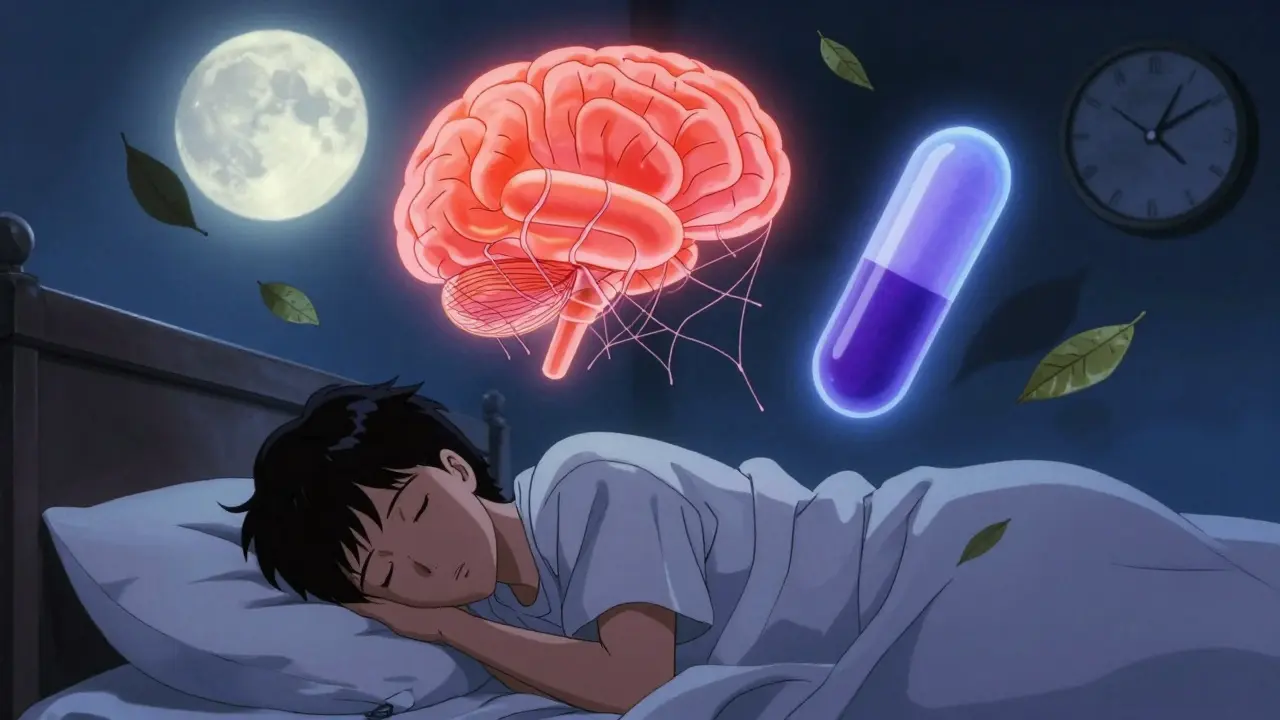
When sleep meds stop working-and start hurting
You’ve tried counting sheep. You’ve cut out caffeine. You’ve even tried melatonin. But when sleep still won’t come, your doctor might hand you a script for a sleeping pill. Maybe it’s Ambien. Maybe it’s Xanax. Either way, you’re taking a sedative-hypnotic-a drug designed to calm your brain enough to fall asleep. But here’s the thing most doctors won’t tell you: these pills don’t fix insomnia. They mask it. And over time, they can make things worse.
In 2022, over 6 million Americans got prescriptions for non-benzodiazepine sleep drugs like zolpidem (Ambien), eszopiclone (Lunesta), or zaleplon (Sonata). Another 3.8 million got benzodiazepines like temazepam or lorazepam. That’s nearly 1 in 20 adults. But according to the VA’s 2023 clinical guidelines, it is no longer recommended to take a sedative-hypnotic drug to treat insomnia or anxiety. Why? Because the risks are stacking up-and they’re not just side effects. They’re life-altering.
How these drugs actually work
Both benzodiazepines and non-benzodiazepines (Z-drugs) work the same way: they boost GABA, the brain’s main calming chemical. But they do it differently.
Benzodiazepines-like diazepam (Valium), alprazolam (Xanax), and temazepam (Restoril)-attach to multiple spots on GABA-A receptors. That means they don’t just help you sleep. They also reduce anxiety, relax muscles, and can cause drowsiness that lasts all day. Some, like flurazepam, stick around in your body for over 200 hours. That’s nearly two weeks. Your body doesn’t clear it fast. So even if you take it at night, you’re still carrying the drug into tomorrow. And that’s why people on long-acting benzodiazepines often feel foggy, uncoordinated, or dizzy during the day.
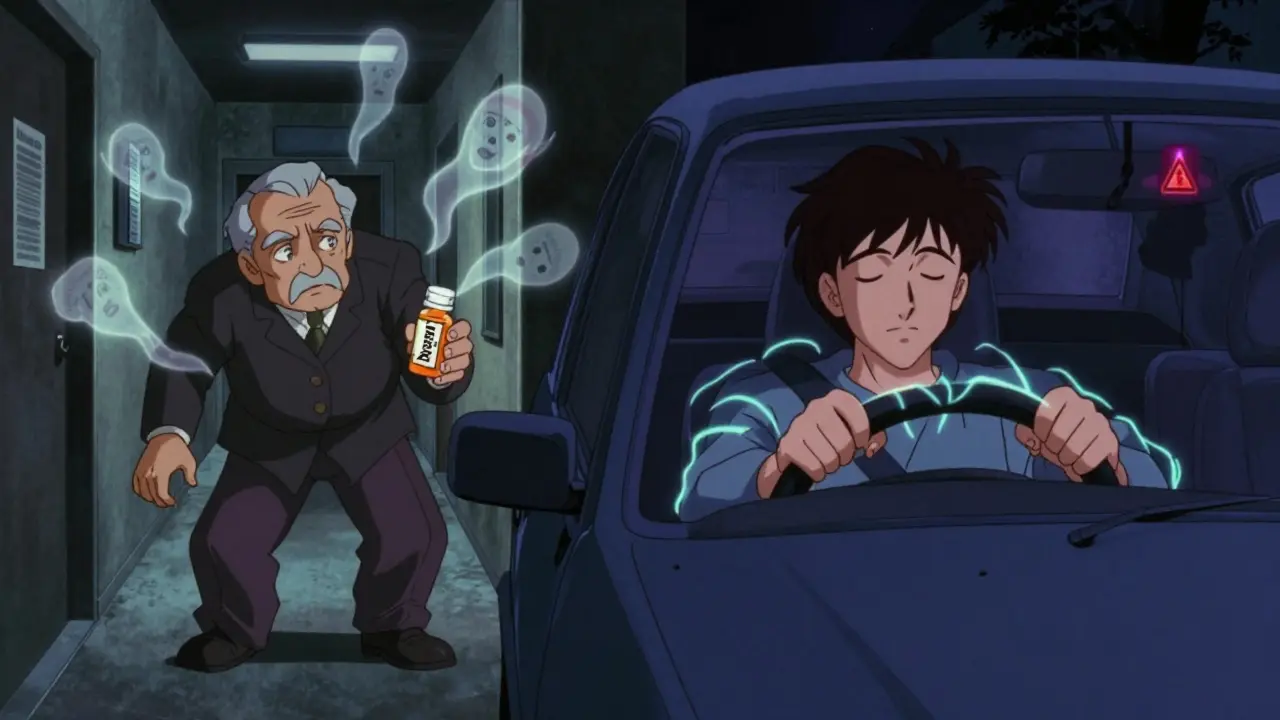
Non-benzodiazepines-Z-drugs like zolpidem, eszopiclone, and zaleplon-were designed to be more precise. They target just one type of GABA receptor (omega-1), meant to help you fall asleep without the heavy sedation. That sounds better, right? But here’s the catch: they still cause next-day drowsiness, memory lapses, and strange behaviors like sleepwalking or even sleep-driving. The FDA got so many reports of people driving while asleep on zolpidem that they cut the recommended dose in half for women in 2013. Turns out, women metabolize it slower. That’s why they’re more likely to wake up still groggy.
The real difference: safety, not effectiveness
Many people think Z-drugs are safer than benzodiazepines. That’s what the marketing told us. But the science says otherwise.
A 2019 JAMA Internal Medicine study looked at long-term outcomes and found no significant difference in safety between the two classes. Both increase your risk of falls, memory loss, and car crashes. Both cause tolerance-you need more over time to get the same effect. Both lead to rebound insomnia when you stop.
Here’s where they diverge:
- Benzodiazepines are more likely to cause severe withdrawal. Quitting after a few months can trigger panic attacks, seizures, or hallucinations. One Reddit user who quit temazepam after 8 months said, “I had panic attacks for three weeks straight.”
- Non-benzodiazepines have fewer withdrawal symptoms-but more bizarre side effects. Zolpidem is linked to 66% of FDA-reported sleep-driving incidents between 2005 and 2010. People wake up miles from home, with no memory of driving. Others report sleep paralysis, hallucinations, or a metallic taste (17% of Lunesta users).
For older adults, the danger is even clearer. A 2012 JAMA study found benzodiazepines raised hip fracture risk by 2.3 times. Z-drugs? 1.8 times. Both are dangerous. But benzodiazepines? They’re worse.
The hidden risks you won’t read on the label
Most people know about drowsiness. But the real dangers are quieter-and more insidious.
Memory problems: A 2023 VA report found sedative-hypnotics increase the risk of memory and concentration issues by 5 times. That’s not just forgetting where you put your keys. It’s forgetting conversations, names, even how to do simple tasks.
Daytime fatigue: 34% of users in a 2021 Sleep Medicine Reviews study reported daytime drowsiness so bad it hurt their work performance. That’s over one in three. And it doesn’t go away after a few days. It builds up.
Sleep apnea gets worse: If you have sleep apnea-and 20-30% of chronic insomniacs do-these drugs can make it more dangerous. They relax your throat muscles even more, blocking your airway longer. That means more low-oxygen nights, higher blood pressure, and increased risk of heart attack.
Drug interactions: Mixing these with alcohol, opioids, or even antihistamines (like Benadryl) can slow your breathing to dangerous levels. The FDA has warned about deaths from these combinations. And it’s not rare. One 2023 study found 1 in 10 overdose deaths involving sedative-hypnotics also involved opioids.
Why they stop working-and what to do instead
Most people stop taking these pills within 3 months. Why? Because they lose their effect. A Reddit user wrote: “Zolpidem stopped working after two weeks.” Another: “I was taking 20mg just to get 4 hours of sleep.”
Tolerance builds fast. So does dependence. You don’t just want the pill-you need it to feel normal. That’s addiction.
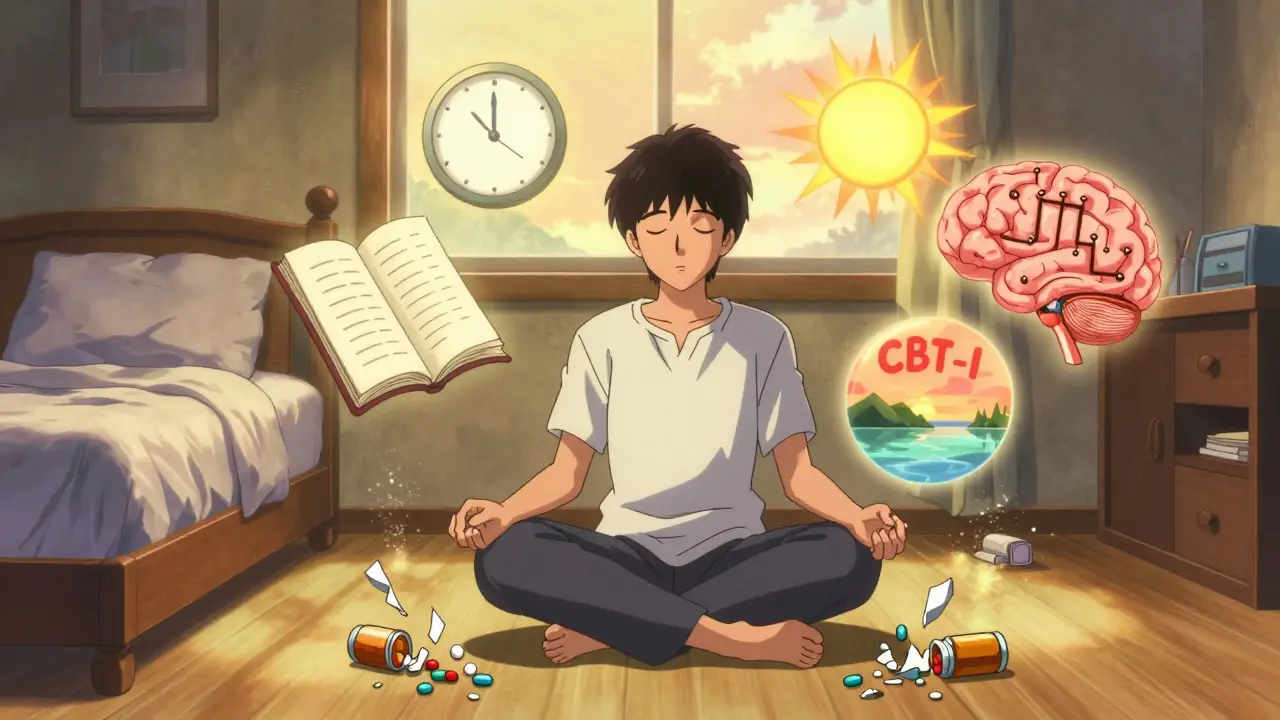
The American Academy of Sleep Medicine now says cognitive behavioral therapy for insomnia (CBT-I) is the first-line treatment. Not pills. Not herbs. Not melatonin. CBT-I.
What is it? It’s a structured program that teaches you how to retrain your brain to sleep naturally. It includes:
- Limiting time in bed to only when you’re sleepy
- Stopping clock-watching
- Challenging anxious thoughts about sleep
- Establishing a consistent wake-up time-even on weekends
Studies show CBT-I works better than pills. And it lasts. People who do CBT-I stay asleep for years. People who take pills? They’re back to square one after stopping.
And here’s the kicker: CBT-I is covered by Medicare and most private insurers now. You don’t need to pay out of pocket. But you have to ask for it. Most doctors don’t bring it up.
What to do if you’re already on one
If you’re taking a sleeping pill right now, don’t quit cold turkey. That’s dangerous. Especially with benzodiazepines.
Here’s what to do:
- Talk to your doctor. Ask about tapering. For benzodiazepines, reduce by 10% every 1-2 weeks. For Z-drugs, a 2-4 week taper is usually enough.
- Track your sleep. Use a journal or app. Note how many hours you sleep, how rested you feel, and any side effects. This helps your doctor adjust your plan.
- Start CBT-I now. Even while you’re tapering. It helps your brain adjust to sleeping without the drug.
- Avoid alcohol. Even one drink can double the sedative effect. That’s not worth the risk.
If you’ve been on these drugs for more than a few weeks, your brain has adapted. You’re not broken. You’re just chemically dependent. That’s not weakness. It’s biology.
The future of sleep meds
There’s new hope. Drugs like suvorexant (Belsomra) and lemborexant (Dayvigo) work differently. Instead of boosting GABA, they block orexin-the brain’s wakefulness signal. They’re not perfect. But they cause 30-40% less next-day drowsiness in trials.
They’re not available over the counter. They’re still prescription-only. And they’re expensive. But they’re part of a shift: away from brain-sedating drugs, toward smarter, safer options.
Meanwhile, the VA, the FDA, and the American Geriatrics Society all agree: these drugs have no place in long-term care. Not for older adults. Not for anyone. Not anymore.
You don’t need a pill to sleep. You need a better relationship with your sleep cycle. And that’s something no drug can give you.
Are benzodiazepines more addictive than non-benzodiazepines?
Yes. Benzodiazepines are more likely to cause physical dependence and severe withdrawal symptoms, including seizures and panic attacks. Non-benzodiazepines (Z-drugs) cause less severe withdrawal, but both can lead to psychological dependence. Tolerance builds quickly with both, meaning you need higher doses over time to get the same effect.
Can I take sleeping pills for more than a few weeks?
Clinical guidelines from the American Academy of Sleep Medicine and the VA recommend using sedative-hypnotics for no longer than 2-4 weeks. After that, the risks-memory loss, falls, daytime fatigue, and dependence-outweigh the benefits. Long-term use doesn’t improve sleep quality. It makes your brain rely on the drug to shut down.
Do Z-drugs like Ambien really cause sleep-driving?
Yes. The FDA received hundreds of reports of people driving, cooking, or even having sex while asleep after taking zolpidem (Ambien). Between 2005 and 2010, 66% of all sleep-related driving incidents linked to prescription sleep aids involved zolpidem. The FDA responded by cutting the recommended dose in half for women in 2013, because they metabolize the drug slower and are more prone to next-day impairment.
Why do doctors still prescribe these drugs if they’re so risky?
Many doctors prescribe them because they’re fast, easy, and patients ask for them. CBT-I takes weeks to show results and requires effort. Pills work the first night. But that’s not treatment-it’s temporary relief. The medical system is slow to change, and many providers haven’t been trained in non-drug sleep therapies. That’s why it’s up to you to ask about CBT-I.
Is melatonin a safer alternative?
Melatonin is not a sedative. It’s a hormone that helps regulate your sleep-wake cycle. It’s safer than benzodiazepines or Z-drugs and doesn’t cause dependence or next-day grogginess. But it’s not a magic fix. It works best for circadian rhythm issues-like jet lag or shift work-not chronic insomnia. For true insomnia, CBT-I is still the gold standard.
What’s the best way to stop taking a sleeping pill?
Don’t quit cold turkey. Work with your doctor to create a slow taper plan. For benzodiazepines, reduce your dose by 10% every 1-2 weeks. For Z-drugs, a 2-4 week taper is often enough. Start CBT-I at the same time-it helps your brain relearn how to sleep naturally. Keep a sleep journal to track progress. And avoid alcohol, caffeine, and screens before bed. Support matters: talk to a therapist or join a sleep support group. You’re not alone.
What to do next
If you’re on a sleeping pill right now, your next step isn’t to get a refill. It’s to ask your doctor about CBT-I. Call your insurance. Ask if they cover it. Look up a certified provider in your area. Most programs take 6-8 sessions. Many are online now. You don’t need to sit in a clinic.
Sleep isn’t something you need to be drugged into. It’s something your body knows how to do. You just need to give it the right conditions. And that’s not a pill. That’s a habit. A routine. A mindset.
It’s not easy. But it’s worth it. Because when you sleep without a pill, you don’t just sleep better. You wake up clearer. Calmer. Alive.





Comments
Chloe Hadland
January 25, 2026I was on zolpidem for 6 months and didn't realize how foggy I was until I stopped. My boss said I kept forgetting meeting agendas. Turns out I wasn't just tired-I was chemically impaired. CBT-I changed my life. No pills. No guilt. Just sleep.
Juan Reibelo
January 26, 2026I’ve seen too many people get hooked on these meds... and then blame themselves for being ‘weak.’ It’s not weakness-it’s neurochemistry. The system fails people by offering a quick fix instead of real care. I’m 3 months into CBT-I, and I’m sleeping better than I have in a decade. No pills. Just discipline.
Michael Camilleri
January 26, 2026People think they need a pill because they’re lazy. Sleep isn’t a reward for good behavior. It’s a biological imperative. If you can’t handle 7 hours without a chemical crutch maybe you need to stop scrolling at 2am and start respecting your circadian rhythm. The real problem isn’t the drug-it’s the culture of instant gratification
Marlon Mentolaroc
January 27, 2026I work in ER. Saw a guy come in after sleep-driving into a tree on 10mg zolpidem. He had no memory of it. His wife was screaming. He was confused. He thought he was at work. That’s not a side effect. That’s a public health crisis. And doctors still write these scripts like they’re Advil.
Don Foster
January 28, 2026CBT-I is the only real solution but it requires effort. Most people want a magic bullet. That’s why Big Pharma thrives. They sell the illusion of control. Sleep isn’t something you can outsource to a pill. It’s a practice. A ritual. A surrender. You have to let go of the need to force it. And that terrifies people.
Phil Maxwell
January 28, 2026I tapered off temazepam over 10 weeks with my doctor’s help. It was rough. Nights 3–7 were brutal. But I started journaling, turned off screens at 9, and kept my wake-up time locked. Now I sleep 7 hours without anything. No regrets. Just quiet relief.
Karen Conlin
January 30, 2026If you're reading this and still on a sleeping pill-please don't feel ashamed. You're not broken. You're just stuck in a system that sold you a lie. CBT-I isn't just therapy-it's reclaiming your autonomy. I did it. My mom did it. My coworker did it. We all woke up. You can too. Start today. Ask your doctor. No excuses.
asa MNG
February 1, 2026bro i took ambien for 2 years and woke up once making tacos at 3am 😭 i had no memory of it. my dog was just sitting there like ‘what even is this’ 🤡 now i do breathwork and it’s wild how much better i sleep. no pills. just vibes.
Sushrita Chakraborty
February 1, 2026The medical establishment’s reliance on pharmacological interventions for sleep disorders reflects a systemic failure to prioritize behavioral and psychological interventions. Cognitive Behavioral Therapy for Insomnia, grounded in empirical evidence, remains the gold standard. Prescribing sedative-hypnotics beyond the short-term is not merely suboptimal-it is ethically questionable.
Josh McEvoy
February 2, 2026i cried when i stopped my pills. like… real tears. i felt like i was losing my only friend. then i started reading before bed instead of scrolling. now i sleep like a baby. no drama. just quiet. 🌙
Heather McCubbin
February 4, 2026They call it insomnia but it’s really just modern life screaming for attention. You’re not broken. You’re exhausted. And they’re selling you pills to numb the noise instead of fixing the damn system. I quit my job. Started yoga. Now I sleep 8 hours. No meds. Just peace.
Tommy Sandri
February 5, 2026The VA guidelines are clear. The FDA has issued multiple warnings. Yet, prescriptions continue to rise. This is not a medical issue-it is a cultural one. We have normalized chemical sedation as a solution to stress, overwork, and digital overload. Until we address the root causes, no pill will ever be enough.
Write a comment