

Antihistamine Safety Checker for Pregnancy
Check Antihistamine Safety
Select an antihistamine and trimester to see if it's safe during pregnancy based on current medical guidelines.
When you’re pregnant and your nose is stuffed up, your eyes are itchy, or your skin is breaking out in hives, it’s tempting to grab whatever antihistamine is sitting in the medicine cabinet. But not all allergy meds are created equal when you’re carrying a baby. The question isn’t just can you take an antihistamine - it’s which one, and when.
First-Generation vs. Second-Generation: The Big Difference
Not all antihistamines are the same. They’re split into two main groups: first-generation and second-generation. The difference isn’t just about how strong they are - it’s about how they affect your body and your baby. First-generation antihistamines like diphenhydramine (Benadryl), chlorpheniramine (ChlorTrimeton), and dexchlorpheniramine cross the blood-brain barrier. That’s why they make you drowsy. But that same trait means they’ve been around for decades - since the 1940s and 1950s - and doctors have seen how they behave in thousands of pregnancies. Studies tracking women who took these during pregnancy show no clear link to birth defects. The American College of Obstetricians and Gynecologists (ACOG) says chlorpheniramine is a safe choice, even in the first trimester. Second-generation antihistamines like loratadine (Claritin), cetirizine (Zyrtec), and fexofenadine (Allegra) were designed to avoid the brain. They don’t cause drowsiness in most people. That’s great for your daily life - but it also means less long-term data exists. Still, studies involving over 1,000 pregnancies for each of these drugs haven’t shown increased risks of birth defects. The Mayo Clinic recommends loratadine and cetirizine as first-line options for mild allergy symptoms during pregnancy.What’s Actually Safe? The Top Choices
Based on current evidence, three antihistamines stand out as the safest bets:- Chlorpheniramine - The most studied first-gen option. Used since the 1950s. No increase in miscarriage, preterm birth, or birth defects found in large studies.
- Loratadine - A second-gen drug with over 1,500 documented pregnancy exposures. No consistent pattern of birth defects. Often recommended for mild symptoms.
- Cetirizine - Also second-gen. Data from the National Birth Defects Prevention Study shows no increased risk of major malformations. Works quickly and lasts longer than loratadine for some people.
These three are the ones most OB-GYNs and allergists will point to. They’re not 100% risk-free - no medication is - but they’re the best-supported by decades of data.
What to Avoid - Especially in the First Trimester
Some antihistamines come with red flags. Hydroxyzine (Atarax, Vistaril) is one. It’s sometimes used for anxiety or severe itching, but the CDC’s analysis of the National Birth Defects Prevention Study found a possible link to conotruncal heart defects - though based on very few cases (just six exposed babies). It’s not banned, but most providers avoid it unless absolutely necessary. Then there’s pseudoephedrine. It’s not an antihistamine - it’s a decongestant - but it’s often combined with them in products like Claritin-D or Zyrtec-D. The ACOG and Mayo Clinic both warn against using pseudoephedrine in the first trimester. Even a small increase in risk for abdominal wall defects (like gastroschisis) is too much when safer alternatives exist. If you need a decongestant later in pregnancy, talk to your doctor. They might say it’s okay after week 12 - but only if you don’t have high blood pressure.
When Is It Okay to Use Them?
You don’t need to suffer through sneezing fits, sleepless nights, or constant scratching just because you’re pregnant. If your allergies are bad enough to affect your sleep, eating, or mental health - then the risks of not treating them may be greater than the risks of taking a safe antihistamine. Uncontrolled allergic rhinitis can lead to sinus infections. Severe eczema can cause skin infections. Poor sleep can raise your risk of preeclampsia. The American College of Allergy, Asthma & Immunology (ACAAI) says treating symptoms isn’t just about comfort - it’s about protecting your health and your baby’s. So if you’re struggling with:- Constant sneezing and runny nose
- Itchy, red eyes that won’t improve with eye drops
- Hives or eczema flares that keep you up at night
then a low-dose, well-studied antihistamine is a reasonable option.
What About Nasal Sprays?
Sometimes, pills aren’t the best answer. If your main issue is nasal congestion or post-nasal drip, a steroid nasal spray might be even better. These work locally - they don’t travel far through your bloodstream. The AAFP and Mayo Clinic both say these are safe during any trimester:- budesonide (Rhinocort Allergy)
- fluticasone (Flonase Allergy Relief)
- mometasone (Nasonex 24HR Allergy)
These are often recommended as first-line treatment - even before oral antihistamines - because they’re targeted, effective, and have minimal systemic absorption. You can use them daily. No need to wait until symptoms get worse.
What About Newer Options Like Levocetirizine or Desloratadine?
You might see these on the shelf and wonder if they’re better. Levocetirizine (Xyzal) is the active ingredient in cetirizine. Desloratadine (Clarinex) is the active ingredient in loratadine. They’re more potent, but there’s far less pregnancy data. Right now, there’s no evidence they’re riskier - but there’s also no large, long-term study proving they’re as safe as the older ones. Most doctors stick with cetirizine and loratadine for that reason. If you’ve been taking levocetirizine before pregnancy and your doctor says it’s fine, they may let you continue. But don’t start it cold during pregnancy unless there’s a clear reason.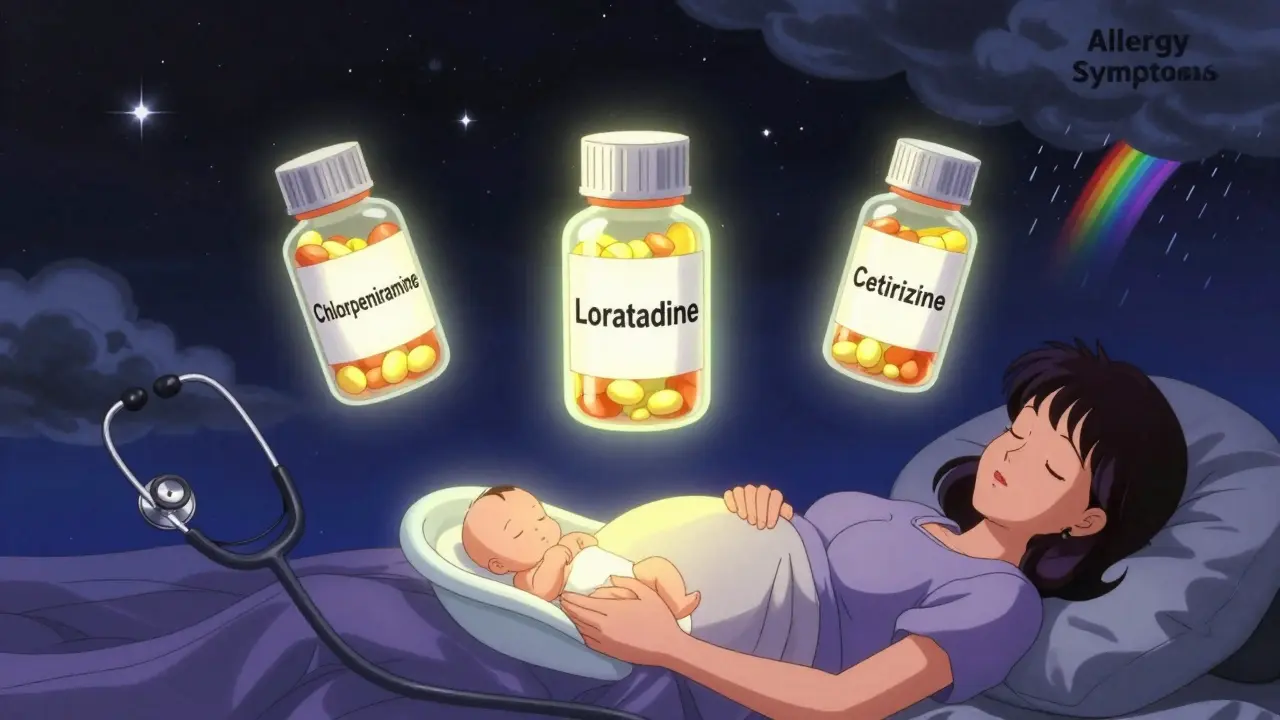
How Much Is Too Much?
Dosing matters. More isn’t better. The Mayo Clinic recommends starting with the lowest effective dose. For loratadine, that’s 10 mg once daily. For cetirizine, it’s 10 mg once daily. For chlorpheniramine, it’s 4 mg every 4-6 hours - but no more than 24 mg in 24 hours. Never take more than the label says. And never combine antihistamines - like taking Benadryl and Zyrtec together - unless your doctor tells you to. You don’t need two. One well-chosen one is enough.What If You’ve Already Taken One?
If you took Benadryl last week because you couldn’t sleep - don’t panic. One or two doses of a first-gen antihistamine won’t harm your baby. The risk comes from long-term, high-dose use, not occasional use. If you’re worried, talk to your OB-GYN. They can review what you took, when, and why. Most of the time, they’ll say: "No problem." But if you’ve been using something like hydroxyzine regularly, they might want to monitor you more closely.Bottom Line: What Should You Do?
- Don’t ignore severe allergies - they can hurt you and your baby.
- Chlorpheniramine, loratadine, and cetirizine are the safest bets.
- Use the lowest dose that works.
- Consider steroid nasal sprays before pills - they’re often more effective and safer.
- Avoid hydroxyzine and pseudoephedrine in the first trimester.
- Always talk to your doctor before starting any new medication, even if it’s "over-the-counter."
There’s no perfect answer. But there are good ones. And with the right choice, you can breathe easier - literally - without worrying about your baby.







Comments
Alex Ogle
February 9, 2026Man, I remember when my wife was pregnant and she got hit with seasonal allergies like a freight train. We went full science mode - checked every study, talked to her OB, even called the teratology hotline. Turns out, loratadine was the sweet spot: no drowsiness, no panic, no drama. She took it daily for three months and the baby? Perfect Apgar scores, 9lbs 2oz, zero issues. Sometimes the simplest answer is the right one - and it’s not always "avoid everything."
Sam Dickison
February 10, 2026ACOG’s guidelines are solid, but real talk - most OBs don’t have time to dive into pharmacokinetics. I’ve seen so many patients just grab Benadryl because it’s "the one they know." And honestly? It’s fine for occasional use. The real risk isn’t the med - it’s the untreated rhinitis leading to sleep apnea or chronic stress. Don’t fear the pill. Fear the exhaustion.
Chelsea Cook
February 10, 2026So let me get this straight - we’re supposed to trust a 1950s drug because it’s been around longer than my ex’s new boyfriend? Classic. I get the data, but also… we’ve got 21st-century science. Why not let the newer ones have a shot? Cetirizine’s half-life is longer, it’s more targeted, and we’ve got 15k+ exposures. Maybe stop romanticizing the past and start trusting the evidence?
Lyle Whyatt
February 10, 2026As someone who’s been through two pregnancies and a PhD in immunology, I’ve gotta say - nasal sprays are the unsung heroes here. Seriously. Flonase? Budesonide? They’re like a stealthy ninja for your sinuses. No systemic absorption, no placental crossing, just localized relief. I’ve had patients switch from oral antihistamines to sprays and suddenly they’re sleeping through the night, not reaching for the medicine cabinet every 4 hours. If you’re congested, start here. Pill second.
Simon Critchley
February 10, 2026LOL. "Avoid hydroxyzine" - like anyone’s actually prescribing it in the first trimester. That’s like saying "don’t drink bleach." But then again, I’ve seen women on Reddit self-prescribing Zyrtec-D because "it’s just one pill"… and then panicking when they find out pseudoephedrine’s a no-go. The real issue isn’t the meds - it’s the Google OB-GYNs. 🤦♂️
Brandon Osborne
February 11, 2026Let’s be real - this whole "safe antihistamine" thing is a corporate marketing ploy. Big Pharma spent millions making loratadine "pregnancy-friendly" so they could keep selling it. Meanwhile, chlorpheniramine - cheap, effective, studied since Nixon - is treated like a relic. They don’t want you using generics. They want you buying branded, overpriced, "research-backed" nonsense. Wake up. The data’s the same. The price? Not.
Ritteka Goyal
February 12, 2026OMG I just read this and I’m like… why is everyone so scared? In India we’ve been using chlorpheniramine for decades - my mom took it when she was pregnant with me, my aunt took it with twins, my cousin took it with her third and they’re all 20+ now and fine. Why are we overcomplicating this? We have real problems - malnutrition, lack of prenatal care, waterborne diseases - and we’re debating whether Zyrtec is "safe enough"? Please. If your nose is blocked and you can’t sleep, take the 4mg tablet. No guilt. No panic. Just breathe. 🙏
John McDonald
February 13, 2026Y’all are overthinking this. Here’s the cheat code: if it’s on the ACOG first-line list, it’s fine. If it’s in a combination product with pseudoephedrine? Skip it. If you’re unsure? Call your OB. Not Google. Not Reddit. Your doctor. They’ve seen 1000s of cases. You’ve seen one. Trust the system. And for the love of all things holy - don’t mix meds. One antihistamine. One dose. Done. You’re not a pharmacologist. You’re a human who needs to sleep.
Jacob den Hollander
February 14, 2026Just wanted to say - if you took Benadryl once or twice before you knew you were pregnant? Don’t spiral. Seriously. I was a nervous first-time mom and I took two doses in week 6 because I couldn’t stop itching. I cried for three days thinking I’d ruined everything. My OB looked at me like I’d just asked if breathing was safe. "You’re fine," she said. "Your baby’s heart is beating. That’s all that matters." I’ve got a 4-year-old who’s a total tornado of energy and joy. One dose doesn’t define a pregnancy. You’re not broken. You’re human.
Andy Cortez
February 16, 2026Wait… so we’re saying it’s fine to take meds for allergies… but not for anxiety? Hydroxyzine is banned but Xanax isn’t? What’s the logic here? If you’re gonna let a woman take a sedative for sleep, why not one for itching? I’m not saying go wild - but this feels like moral panic disguised as science. Also… "no evidence of risk" isn’t "proof of safety" - so why are we acting like it is?
Brett Pouser
February 17, 2026As a dad of three - two of whom were born to moms who took cetirizine daily - I just wanna say: thank you for writing this. My wife was terrified. We read everything. We talked to three doctors. We almost gave up on treating her eczema. Then we found this. She used loratadine and budesonide. No flare-ups. No sleepless nights. Our kids? Healthy, happy, loud. This isn’t just info - it’s peace of mind. Thank you.
Andrew Jackson
February 18, 2026While the empirical data presented herein is ostensibly compelling, one must not overlook the foundational epistemological dilemma: the reliance on observational cohort studies, which are inherently susceptible to confounding variables and selection bias. The absence of randomized controlled trials in this domain - owing to ethical constraints - renders any assertion of "safety" provisional at best. One must therefore exercise epistemic humility. To declare a pharmaceutical agent "safe" in pregnancy is not merely a clinical judgment - it is a metaphysical wager upon the sanctity of fetal development. Proceed with circumspection.
Write a comment