
Bempedoic Acid Side Effect Risk Calculator
Assess Your Personal Risk
Personalized Risk Assessment
Gout Risk
Tendon Rupture Risk
When you can't take statins because of muscle pain or weakness, bempedoic acid (sold as Nexletol) can be a lifeline. Approved by the FDA in 2020, it lowers LDL cholesterol by blocking cholesterol production in the liver-without hitting muscles the way statins do. But it’s not risk-free. For every person who avoids muscle pain with this drug, another might face a sudden gout flare or even a torn tendon. If you're considering bempedoic acid, you need to know what’s really going on inside your body.
How Bempedoic Acid Works (and Why It’s Different from Statins)
Bempedoic acid works upstream from statins. While statins block HMG-CoA reductase, bempedoic acid inhibits ATP-citrate lyase-an enzyme earlier in the cholesterol-making pathway. This means it acts mainly in the liver, not in muscles. That’s why it’s often prescribed to people who get muscle aches, cramps, or weakness from statins. About 5-10% of statin users can’t tolerate them, and for those people, bempedoic acid is one of the few alternatives with proven heart benefits.
It’s usually taken as a 180 mg tablet once a day, with or without food. Many patients take it with ezetimibe (in the combo drug Nexlizet) for stronger LDL lowering-about 17-22% reduction on average. But unlike statins, it doesn’t cause the same muscle-related side effects. In clinical trials, muscle problems occurred in just 5.8% of users, compared to 10-15% with statins. That sounds great-until you look at what it replaces those muscle issues with.
Gout: The Hidden Risk You Can’t Ignore
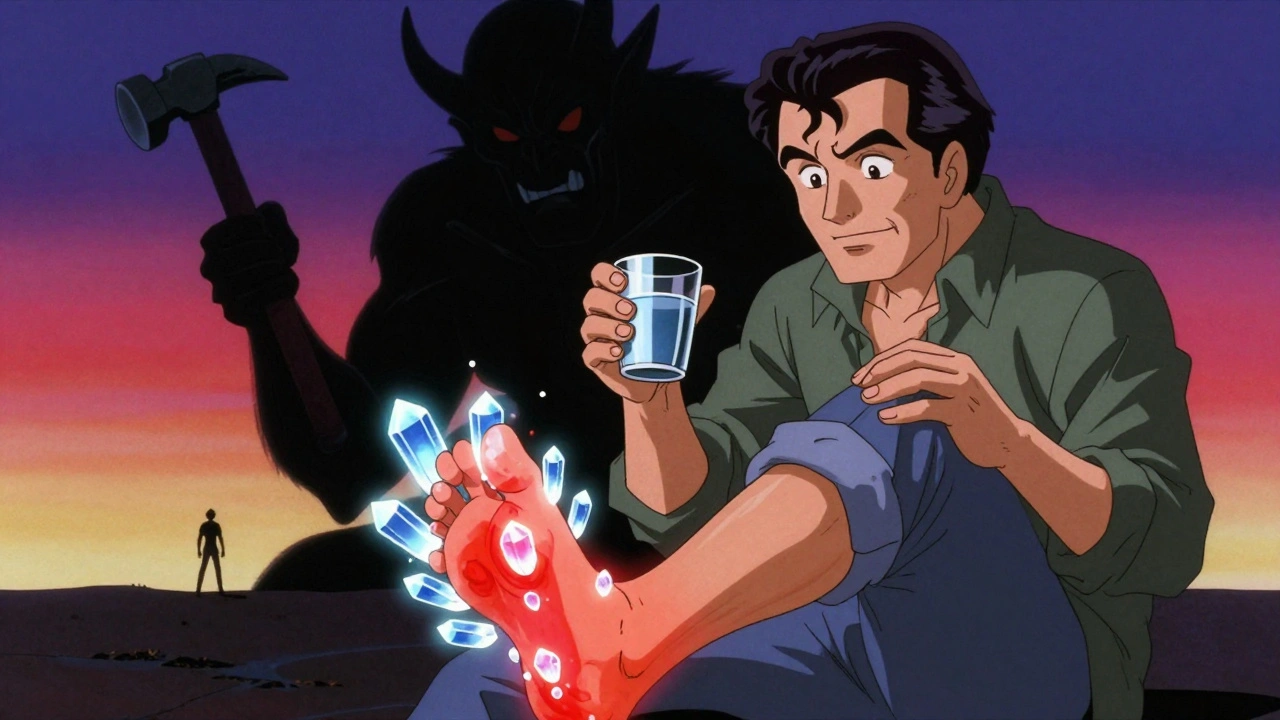
One of the most surprising side effects of bempedoic acid is gout. In clinical trials, 1.5% of people taking it had a gout attack, compared to only 0.5% on placebo. That might sound small, but it’s a threefold increase. For people who already had gout before starting the drug, the risk jumps to 2.3%. That’s more than double the rate in those without prior gout.
Why does this happen? Bempedoic acid raises uric acid levels in the blood. High uric acid leads to crystals forming in joints-especially the big toe. These crystals trigger intense inflammation: swelling, redness, and pain so sharp it can wake you up at night. Gout flares often show up within the first 4 weeks of starting the drug.
Doctors now recommend checking uric acid levels before starting bempedoic acid and again at 4 weeks. If levels are high, many will prescribe allopurinol (100-300 mg daily) as a preventive. Studies show this cuts gout risk by about 65%. If you’ve had gout before, don’t start bempedoic acid without talking to your doctor about this protection plan.
Tendon Rupture: A Rare but Devastating Risk
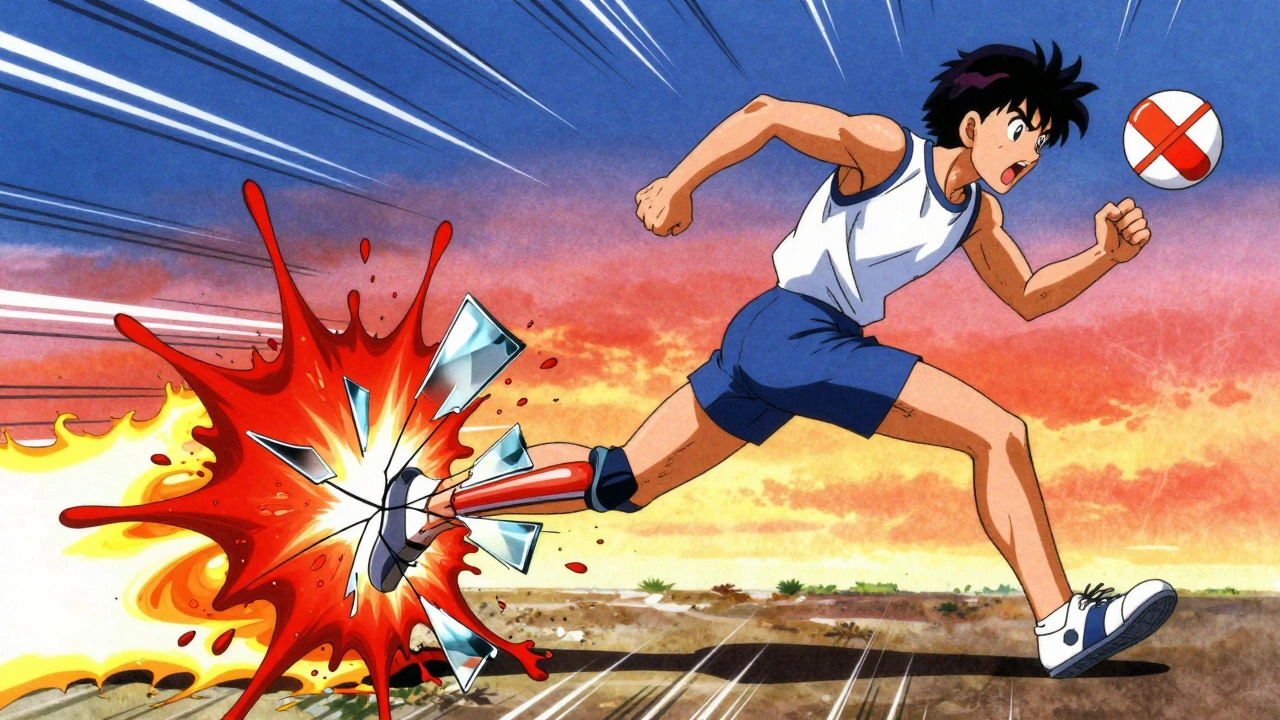
Here’s where things get serious. Bempedoic acid increases the risk of tendon injuries-including full ruptures. In trials, 0.7% of users experienced tendon problems, compared to 0.1% on placebo. That’s a sevenfold increase. The risk is even higher when bempedoic acid is combined with statins: tendon rupture risk triples compared to placebo alone.
What does a tendon rupture feel like? You might hear a loud snap or pop. Then, sudden pain, bruising, or inability to move the affected area-often the Achilles tendon in the heel, but sometimes the shoulder or wrist. It’s not a minor strain. It’s a tear that often requires surgery and months of rehab.
The FDA and European Atherosclerosis Society both warn against using bempedoic acid if you’re already on fluoroquinolone antibiotics (like ciprofloxacin or levofloxacin). These drugs also damage tendons, and together, the risk multiplies. If you’re on antibiotics for a sinus infection or UTI, hold off on bempedoic acid until you’re done.
Other Side Effects: What Else Could Go Wrong?
Beyond gout and tendons, other side effects are milder-but still worth watching:
- Muscle spasms: Happens in about 5.8% of users. Often goes away after a few weeks.
- Back pain: Reported in nearly 5% of patients. Could be unrelated, but it’s common enough to note.
- Pain in hands or feet: Around 3.4%. May feel like tingling or aching.
- Elevated liver enzymes: Seen in 2.2% of users. Usually mild, but your doctor will check liver tests at baseline and every 3 months.
- Anemia: Hemoglobin drops slightly in about 1.8% of people. Rarely severe enough to stop the drug.
- Upper respiratory infections and bronchitis: More common than placebo, but likely coincidental.
Most of these side effects are manageable. Only about 1.2% of people stop taking bempedoic acid because of muscle spasms or other mild issues. But if you feel sudden, severe pain in a tendon-or your big toe turns red and throbs-don’t wait. Call your doctor immediately.
Who Should Avoid Bempedoic Acid?
This drug isn’t for everyone. You should avoid it if:
- You’ve had a tendon rupture before
- You’re currently taking fluoroquinolone antibiotics
- You have severe, recurring gout that’s hard to control
- Your liver enzymes are already elevated
- You’re pregnant or planning to become pregnant (safety data is limited)
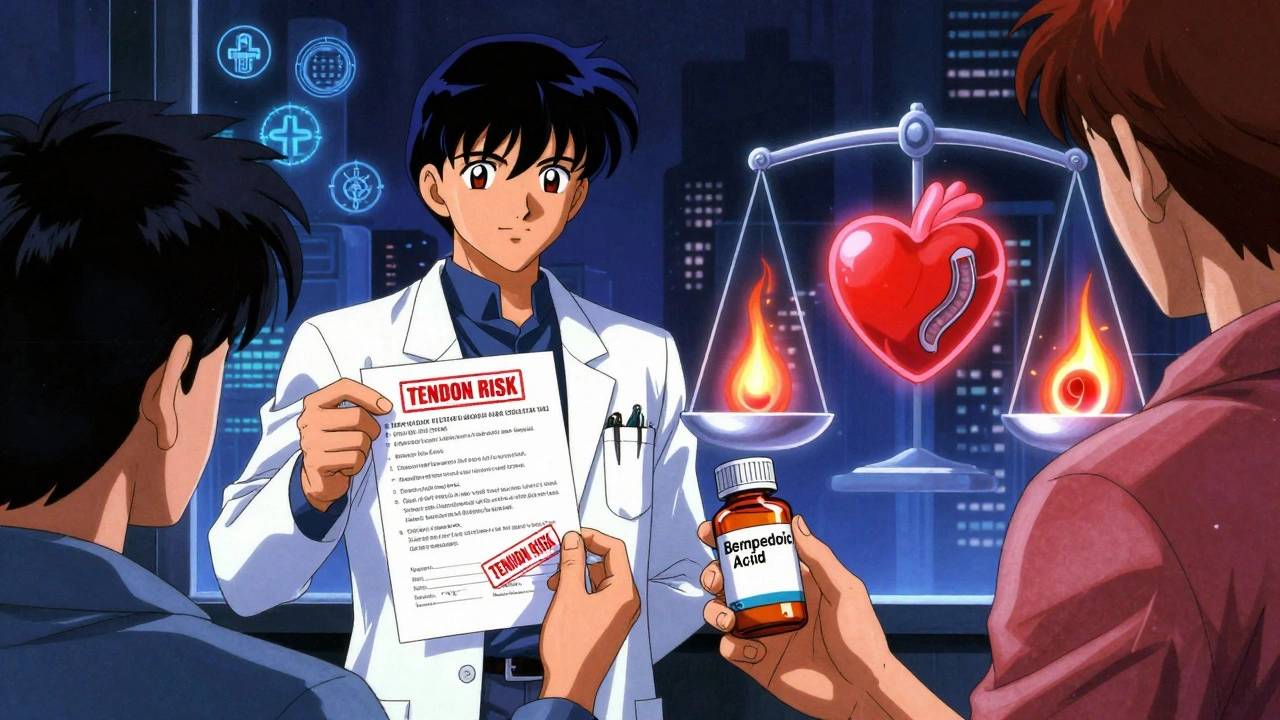
Even if you’re otherwise healthy, if you’re active-running, lifting weights, playing tennis-your tendon risk goes up. Talk to your doctor about whether the benefits outweigh the risks for your lifestyle.
How to Monitor and Manage Risks
If you’re on bempedoic acid, here’s what you need to do:
- Get a baseline blood test for uric acid, liver enzymes, and hemoglobin before starting.
- Have another blood test at 4 weeks to check for early changes.
- Continue monitoring every 3 months if uric acid or liver enzymes are high.
- Keep track of any joint pain, especially in the big toe. Note when it started and how often it happens.
- Watch for sudden pain, popping sounds, or swelling in tendons. If it happens, stop the drug and go to urgent care.
- Don’t start new antibiotics without telling your doctor you’re on bempedoic acid.
Many people tolerate bempedoic acid just fine. But the key is awareness. The drug’s benefits-lowering LDL and reducing heart attacks-are real. The CLEAR Outcomes trial showed a 13% drop in major heart events over 4 years. But that benefit only matters if you don’t end up in the hospital with a ruptured tendon or a gout flare that leaves you bedridden.
What’s Next for Bempedoic Acid?
Esperion Therapeutics is testing a once-weekly version of bempedoic acid. Early results show it works just as well-and may cut gout side effects by 22%. That could change the game. But until then, the daily pill remains the standard.
The American Heart Association says bempedoic acid should be reserved for people who truly can’t take statins. It’s not a first-line drug. It’s a backup. And like any backup, it comes with trade-offs. If you’re choosing it, make sure you’re not trading one problem for another.
Can bempedoic acid cause kidney damage?
No, bempedoic acid isn’t linked to kidney damage. It doesn’t affect kidney function directly. But high uric acid from the drug can lead to kidney stones in rare cases. If you have a history of kidney stones, your doctor may monitor you more closely.
Is bempedoic acid safe with other cholesterol drugs?
Yes, it’s often combined with ezetimibe (Nexlizet) or low-dose statins. But combining it with statins increases tendon rupture risk. Always tell your doctor about every medication you take, including supplements. Avoid combining it with fluoroquinolone antibiotics.
How long does it take for gout to develop after starting bempedoic acid?
Most gout flares happen within the first 4 weeks of starting the drug. That’s why doctors check uric acid levels at that 4-week mark. If your levels are high and you haven’t had gout before, starting allopurinol early can prevent attacks.
Can I take bempedoic acid if I’ve had a heart attack?
Yes, it’s actually approved for people with established cardiovascular disease. The CLEAR Outcomes trial showed it reduced heart attacks, strokes, and heart-related deaths by 13% in high-risk patients. If you’ve had a heart attack and can’t take statins, this drug can help protect you-but only if you manage the side effects.
Do I need to change my diet while taking bempedoic acid?
You don’t need a special diet, but avoiding high-purine foods can help reduce gout risk. That means cutting back on red meat, organ meats, shellfish, and alcohol-especially beer. Drink plenty of water. These steps won’t replace medication, but they support your treatment.





Comments
James Allen
December 1, 2025So let me get this straight - we’re giving people a drug that swaps muscle pain for a gout flare so bad you can’t walk, and then randomly TORN TENDONS?? 😂 This isn’t medicine, it’s Russian roulette with a prescription pad. They call it ‘alternative’? Nah, it’s just the FDA’s way of saying ‘we ran out of options’ and handed you a ticking time bomb labeled ‘Nexletol.’
Erin Nemo
December 3, 2025My dad’s on this and had a gout flare two weeks in - doc gave him allopurinol and it’s been fine. Just know your risk and get tested. Simple.
ariel nicholas
December 4, 2025Wait-so you’re telling me… that a pharmaceutical company, in a capitalist system, created a drug that… doesn’t hit muscles… but hits… uric acid… and tendons… and then we’re supposed to be grateful? This isn’t science-it’s a mathematical optimization problem where the goal is to minimize muscle complaints while maximizing shareholder dividends… and we’re the variables…
And let’s not forget… the FDA… who approved this… is… funded… by… industry… and… the… CLEAR… Outcomes… trial… was… sponsored… by… Esperion… who… makes… the… drug… and… who… owns… the… data… and… who… didn’t… tell… you… about… the… tendon… rupture… until… after… the… FDA… said… ‘yes’…
So… yeah… I’m not taking it… I’m just… going… to… eat… avocado… and… do… yoga…
Rachel Stanton
December 4, 2025For anyone considering bempedoic acid, let’s break this down clinically but compassionately: the 13% reduction in major CV events is real - and meaningful for high-risk patients. But the trade-offs? Real too. Uric acid spikes are predictable - baseline and 4-week labs are non-negotiable. Tendon risk? Higher with statin combos and fluoroquinolones - avoid that cocktail like the plague. And yes, if you’re active, your tendon load matters. Talk to your cardiologist AND your physical therapist. This isn’t a ‘take and forget’ drug - it’s a managed therapy. You’re not just a patient - you’re a partner in your care.
Amber-Lynn Quinata
December 6, 2025HOW CAN YOU EVEN THINK ABOUT TAKING THIS?!?! 😱 You’re literally trading one health disaster for TWO worse ones. Gout is PAINFUL and tendon ruptures? That’s LIFE-CHANGING. I had a cousin who tore his Achilles on this - now he walks with a limp and can’t play with his kids. 🤕💔 You think you’re being smart by avoiding statin muscle pain? You’re just setting yourself up for a medical nightmare. STOP. TALK TO YOUR DOCTOR. DON’T BE A LAB RAT. 🙏
Scotia Corley
December 8, 2025The data presented in this article is methodologically sound and reflects the findings of the CLEAR Outcomes trial. However, the clinical utility of bempedoic acid remains constrained by its adverse effect profile. The relative risk increase for gout and tendon rupture, while statistically significant, must be weighed against absolute risk in low-to-moderate risk populations. I caution against its use in patients under 60 without established cardiovascular disease. The benefit-risk ratio is favorable only in high-risk cohorts with statin intolerance - and even then, requires vigilant monitoring.
amit kuamr
December 9, 2025My uncle took this in India after statins failed. He got gout. Doctor gave him allopurinol. He’s fine now. No tendon problems. But he drinks lots of water. And avoids meat. Simple. No drama. Just follow doctor. No need to panic.
elizabeth muzichuk
December 10, 2025And yet… people still take it. Like it’s just another vitamin. No one thinks about the long-term consequences. No one thinks about the kids who might lose their parents to a ruptured tendon because someone didn’t listen. This isn’t just a medical decision - it’s a moral one. You’re not just risking your body - you’re risking your family’s peace. I’m not judging… I’m just… watching… and waiting… for the next headline.
Write a comment