
When you walk into a clinic or urgent care center, you probably don’t think about how much the doctors paid for the antibiotics or lidocaine they just gave you. But the truth is, the price of those generic drugs can vary wildly-sometimes by more than 50%-depending on how they were bought. Bulk purchasing isn’t just a corporate trick; it’s a practical, proven way for healthcare providers to cut costs without cutting care. And for clinics, small hospitals, and even individual practitioners, it’s becoming one of the most effective tools to keep expenses down in a system where every dollar counts.
How Bulk Buying Works for Generic Drugs
Generic drugs are copies of brand-name medications that have lost patent protection. They’re chemically identical, just cheaper. In the U.S., generics make up over 90% of all prescriptions filled-but they account for less than 25% of total drug spending. That gap exists because of how these drugs move through the system. Manufacturers set a list price. Wholesalers buy in bulk and mark it up. Pharmacy benefit managers (PBMs) negotiate rebates behind the scenes. And finally, pharmacies and clinics pay whatever’s left after all the middlemen take their cut.
Bulk purchasing cuts out the noise. Instead of ordering small amounts monthly, providers buy large volumes-think 1,000 to 10,000 units at a time-directly from manufacturers or secondary distributors. In return, they get steep discounts. For orders over 1,000 units, discounts typically range from 5% to 15%. For orders of 10,000 units or more, it’s not unusual to see 20% to 30% off. That’s not theoretical. A Texas urgent care center cut its lidocaine and antibiotic costs by 20% in just two months by switching to quarterly bulk orders instead of monthly ones.
The Hidden Discount Channels: Short-Dated Stock and Secondary Distributors
One of the smartest, least talked-about tactics is buying short-dated stock. These are generic drugs with expiration dates six to twelve months away-still perfectly safe to use, but no longer attractive to big pharmacies that need to keep inventory turning over fast. Secondary distributors like Republic Pharmaceuticals specialize in these deals. They buy excess inventory from hospitals and wholesalers and resell it at 20% to 30% below retail. One Ohio clinic saved 25% on injectables just by switching to this model. No formulary changes. No new prescriptions. Just smarter buying.
Primary wholesalers-McKesson, Cardinal Health, AmerisourceBergen-control 85% of the market. But they rarely offer deep discounts to small providers. Their model relies on volume across thousands of clients, not deep savings for individuals. Secondary distributors, on the other hand, focus on niche buyers: urgent cares, dermatology clinics, podiatrists. They offer better prices, clearer contracts, and fewer hoops to jump through. In fact, providers using secondary distributors report savings of 20% to 25%, compared to just 3% to 8% with traditional wholesalers.
Why State Pools and PBMs Don’t Always Help
Some might think state Medicaid programs or pharmacy benefit managers (PBMs) are the answer. They do negotiate bulk deals-but the savings don’t always reach the front lines. Multi-state purchasing pools like the National Medicaid Pooling Initiative (NMPI) or the Sovereign States Drug Consortium (SSDC) save states 3% to 5% compared to single-state programs. That’s real money, but it’s still a fraction of what’s possible.
PBMs are even trickier. They negotiate rebates of 15% to 40% on generic drugs. Sounds great, right? But here’s the catch: PBMs often keep a big chunk of that rebate. Research from the USC Schaeffer Center shows that only 50% to 70% of those negotiated savings actually make it to the health plan or provider. The rest goes to the PBM’s bottom line. That’s why a commercial health plan might pay $100 for a prescription, with $41 going to the manufacturer, $17 to production, and the rest disappearing into administrative layers. Bulk purchasing bypasses this entirely.

What Drugs Benefit Most from Bulk Buying
Not every generic drug is worth buying in bulk. The sweet spot is high-volume, low-cost medications that clinics use every day:
- Lidocaine injections
- Antibiotics like amoxicillin and azithromycin
- Corticosteroids (prednisone, methylprednisolone)
- Saline solutions and IV fluids
- Common oral meds: metformin, atorvastatin, lisinopril
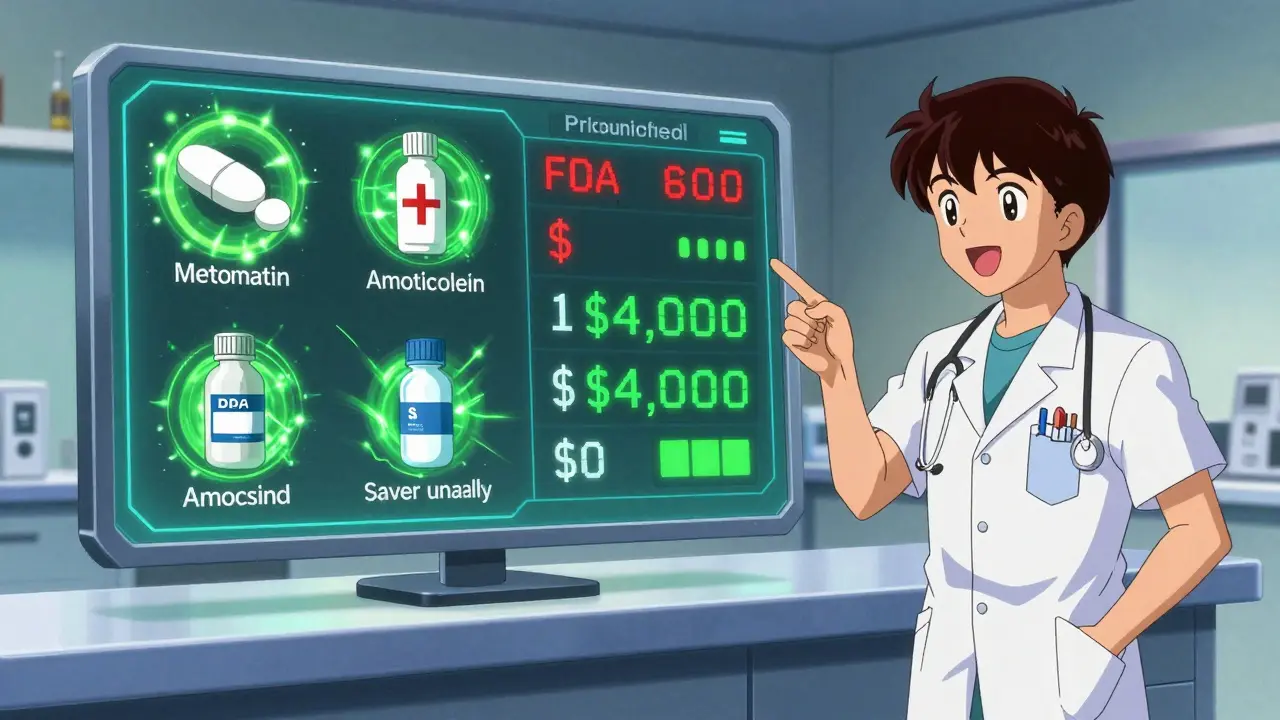
These drugs are stable, have long shelf lives, and are prescribed constantly. A single urgent care center might use 500 vials of lidocaine a month. Buying 2,000 vials quarterly saves more than $1,000 in just one quarter. That’s a $4,000 annual savings on one drug alone.
On the flip side, low-use drugs-like specialty injectables or rare generics-are not worth bulk buying. You risk waste, storage issues, or expiration. And during drug shortages, bulk orders can backfire. As of November 2023, the FDA listed 298 active generic drug shortages. If you’re locked into a 10,000-unit order and the supply chain breaks, you’re stuck.
Real-World Implementation: What It Takes to Start
Getting started isn’t hard, but it does require planning. Here’s how successful clinics do it:
- Track your top 20 SKUs. Use your billing or inventory system to find the 15 to 20 generic drugs that make up 60% to 70% of your medication spending.
- Reach out to secondary distributors. Republic Pharmaceuticals, HealthWarehouse, and others offer free consultations. Ask for their bulk discount schedule and minimum order requirements.
- Start small. Pick one drug-say, amoxicillin-and order 2,000 tablets instead of 500. See how it affects your cash flow and storage.
- Track expiration dates. If you buy short-dated stock, set up alerts. Use a simple spreadsheet or inventory app to flag items expiring in 3 months.
- Automate reordering. Once you’re comfortable, connect your inventory system to your distributor’s portal. Many now offer automated reordering based on usage patterns.
Most clinics report a 4- to 6-week learning curve. It takes about 20 hours of staff time to get the system running smoothly. But after that, the savings become automatic. One Florida medical director put it simply: “Switching to Republic gave us options we didn’t have before. No allocations, no games-just the inventory we needed at prices that make sense.”
The Risks and Pitfalls
It’s not all smooth sailing. Here are the biggest problems providers run into:
- Cash flow strain. Buying 5,000 units upfront means a bigger bill right away. You need 15% to 25% more working capital, according to MGMA data.
- Minimum order requirements. Some distributors require you to buy 10,000 units-even if you only need 3,000. That’s a problem if you’re a small clinic.
- Inventory management. Short-dated stock requires attention. One survey found 28% of providers struggled with waste from expired meds.
- Supply chain instability. During shortages, even bulk buyers can’t get what they need. The FDA’s shortage list is growing, not shrinking.
The key is to start slowly, stick to high-use drugs, and never commit to more than you can realistically use within six months.
What’s Changing in 2026?
The landscape is shifting fast. The Inflation Reduction Act’s Medicare drug price negotiation program is now active. In 2026, Medicare will negotiate prices for 10 high-cost drugs, with projected savings of $6 billion-22% off list prices. These negotiated prices are expected to ripple into Medicaid and commercial plans over time.
Meanwhile, PBMs are rolling out integrated point-of-sale discounts. Instead of handing patients discount cards, pharmacies now apply bulk-negotiated prices automatically at checkout. For common generics like metformin or atorvastatin, patients are seeing out-of-pocket costs drop by 30% to 50%-without any extra steps.
And the FTC is cracking down. As of late 2023, there were 17 active investigations into drug pricing manipulation. That could force more transparency into rebate structures and distributor pricing.
Bulk purchasing isn’t a magic bullet. But in a system where 90% of prescriptions are generics and 75% of the cost is hidden in the supply chain, it’s one of the few tools providers actually control. The goal isn’t to buy everything in bulk. It’s to buy the right things, in the right amounts, from the right sources-and keep the savings where they belong: in the clinic’s budget, and ultimately, in patient care.
Can small clinics really save money with bulk purchasing?
Yes. Even small clinics can save 20% or more on high-use generics like antibiotics, lidocaine, and corticosteroids. The key is to focus on just 15 to 20 medications that make up the majority of your drug spending. You don’t need to buy in massive quantities-1,000 to 5,000 units per order is often enough to unlock discounts. Secondary distributors like Republic Pharmaceuticals specialize in helping small providers with flexible order sizes.
Is buying short-dated stock safe?
Absolutely. Generic drugs remain effective and safe until their expiration date, which is set by the FDA with a wide safety margin. Medications with 6 to 12 months left on their shelf life are still fully potent. The only risk is improper storage or poor inventory tracking. Clinics that use digital alerts and first-in-first-out systems report zero waste and 25%+ savings.
Why not just buy from CVS or Walgreens?
Retail pharmacies like CVS and Walgreens buy from the same primary wholesalers as everyone else-and they mark up prices for individual sales. You’re paying retail, not wholesale. Bulk purchasing lets you skip that markup entirely. For example, a 100-count bottle of metformin might cost $15 at CVS but only $8 when bought in bulk from a secondary distributor. That’s a 47% savings.
Do I need special equipment to store bulk drugs?
Not usually. Most oral generics and injectables require standard room-temperature storage. You’ll need secure, dry space and a system to track expiration dates. A simple spreadsheet or low-cost inventory app (like MedsTrack or Inventory Now) works fine. Avoid overstocking-only buy what you’ll use in 6 months. If you’re handling refrigerated items like insulin, you’ll need a fridge, but that’s rare for bulk generics.
What if a drug goes into shortage?
Don’t lock in large orders for drugs with unstable supply. Stick to generics with consistent availability-most high-use ones do. Monitor the FDA’s Drug Shortage Database. If a drug you rely on appears on the list, pause bulk orders until it’s resolved. Many secondary distributors offer flexible contracts with no penalties for adjusting orders during shortages.
How long until I see savings after switching?
You’ll see the difference in your next invoice. Most clinics report savings within 30 to 60 days of switching to a secondary distributor or starting bulk orders. The real benefit builds over time as you refine your inventory and eliminate wasteful monthly purchases. One clinic saved $18,000 in the first year just by optimizing five drugs.




Comments
Justin Fauth
February 4, 2026Let me tell you something - this whole 'bulk buying' thing is just Big Pharma’s latest con game. They know we’re desperate, so they jack up list prices, then 'offer' discounts like they’re doing us a favor. Meanwhile, the real savings? Gone. Vanished into the pockets of middlemen who still get rich off our pain. This isn’t saving money - it’s just making us pay in different ways. And don’t even get me started on 'secondary distributors.' Sounds fancy, but half of them are just repackaged gray-market trash with fake expiration dates. I’ve seen it. I’ve worked in this system. You think you’re saving? You’re just gambling with patient safety.
And yeah, I know - 'but the data says otherwise!' Data doesn’t bleed. People do. And when a kid gets a bad batch of amoxicillin because some distributor ran out of fridge space? That’s on you. Not the manufacturer. Not the FDA. YOU.
Stop romanticizing 'smart buying.' This is just capitalism with a nice PowerPoint.
PS: I’ve been doing this for 17 years. I know what I’m talking about.
Meenal Khurana
February 6, 2026Simple truth: buy in bulk only if you use it fast. No drama. No fluff.
Joy Johnston
February 7, 2026While the premise of bulk purchasing is sound, the implementation requires rigorous operational discipline. Clinics must maintain precise inventory tracking systems, implement FIFO protocols, and establish vendor accountability standards - otherwise, the financial benefits are negated by waste, regulatory exposure, and liability risk.
For example, a 2022 study published in the Journal of Healthcare Supply Chain Management demonstrated that clinics without automated expiration alerts experienced 23% higher drug wastage than those with integrated digital tracking. This isn’t merely a procurement issue - it’s a compliance and patient safety imperative.
Additionally, while secondary distributors offer attractive pricing, they are not subject to the same FDA oversight as primary wholesalers. Providers must validate each vendor’s GMP certification, audit trail, and temperature-controlled logistics capability before entering into any agreement.
That said, when executed with precision, bulk purchasing can reduce medication expenditures by 18–32% without compromising clinical outcomes. The key is not quantity - it’s governance.
Shelby Price
February 8, 2026Okay but like… have y’all seen how much lidocaine costs at CVS? 😳
I work at a tiny clinic and we went from buying 50 vials a month to 2,000 every quarter - and our bill went from $1,200 to $850. Like… that’s just free money? I feel like I’m cheating the system. 😅
Also, we started buying short-dated stuff and it’s been fine. No one’s died. Not even close. We just put a sticky note on the box that says ‘USE FIRST’ and boom - problem solved. 🙌
Also, I love that we don’t have to deal with PBMs anymore. Like… who even are they? Are they ghosts? Do they live in a server farm? 😂
Keith Harris
February 9, 2026You call this 'smart buying'? This is just corporate peon behavior wrapped in a PowerPoint. You’re not saving money - you’re becoming a debt slave to inventory. You think you’re being clever by buying 10,000 vials of lidocaine? Nah. You’re just giving your landlord a down payment on a new yacht. And when the FDA slaps a shortage notice on that batch? You’re stuck with a warehouse full of expired junk and a CFO who’s crying in the breakroom.
And let’s talk about these 'secondary distributors' - you know what they really are? The scum of the pharmaceutical supply chain. They’re the guys who buy stolen meds from hospitals in Puerto Rico and slap on new labels. I’ve seen the invoices. I’ve seen the warehouse. I’ve smelled the moldy metformin. You think you’re saving? You’re just trading one scam for a dirtier one.
And don’t even get me started on the 'FDA safety margin.' That’s not a safety margin - it’s a legal loophole. The FDA says 'six months' because they don’t want to admit that 40% of generics degrade in heat. But you? You’re just gonna trust a spreadsheet?
Wake up. This isn’t entrepreneurship. It’s desperation with a spreadsheet.
Mandy Vodak-Marotta
February 10, 2026Okay so I’ve been doing this for like 8 months now and I have to say - I was skeptical. Like, really skeptical. I thought it was all hype. But then we started with just amoxicillin - 2,000 tablets instead of 500 - and I was like… wait, this is actually cheaper? Like, 40% cheaper? I had to triple-check the invoice. I thought I misread it. Then we did prednisone. Then saline. Then lidocaine. Now we’re saving like $15,000 a year just on five drugs. And honestly? It’s not even that hard.
We use this app called MedsTrack - it’s like $10 a month. It sends us alerts when stuff is about to expire. We just put the short-dated stuff on the front shelf. Boom. Done.
And the best part? We stopped having to call our wholesaler every week asking ‘when’s my order?’ Now we just get a box delivered every three months. It’s like… automatic. Like magic. Except it’s not magic - it’s just thinking ahead.
Also, I told my boss we should do this and he said ‘nah, too risky.’ So I did it anyway. He didn’t even notice until the next invoice. Now he’s the one asking me how to get set up. 😎
Also, we switched to Republic and they sent us free samples of a new generic we hadn’t even heard of. Like… free? For real? I think they’re trying to win us over. I’m not mad about it.
rahulkumar maurya
February 11, 2026How quaint. You believe that a small clinic in rural Ohio can outmaneuver the intricate, capital-intensive machinery of pharmaceutical distribution? This is not a procurement strategy - it is a delusion of autonomy in a system engineered for consolidation. The notion that secondary distributors offer 'better pricing' ignores the fact that they operate on the periphery of regulatory oversight, often sourcing from unlicensed intermediaries in jurisdictions with negligible quality control.
Furthermore, the 'savings' you perceive are illusory: they are front-loaded, cash-flow negative, and expose your institution to systemic risk during supply chain disruptions - which, as you so delicately noted, are increasing exponentially. The FDA’s 298 active shortages are not anomalies - they are the predictable outcome of a market distorted by deregulation and profit-driven fragmentation.
True efficiency lies not in amateur bulk purchasing, but in institutional integration - state pooling, national contracting, and centralized logistics. Your '20% savings' are the cost of your ignorance. You are not a savvy operator. You are a footnote in the collapse of decentralized healthcare.
Alec Stewart Stewart
February 11, 2026Hey - just wanted to say this post really helped me. I run a small clinic with 2 staff and no budget. I was scared to try bulk buying because I thought I’d mess up. But we started with just one drug - metformin - and ordered 1,000 pills instead of 200. It cost $75 instead of $120. We’ve been using it for 4 months and still have half left. No waste. No stress.
I didn’t even know about secondary distributors until I read this. Now I’m emailing Republic tomorrow. 😊
Also, the part about short-dated stock? I was worried it’d be expired or weak. But the doc who wrote this said it’s safe - and I trust that. We just write the expiration date on the box and put it in front. Simple.
Thank you for writing this. I feel like I can actually do something good here. 🙏
Geri Rogers
February 12, 2026OMG YES. I did this last year and I’m basically a hero at my clinic now. 🎉
We switched from McKesson to HealthWarehouse and saved $22,000 in 6 months. I printed out the invoice and taped it to the fridge. My coworkers cried. I cried. The whole place was emotional. 😭
Also, I started buying short-dated stock and we got a whole pallet of azithromycin for 40% off. I was like - this is illegal? But nope! Totally legal. FDA says it’s fine. We just put a little ‘USE ME FIRST’ sticker on it and now we’re like the cool kids of inventory management.
And guess what? We didn’t even need a fancy system. I used Google Sheets. Yes. Google Sheets. 💪
Also, my boss said ‘what if we get a shortage?’ I said ‘then we’ll just buy less next time.’ He looked at me like I spoke fluent alien. But then he saw the savings and now he’s asking me to train the whole county. 😎
PS: If you’re scared - just start with one drug. I promise, you won’t die. I didn’t. And I’m still here. 🙌
Janice Williams
February 13, 2026While the article presents a compelling narrative regarding cost reduction through bulk procurement, it fails to address the ethical implications of engaging with unregulated secondary distributors. These entities operate in a regulatory gray zone, often circumventing the Drug Supply Chain Security Act (DSCSA) by failing to provide full pedigree documentation. Furthermore, the promotion of short-dated pharmaceuticals as a viable strategy constitutes a latent violation of USP <797> standards for sterile compounding and storage integrity.
Moreover, the assertion that savings 'belong in the clinic’s budget' obscures the fact that these funds are not discretionary - they are fiduciary obligations to patients, regulators, and insurers. To prioritize cost reduction over supply chain integrity is to prioritize profit over patient safety, a position that, in my professional judgment, is indefensible.
The true solution lies not in circumventing the system, but in reforming it - through legislative mandates, transparent pricing, and centralized procurement. What you call 'smart buying' is, in reality, systemic erosion.
Jhoantan Moreira
February 14, 2026This is actually really thoughtful - I love how practical it is. 🌟
I’m from the UK and we don’t have this kind of system here, but I’ve been following how US clinics handle meds, and this makes so much sense. No drama. No corporate nonsense. Just people doing the right thing with what they’ve got.
I especially liked the part about starting small. So many people think they need to go all-in, but you don’t. One drug. One order. See what happens. That’s how real change starts.
Also - the Google Sheets thing? Yes. Sometimes the best tech is the one you already know. 😊
Thank you for writing this. It felt human. And that matters.
Write a comment