
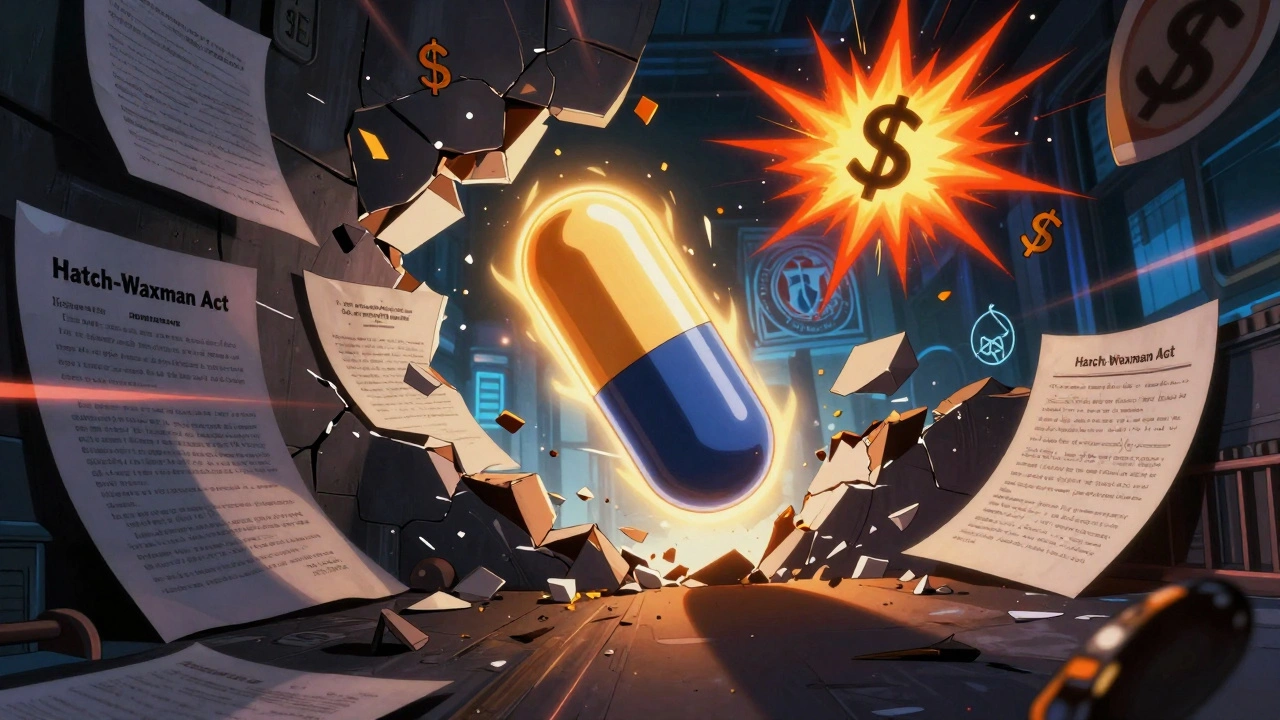
When you walk into a pharmacy and pick up a generic version of your prescription, you’re benefiting from one of the most successful competition policies in modern history. But behind that low price tag lies a complex battle between innovation, profit, and fairness - one shaped by antitrust laws designed to keep the generic drug market open and affordable. In the U.S., generic drugs now make up 90% of all prescriptions filled, saving consumers over $217 billion in a single year. That’s not luck. It’s the result of the Hatch-Waxman Act of 1984 - a law meant to balance patent protection for brand-name drugmakers with faster access to cheaper generics. But over time, loopholes, legal maneuvers, and corporate tactics have turned this system into a battleground.
How the Hatch-Waxman Act Was Supposed to Work
The Hatch-Waxman Act created a clear path for generic drug companies to enter the market. Instead of repeating expensive clinical trials, generic manufacturers could file an Abbreviated New Drug Application (ANDA), proving their version was bioequivalent to the brand-name drug. The law gave the first generic company to challenge a patent a special reward: 180 days of exclusive market access. That exclusivity was meant to be a powerful incentive - enough to offset the cost and risk of litigation, and enough to drive prices down fast once the generic arrived. But here’s the catch: the 180-day exclusivity window isn’t just a reward. It’s also a weapon. If the first generic filer delays launching, no other generic can enter. That creates a perfect setup for collusion. Brand-name companies, facing the loss of their monopoly, sometimes strike secret deals with these first-mover generics: pay them to stay off the market. These are called pay-for-delay agreements. The Federal Trade Commission (FTC) has tracked over 18 of these cases since 2000. In one, Gilead Sciences paid $246.8 million in 2023 to settle allegations it used pay-for-delay to block generic versions of its HIV drug Truvada. These deals cost consumers billions. The Supreme Court ruled in 2013 (FTC v. Actavis) that such payments could violate antitrust laws - but proving they’re illegal is still hard. Courts now look at whether the payment is large, unexplained, and goes beyond the cost of litigation. If it does, it’s likely anti-competitive.Orange Book Manipulation and Patent Thickets
Another tool brand-name companies use is the FDA’s Orange Book, a public list of patents linked to approved drugs. Generic companies must challenge every patent listed there before they can enter the market. But some brand-name firms abuse this system by listing patents that don’t actually protect the drug’s active ingredient - like patents on packaging, dosage forms, or manufacturing methods. These are called “secondary patents.” In 2003, the FTC took action against Bristol-Myers Squibb for improperly listing patents on its drug Abilify to block generics. The company didn’t just delay competition - it stretched out its monopoly for years. The same tactic has been used for drugs like Nexium and Copaxone. When a company files dozens of patents - some weak or irrelevant - it creates what experts call a “patent thicket.” Generic makers get stuck in legal limbo, spending millions on lawsuits just to get to market. This isn’t just about patents. It’s about timing. The FTC found that when the first generic enters, prices drop by at least 20% within a year. With five generics on the market, prices fall by nearly 85%. That’s why delaying entry for even a few months can mean billions in lost savings.Product Hopping and Sham Petitions
When a brand-name drug’s patent is about to expire, some companies don’t wait. They launch a slightly modified version - a new pill, a new dosage, a new delivery system - and aggressively market it as “better.” This is called product hopping. AstraZeneca did this with Prilosec and Nexium. Prilosec was a blockbuster heartburn drug. When its patent neared expiration, AstraZeneca introduced Nexium - essentially the same active ingredient, but with a new patent. They convinced doctors and patients Nexium was superior. Sales of Nexium soared. Prilosec’s generics flooded the market, but most patients were already switched over. The result? The generic version of Prilosec couldn’t compete because the market had moved on. The FTC called this a “strategic withdrawal” of the original drug. Courts have been split. In one case, Walgreens sued AstraZeneca for monopolization - but the court dismissed it because Nexium wasn’t legally required to be substituted for Prilosec. That’s the problem: the law doesn’t clearly say you can’t manipulate patient behavior to block generics. Another tactic? Sham citizen petitions. These are fake complaints filed with the FDA by brand-name companies, claiming safety or efficacy issues with a generic drug. They’re rarely based on real science. The goal? To delay FDA approval. In 2023, the FTC sued Teva Pharmaceuticals for filing over 100 of these petitions to block generics for its multiple sclerosis drug Copaxone. The case is still pending. If proven, it’s a textbook example of using government processes as a weapon.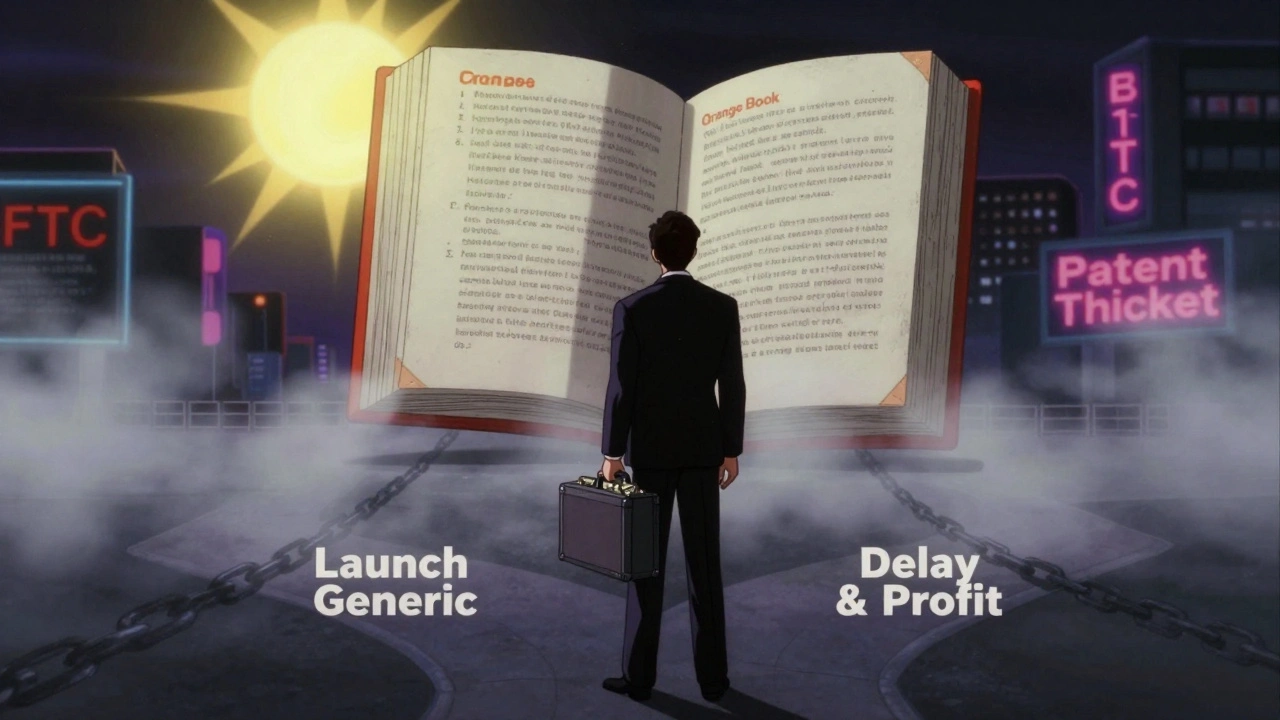
Global Differences in Enforcement
The U.S. isn’t alone in this fight - but it’s not the only model. In the European Union, regulators focus more on regulatory manipulation. Companies have been fined for withdrawing marketing authorizations in specific countries to block generic imports. Others have misled patent offices to extend protection. The European Commission estimates these delays cost European consumers €11.9 billion every year. China took a hardline approach in January 2025 with its new Antitrust Guidelines for the Pharmaceutical Sector. It identified five “hardcore restrictions” as automatic violations: price fixing, output limits, market division, joint boycotts, and blocking new technology. In the first quarter of 2025 alone, six cases were penalized - five involved price fixing through messaging apps and algorithms. Chinese regulators are now using AI to monitor pricing patterns in real time, catching collusion before it spreads. The U.S. still leads in litigation, but Europe and China are catching up - and they’re not waiting for courtrooms. They’re using regulation as a proactive tool.Who Pays the Price?
Behind every delayed generic is a patient who can’t afford their medicine. A 2022 Kaiser Family Foundation survey found that 29% of U.S. adults skipped doses or didn’t fill prescriptions because of cost. That’s not just a health issue - it’s a direct result of anti-competitive behavior. The Congressional Budget Office estimates that generic competition cuts drug prices by 30% to 90%. Without it, the U.S. spends far more on medications than any other country. In 2022, Americans paid 256% more for the same brand-name drugs than people in 32 other high-income countries. Generics are the only thing holding that number down. And it’s not just about money. Delayed access means worse health outcomes. Diabetics rationing insulin. Cancer patients skipping maintenance drugs. Asthma sufferers using old inhalers because the new one is too expensive. These aren’t hypotheticals. They’re daily realities.
What’s Changing Now?
The FTC is pushing for more transparency. In 2022, it held a workshop titled “Generic Drug Entry after Patent Expiration,” signaling a renewed focus on product hopping and patent thickets. Congress is also considering bills to limit pay-for-delay deals and require companies to disclose settlement terms. Some states are acting on their own. California and New York have passed laws requiring drugmakers to justify price hikes and report patent filings. The Inflation Reduction Act of 2022 gave Medicare the power to negotiate prices for a handful of high-cost drugs - a move that indirectly pressures brand-name companies to stop delaying generics. But enforcement is still slow. Lawsuits take years. Settlements are secret. And the legal system still treats patent challenges as legitimate - even when they’re clearly designed to block competition.What Needs to Change
The Hatch-Waxman Act worked - for a while. But the rules haven’t kept up with the tactics. Here’s what needs to happen:- End 180-day exclusivity if the first generic doesn’t launch within 75 days of approval.
- Require full disclosure of all settlement terms in pay-for-delay deals.
- Limit Orange Book listings to patents that directly cover the drug’s active ingredient.
- Make product hopping a per se violation of antitrust law.
- Give the FDA authority to fast-track generic approval if a citizen petition is deemed frivolous.
Why This Matters Beyond Prescription Bottles
This isn’t just about drugs. It’s about how markets work when innovation is tied to monopoly power. If companies can delay competition by gaming the patent system, filing fake petitions, or manipulating patient choices, then the whole idea of free markets is undermined. The generic drug market is one of the few places where antitrust law has delivered real, measurable results - billions in savings, millions of lives improved. But those gains are under siege. The next decade will decide whether competition still wins - or if profit wins instead.What is the Hatch-Waxman Act and how does it affect generic drugs?
The Hatch-Waxman Act of 1984 created a legal pathway for generic drug manufacturers to bring cheaper versions of brand-name drugs to market without repeating expensive clinical trials. It allows generics to file an Abbreviated New Drug Application (ANDA) and grants the first company to challenge a patent 180 days of exclusive market access. This system has driven generic adoption from 19% of prescriptions in 1984 to 90% today, saving consumers over $1.6 trillion since 2005.
What are pay-for-delay agreements in the pharmaceutical industry?
Pay-for-delay agreements occur when a brand-name drug company pays a generic manufacturer to delay launching its cheaper version. These deals are designed to extend the brand’s monopoly. The FTC considers them anti-competitive, and the Supreme Court ruled in 2013 that they can violate antitrust laws if they involve large, unexplained payments. Gilead Sciences paid $246.8 million in 2023 to settle such allegations involving its HIV drug Truvada.
How do companies use the Orange Book to block generic competition?
The Orange Book lists patents associated with brand-name drugs. Generic companies must challenge every listed patent before entering the market. Some brand-name companies abuse this by listing weak or irrelevant patents - like those covering packaging or dosage forms - to create legal barriers. The FTC has taken action against companies like Bristol-Myers Squibb for this practice, which delays generic entry and keeps prices high.
What is product hopping and why is it a problem?
Product hopping happens when a brand-name company makes a minor change to its drug - like switching from a pill to a capsule - right before its patent expires and markets the new version as superior. This tricks doctors and patients into switching, making the original drug’s generic version less desirable. AstraZeneca used this tactic with Prilosec and Nexium, effectively blocking generic competition even after the original patent expired.
How do sham citizen petitions delay generic drugs?
Sham citizen petitions are fake complaints filed with the FDA by brand-name companies, claiming safety or efficacy issues with a generic drug. These petitions are rarely based on real science. Their goal is to delay FDA approval by triggering reviews. The FTC sued Teva Pharmaceuticals for filing over 100 of these petitions to block generics for its multiple sclerosis drug Copaxone. The case is ongoing.
Why do generic drug prices drop so much after entry?
When the first generic enters, prices typically drop by at least 20% within a year. With five or more generic competitors, prices fall by nearly 85%. This happens because generics have no R&D costs and compete aggressively on price. The market shifts from monopoly to competition, forcing brand-name companies to lower prices or lose market share entirely.
How do antitrust laws in China differ from those in the U.S.?
China’s 2025 Antitrust Guidelines for the Pharmaceutical Sector treat price fixing, market division, and collusion via digital platforms as automatic violations. Chinese regulators are using AI to monitor pricing trends and have already penalized six cases in the first quarter of 2025 - five involving price fixing through messaging apps. In contrast, the U.S. relies more on litigation after the fact, focusing on pay-for-delay and patent abuse rather than preemptive monitoring.
What impact do delayed generic entries have on patients?
Delayed generic entry directly affects medication access. A 2022 Kaiser Family Foundation survey found that 29% of U.S. adults skipped doses or didn’t fill prescriptions due to cost. When a drug stays expensive because generics are blocked, patients ration pills, skip treatments, or go without - leading to worse health outcomes and higher long-term medical costs.





Comments
joanne humphreys
December 5, 2025The Hatch-Waxman Act was brilliant in theory, but it’s been gutted by corporate lawyers with too much time and too many loopholes. I’ve seen this firsthand-my dad couldn’t afford his blood pressure med until a generic finally launched, three years after the patent expired. That delay wasn’t an accident. It was a business plan.
Ashish Vazirani
December 6, 2025India makes 40% of the world’s generics-and yet, American pharma still thinks it can outmaneuver us with patent tricks?!! We’ve been making affordable medicines since the 1970s!! You think your courts are smart? We bypassed patents legally, and saved millions!! You’re still stuck in 1984 while we’re in 2025!!
Mansi Bansal
December 7, 2025It is imperative to acknowledge that the structural integrity of the U.S. pharmaceutical regulatory framework has been systematically compromised by rent-seeking behavior, manifesting in the form of strategic patent thickets, exorbitant pay-for-delay remuneration, and the institutionalized manipulation of the Orange Book. The FTC’s reactive posture is not merely inadequate-it is complicit in the perpetuation of market distortion on a macroeconomic scale.
Kay Jolie
December 8, 2025Okay, but have you considered the innovation disincentive? If you crush every last dime of profit from pharma, who’s going to fund the next miracle drug? We’re not talking about aspirin here-we’re talking about mRNA vaccines, CAR-T therapies, gene editing. You can’t have competition without capital. And capital doesn’t flow into voids.
Billy Schimmel
December 10, 2025So let me get this straight… we’re mad that companies are using the system… but we’re not changing the system? Classic.
Katie O'Connell
December 11, 2025The empirical evidence is unambiguous: the marginal cost of generic drug production is negligible. The pricing differentials are therefore not reflective of production economics, but rather of monopolistic rent extraction enabled by legal arbitrage. The failure to enforce the spirit of Hatch-Waxman constitutes a market failure of the highest order.
Clare Fox
December 12, 2025we used to think drugs were about healing… now it’s just a game of who can file the most patents or pay the most lawyers. the people who need it the most? they’re just… stuck. no one talks about that part.
Arjun Deva
December 12, 2025Big Pharma owns the FDA, the courts, Congress… and now they’re using AI to hide it? You think the pay-for-delay deals are the only thing? They’re also bribing doctors, manipulating clinical trials, silencing whistleblowers… it’s all connected. The system is rigged. You think this is about drugs? No. It’s about control.
Andrew Frazier
December 13, 2025China’s using AI to catch price fixing? Wow. We’re still arguing over whether a pill shape counts as a patent. We’re falling behind. And the worst part? We’re proud of it. America: where innovation means finding new ways to charge more.
Mayur Panchamia
December 15, 2025Let me tell you something-when your country spends 256% more for the same drug, and your politicians are too scared to fix it, you don’t get to cry about ‘innovation’! We make generics that save lives-while you write 100-page legal briefs to delay them. Your system isn’t broken-it’s designed to fail the poor!
Geraldine Trainer-Cooper
December 16, 2025if you care about patients you fix the law not just complain
Nava Jothy
December 16, 2025How can anyone sleep at night knowing that a CEO’s bonus is built on a diabetic skipping insulin? 😔💔 I’m not just angry-I’m heartbroken. This isn’t capitalism. It’s cruelty with a corporate logo.
Kenny Pakade
December 17, 2025So you want to punish companies for trying to protect their IP? That’s socialism. If you don’t like the system, move to China. They love you there. Oh wait-you can’t, because they’re the ones making your cheap generics.
brenda olvera
December 18, 2025Generics are how my grandma got her heart meds every month. She didn’t care about patents or lawsuits. She just wanted to live. That’s what this is really about. Not money. Not law. Just people.
Write a comment