

Every time you reach for a bottle of oil or a tub of butter, you’re making a choice that affects your heart. Not just today, but for years to come. The truth is, what you cook with matters more than you think. And it’s not about cutting fat entirely-it’s about choosing the right kind. The science is clear: swapping out the wrong fats for the right ones can lower your risk of heart disease by up to 30%. That’s not a guess. That’s from the Heart Foundation of Australia, backed by decades of research including the landmark PREDIMED study.
What Makes an Oil Heart-Healthy?
Not all fats are created equal. The ones that help your heart are high in monounsaturated fats and omega-3s, low in saturated fat, and minimally processed. These fats help lower your LDL (the "bad" cholesterol) without dragging down your HDL (the "good" cholesterol). Olive oil, for example, has 73% monounsaturated fat and just 14% saturated fat. That’s why it’s the cornerstone of the Mediterranean diet-the same diet linked to lower rates of heart attacks in places like Greece and Italy.
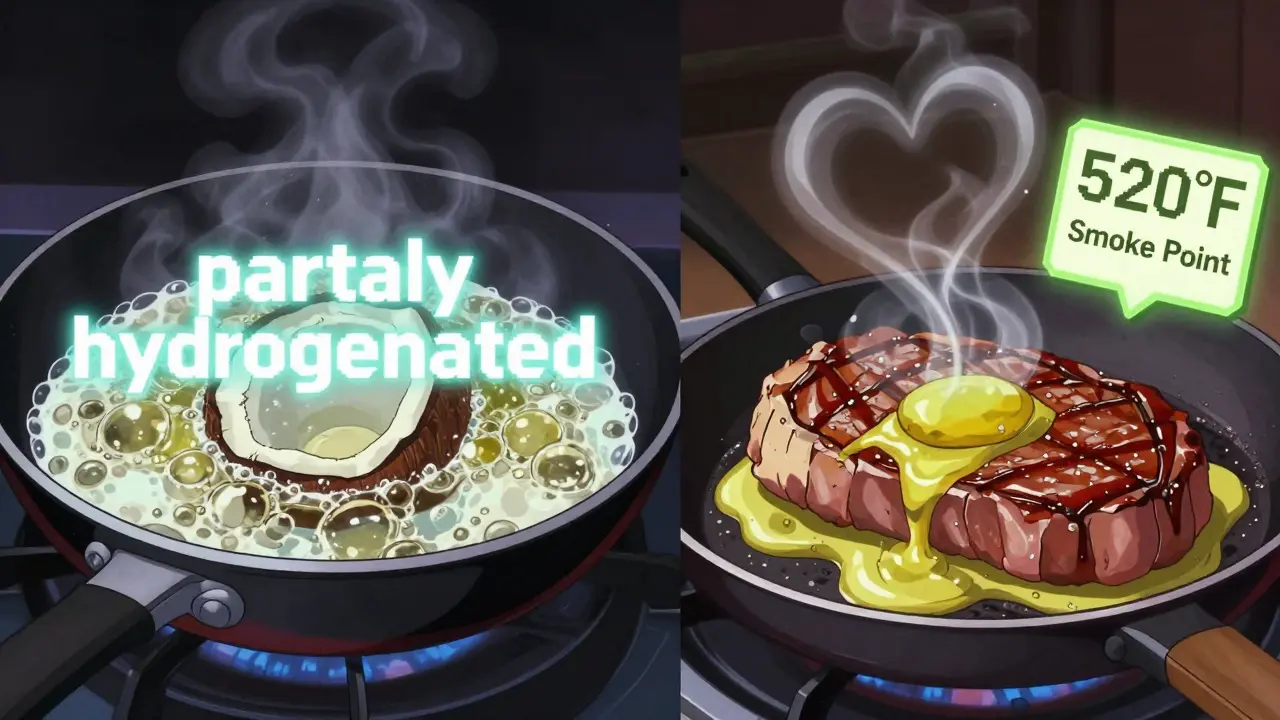
Avocado oil is another standout. With 67% monounsaturated fat and a smoke point of 520°F, it’s perfect for searing, roasting, or even frying. And unlike many oils, it doesn’t break down easily under heat, which means fewer harmful compounds form when you cook with it.
Then there’s algae oil-a newer player that’s gaining serious traction. It contains 86% monounsaturated fat, more than olive oil, and a smoke point of 535°F. It’s neutral in flavor, so it won’t overpower your food. And it’s more sustainable: producing algae oil uses 90% less land than olive oil. It’s not cheap-around $25 for a 16.9 fl oz bottle-but if you cook often at high heat, it’s worth considering.
Which Oils Should You Avoid?
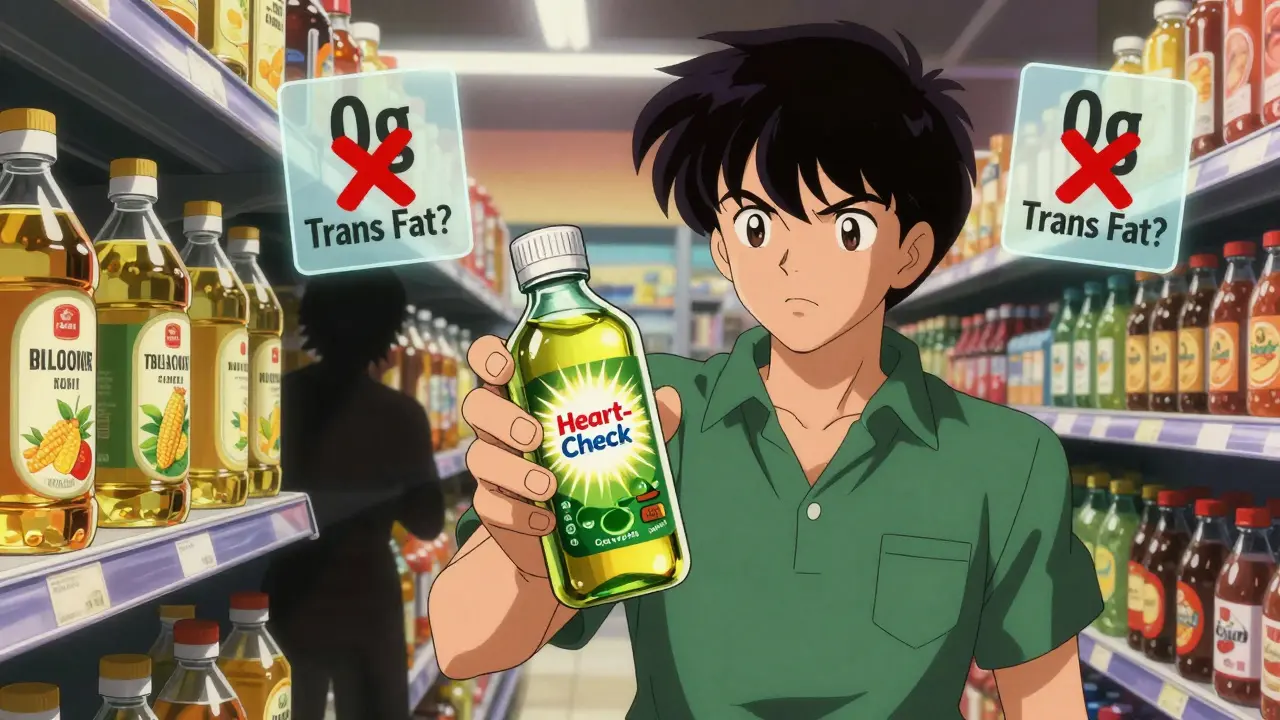
Trans fats are the worst. They’re the ones hidden in partially hydrogenated oils. Even if a label says "0g trans fat," it can still contain up to 0.5g per serving. Multiply that by a few meals a day, and you’re getting real damage. Trans fats raise LDL and lower HDL, which is a double hit to your arteries. The FDA banned them in processed foods in 2020, but they still sneak into some packaged snacks, fried foods, and margarines. Always check the ingredient list. If you see "partially hydrogenated," put it back.
Then there’s coconut oil. You’ve probably heard it’s "healthy." But here’s the reality: it’s 82% saturated fat-higher than butter. The American Heart Association says it’s not heart-healthy. Some blogs claim its medium-chain triglycerides (MCTs) help cholesterol, but clinical studies don’t back that up. Stick with oils that have clear, proven benefits.
And watch out for oils high in omega-6 fatty acids: corn, sunflower, safflower, and soybean oils. They’re everywhere-in salad dressings, chips, and baked goods. Omega-6s aren’t bad in small amounts, but when they dominate your diet (especially when omega-3s are low), they trigger inflammation. That’s a silent driver of heart disease. Aim for a ratio of omega-6 to omega-3 under 4:1. Most Americans get 15:1. That’s too high.
How to Read Labels Like a Pro
Labels lie. Or at least, they hide things. Here’s how to cut through the noise.
- Check the saturated fat first. Aim for less than 2g per serving. If a product has 3g or more per tablespoon, think twice.
- Look for "trans fat" on the nutrition panel. Even if it says "0g," scroll down to the ingredients. If you see "partially hydrogenated," skip it.
- Don’t trust "light" or "pure"-those are marketing terms. They don’t mean anything about health. Instead, look for "extra virgin," "cold-pressed," or "unrefined." These mean less processing, which preserves antioxidants and nutrients.
- Check the first ingredient. If it says "canola oil" or "soybean oil," that’s fine. But if it’s a blend and the first ingredient is palm oil or cottonseed oil, that’s a red flag.
- Watch for certifications. Look for the American Heart Association’s Heart-Check mark or Australia’s Tick Program. These products have been reviewed and meet strict criteria.
And here’s a quick trick: if the oil is sold in a clear bottle and sits on a shelf in bright light, it’s probably not fresh. Polyunsaturated oils like flaxseed or walnut oil go rancid fast. They should be in dark glass, stored in the fridge, and used within 60 days.
Matching Oil to Cooking Method
Using the wrong oil for the wrong job can ruin your food-and your health. Overheating oil breaks it down, creating free radicals and toxic compounds. Here’s a simple guide:
- Extra virgin olive oil (325-375°F): Best for drizzling, salad dressings, or low-heat sautéing. Don’t fry with it.
- Regular olive oil (390-465°F): Fine for stir-fries, roasting veggies, or baking. It’s more refined, so it handles heat better.
- Avocado oil (520°F): Your go-to for searing steak, frying chicken, or roasting at high temps. It’s stable, neutral, and heart-healthy.
- Algae oil (535°F): The top choice for deep frying or high-heat grilling. It’s expensive, but if you cook this way often, it’s the cleanest option.
- Canola oil (400-475°F): A budget-friendly option with decent monounsaturated fat and a good amount of omega-3s (2.2g per tablespoon). It’s fine for everyday cooking.
Don’t use the same oil for everything. Reserve your expensive extra virgin olive oil for finishing dishes. Save your avocado or algae oil for the pan.
Real-World Tips That Actually Work
- Buy in small quantities. Oils don’t last forever. If you don’t use a bottle in 3 months, it’s likely gone bad. Rancid oil tastes stale and can cause inflammation.
- Store oils properly. Keep them away from light and heat. A dark cabinet is better than above the stove. Refrigerate flaxseed, walnut, and hemp oils.
- Use less. You don’t need a puddle of oil to cook. A teaspoon of avocado oil can coat a pan just fine. Measure it instead of pouring.
- Swap butter for oil. In baking, replace butter with mashed avocado or unsweetened applesauce for some recipes. Or use olive oil in muffins and cakes-it adds moisture and heart-healthy fats.
- Read the fine print. "Made with olive oil" doesn’t mean it’s mostly olive oil. Check the ingredient list. If it says "soybean oil, olive oil," you’re getting mostly soybean oil.
Why This Matters More Than Ever
Heart disease is still the #1 killer worldwide. It took 17.9 million lives in 2022, according to the World Health Organization. But here’s the good news: diet is one of the most powerful tools we have to fight it. You don’t need to be perfect. Just make smarter swaps.
Switching from butter to olive oil on your toast. Choosing avocado oil instead of vegetable oil for roasting. Reading labels before buying that "healthy" granola bar. These small changes add up. And they’re backed by science-not hype.
The best part? You don’t have to give up flavor. Extra virgin olive oil has a peppery bite. Avocado oil lets your food taste like itself. Algae oil is clean and neutral. These oils don’t just protect your heart-they make meals better.
Is avocado oil better than olive oil for heart health?
Both are excellent choices. Avocado oil has slightly less saturated fat (12% vs. 14%) and a much higher smoke point (520°F vs. 375-410°F), making it better for high-heat cooking. Olive oil has more polyphenols-antioxidants that reduce inflammation-which makes it ideal for dressings and low-heat uses. For overall heart health, use both: olive oil for flavor, avocado oil for cooking.
Can I still use butter occasionally?
Yes, but keep it rare. Butter is 63% saturated fat, which raises LDL cholesterol. If you use it, limit it to small amounts-like a teaspoon on toast once in a while. Better yet, try a heart-healthy oil spread made from olive or avocado oil. They taste similar but have far less saturated fat.
Are all "extra virgin" olive oils healthy?
No. A 2021 study from the University of California Davis found that 60% of "extra virgin" olive oil sold in the U.S. doesn’t meet international purity standards. Some are mixed with cheaper oils or rancid. Look for brands with certifications like COOC (California Olive Oil Council) or DOP (Italy), and buy from dark glass bottles stored away from light.
What’s the best oil for baking?
Canola oil is a solid, affordable choice-it’s low in saturated fat and has a neutral taste. Avocado oil works well too, though it’s pricier. You can also use unsweetened applesauce or mashed banana for some recipes to cut oil entirely. For richer baked goods, try almond oil-it’s high in monounsaturated fat and adds a subtle nutty flavor.
Does cooking with oil add calories?
Yes, all oils have about 120 calories per tablespoon. But the type of fat matters more than the calories. A tablespoon of avocado oil gives you heart-protective monounsaturated fats. A tablespoon of butter gives you saturated fat and no real benefits. So choose wisely-and use less. You don’t need a full tablespoon to sauté vegetables.







Comments
kirti juneja
February 21, 2026OMG I just switched to avocado oil after reading this and my stir-fries have never tasted better 🥑🔥 Like, I used to think olive oil was the king, but nope-avocado oil is the whole damn throne now. And that algae oil? I’m convinced it’s the future. My kitchen smells like a spa and my cholesterol is throwing a parade. Also, I buy mine in dark glass and keep it in the fridge like it’s a baby. No exceptions.
Haley Gumm
February 23, 2026Okay but let’s be real-coconut oil is NOT the villain everyone makes it out to be. I get the saturated fat thing, but my grandma used it for everything and lived to 94. Also, the studies? Mostly funded by olive oil conglomerates. Just saying. Maybe moderation > demonization? 🤷♀️
Gabrielle Conroy
February 23, 2026I love this so much!! 🥹✨ Seriously, I used to buy "heart-healthy" oils that were just soybean oil with a fancy label. Now I read ingredients like a detective-no more "partially hydrogenated" sneaky stuff!! And storing oils in dark cabinets? GAME CHANGER. I even bought a little drawer organizer for them. My kitchen is now a little heart-health shrine. Also-YES to measuring oil with a spoon!! I used to pour like I was making a lake. Now I use a tsp. Life changed.
Spenser Bickett
February 23, 2026so you’re telling me i need to spend $25 on a bottle of algae oil just to fry my eggs? cool. i’ll stick with the $3 canola oil that’s been sitting on my counter since 2021. also, the aha says butter is bad? lol. butter is a food. algae oil is a marketing ploy. next they’ll tell me to chew on omega-3 gummy bears.
Christopher Wiedenhaupt
February 25, 2026While the information presented is largely accurate, I would caution against overgeneralizing the benefits of monounsaturated fats. The PREDIMED study did show positive outcomes, but it was also a Mediterranean diet intervention that included nuts, legumes, and high vegetable intake-not just oil swaps. Context matters. Also, the smoke point of avocado oil is often overstated; studies show degradation begins around 400°F under real-world conditions.
John Smith
February 26, 2026Heart disease is #1 killer? Yeah, and it’s because people listen to doctors who tell them to swap butter for canola oil. Real food is saturated fat. Real food is butter. Real food doesn’t come in a bottle labeled "heart-healthy." This whole thing is a cult. I eat lard. I’m fine. You’re not.
Natanya Green
February 27, 2026WAIT-so I’ve been using olive oil to sear steak this whole time?? 😭 I thought I was being healthy!! I just bought a whole new bottle of avocado oil and I’m crying. I’m also going to throw out my last 3 bottles of "light" canola oil. I feel betrayed. Like, emotionally. My kitchen is now a warzone of oil bottles. I need therapy. And maybe a new stove.
Steven Pam
February 28, 2026This post? Pure gold. 🌟 Seriously, I used to think all oils were basically the same-until I started reading labels. Now I’m the guy who checks the ingredient list before buying salad dressing. I’ve swapped butter for avocado oil in my pancakes. My wife says I’m obsessed. I say I’m finally awake. And yeah, algae oil is pricey-but if you cook like I do (daily, high heat, no regrets), it’s worth every penny. Small changes, big results. You got this.
Erin Pinheiro
March 2, 2026you think you're smart because you read a study? i've been using coconut oil for 15 years and my cholesterol is better than my brother's who uses "olive oil" from a plastic jug. also, the FDA banned trans fats? yeah right. they're still in every restaurant. and don't even get me started on how "extra virgin" is a lie. i buy mine from a guy at the farmers market who says it's "pure". he's got a tattoo of an olive tree. he's trustworthy.
Michael FItzpatrick
March 3, 2026Man, I love how this breaks it down. I used to think olive oil was the answer to everything. Then I tried avocado oil for roasting chicken and it was like, "ohhhhh, this is what crispy means." I also started storing mine in the cupboard away from the stove-big mistake before. And that algae oil? I tried it last week for deep frying. Tasted like nothing, which is perfect. My 80-year-old mom says I’m "too fancy" now. I told her she’s just jealous because I don’t use Crisco anymore.
Nandini Wagh
March 4, 2026lol i just read "coconut oil is 82% saturated fat" and i laughed so hard i spilled my coffee. i use it for my hair too. so maybe i’m just a walking coconut? anyway, i still use it. and i don’t care what the aha says. i like the taste. also, i cook with lard sometimes. it’s cheaper than algae oil. and i don’t have a heart. so i’m fine.
Kenzie Goode
March 5, 2026I didn’t even know I was poisoning myself until I read this. I used to pour half a cup of sunflower oil into my stir-fry. I thought I was being generous. Turns out I was being a villain. I’ve switched to avocado oil, bought dark glass bottles, and now I store my oils like they’re heirlooms. I even made a little chart for my fridge. My partner says I’m obsessed. I say I’m finally listening to my body. Thank you for this. I feel like I’ve been given a second chance.
Dominic Punch
March 7, 2026Let me cut through the noise: you’re not saving your heart with fancy oils-you’re saving it by eating less processed food. Oil is a band-aid. The real fix? Cut out the packaged snacks, the fried chicken, the "healthy" granola bars full of soybean oil. Use butter if you want. But stop buying the crap that comes in a box. The science isn’t about oil-it’s about what you’re avoiding. Stop overcomplicating. Eat real food. That’s it.
Lou Suito
March 7, 2026Extra virgin olive oil? Please. Most of it’s cut with sunflower. I tested 7 brands with a UV light. 6 were fake. And now you want me to spend $25 on algae oil? That’s not health. That’s capitalism. Also, omega-6s aren’t bad. They’re essential. You’re just scared of corn. Wake up.
Joseph Cantu
March 8, 2026They’re all lying. The FDA, the Heart Foundation, the scientists-they’re all in on it. Algae oil? It’s a GMO. It’s from labs. They want you to buy expensive oils so you’ll forget about the real problem: the government is poisoning us with seed oils to control our hormones. I use lard. I make my own. I grow my own pigs. You think I’m crazy? Wait till you see what’s in that "heart-healthy" margarine.
Write a comment