
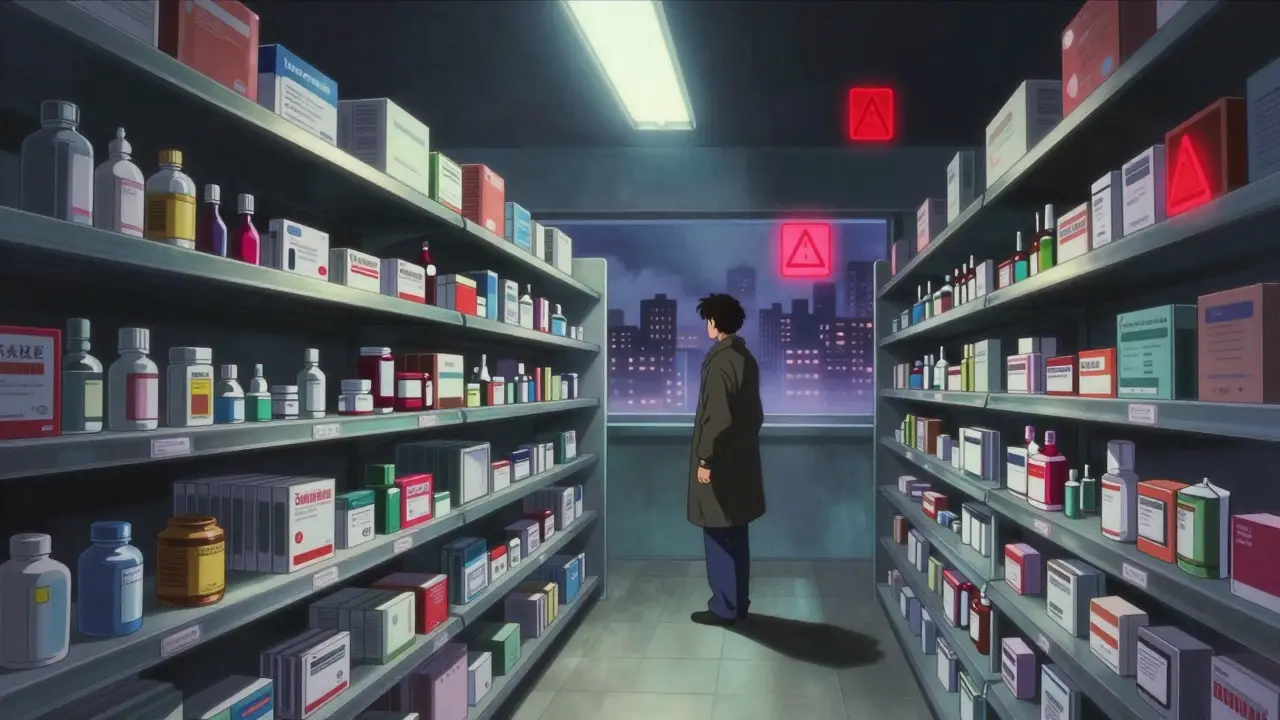
When the pandemic hit in early 2020, most people worried about masks, ventilators, and hospital beds. But behind the scenes, something just as dangerous was unfolding: drug shortages. Essential medicines vanished from pharmacy shelves. People with diabetes couldn’t find insulin. Hospitals ran out of sedatives needed to keep COVID patients alive. At the same time, the illegal drug market turned deadly as fentanyl flooded the streets. This wasn’t just a coincidence - it was a system failure, and its effects are still being felt today.
Drug Shortages Spiked in the First Months of the Pandemic
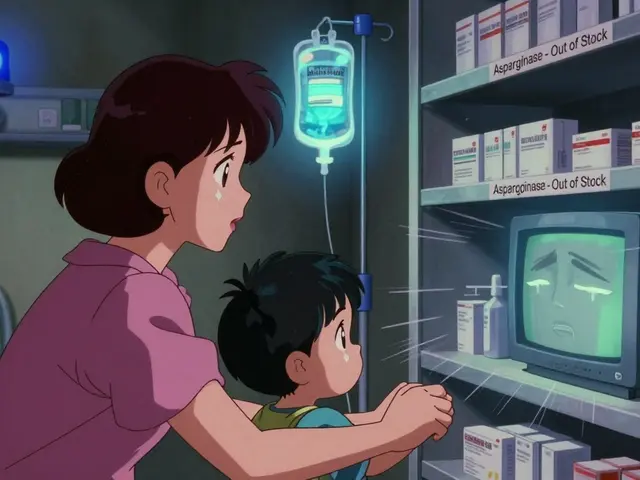
Between February and April 2020, the number of reported drug shortages in the U.S. jumped nearly fivefold. A major study in JAMA Network Open found that 34.2% of drugs with supply chain alerts became unavailable, compared to just 9.5% before the pandemic. That’s more than one in three medications affected. The worst-hit drugs were the ones you wouldn’t expect to run out of: antibiotics, anesthetics, blood pressure meds, and even common generics like hydroxychloroquine and azithromycin. These weren’t luxury drugs - they were lifelines.Why did this happen? The answer is simple: global supply chains broke. Over 80% of the active ingredients in U.S. medications come from China and India. When lockdowns hit those countries, factories shut down. Shipping containers piled up at ports. Truck drivers got sick. What followed wasn’t a glitch - it was a cascade. One delay led to another. Pharmacies ordered more, manufacturers couldn’t keep up, and hospitals rationed doses. Some patients had to switch to less effective alternatives. Others went without.
By May 2020, things started to stabilize. The FDA stepped in, pushing manufacturers to report shortages earlier and fast-tracking inspections. Communication improved. But the damage was done. Even after the spike faded, the system never fully recovered. Today, drug shortages are still 30% higher than pre-pandemic levels - not because of new disruptions, but because the old system was never fixed.
The Illicit Drug Market Turned Deadlier
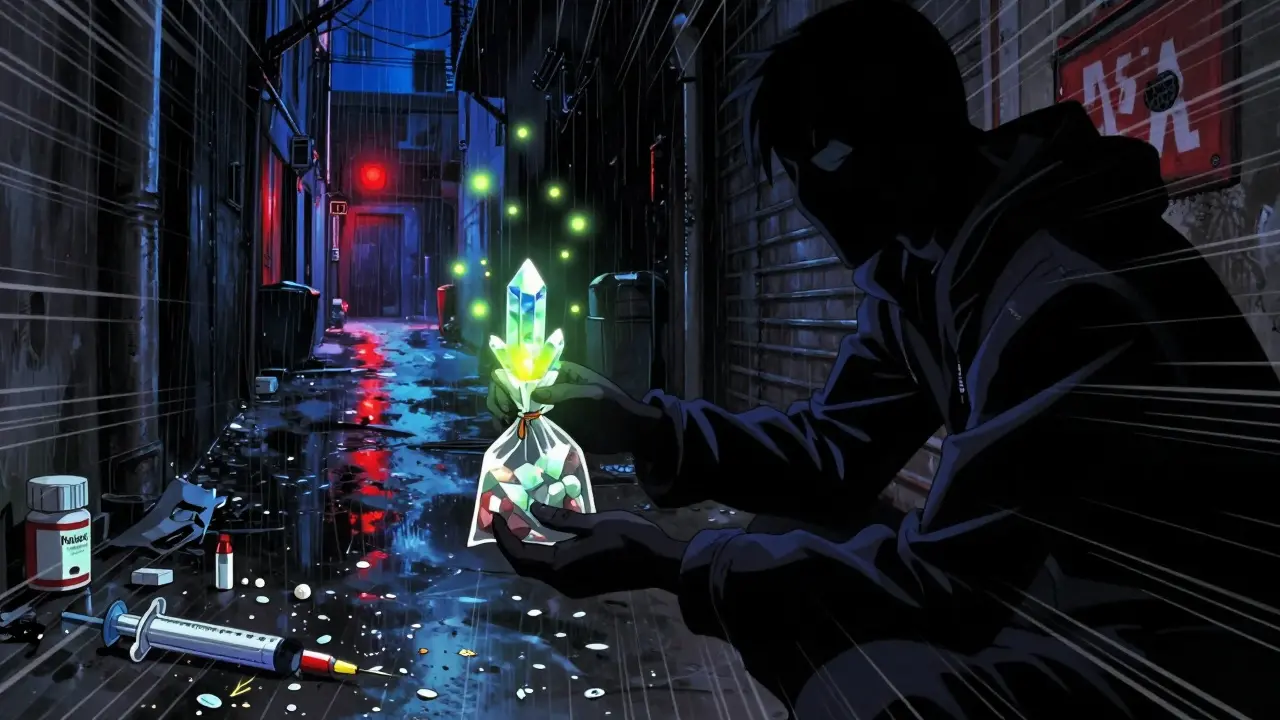
While hospitals struggled to get painkillers and antibiotics, street drug users faced a different crisis. With borders closed and supply routes cut, traffickers scrambled to keep selling. Their solution? Cut drugs with fentanyl. It’s cheap, potent, and easy to smuggle. What used to be a small amount of cocaine or heroin suddenly became a lethal cocktail.CDC data shows overdose deaths jumped from 77,007 in 2019 to 97,990 between May 2020 and April 2021. That’s a 27% increase in just one year. In states like West Virginia, Kentucky, and Vermont, overdose deaths climbed over 50%. These weren’t random spikes - they were direct results of supply chain chaos. A Reddit user from June 2020 summed it up: “The street supply got weird after lockdowns started. People were getting knocked out by doses that used to be normal. Turned out to be fentanyl-laced.”
And it wasn’t just about potency. The pandemic made it harder to get help. Harm reduction programs - needle exchanges, supervised injection sites, peer support groups - were shut down or scaled back. One program in Philadelphia saw a 40% drop in services. People who used drugs were afraid to go to hospitals. Stigma, fear of arrest, and lack of transportation kept them isolated. Without access to naloxone or clean supplies, overdoses became more frequent and deadlier.
Telehealth Helped Some - But Left Others Behind
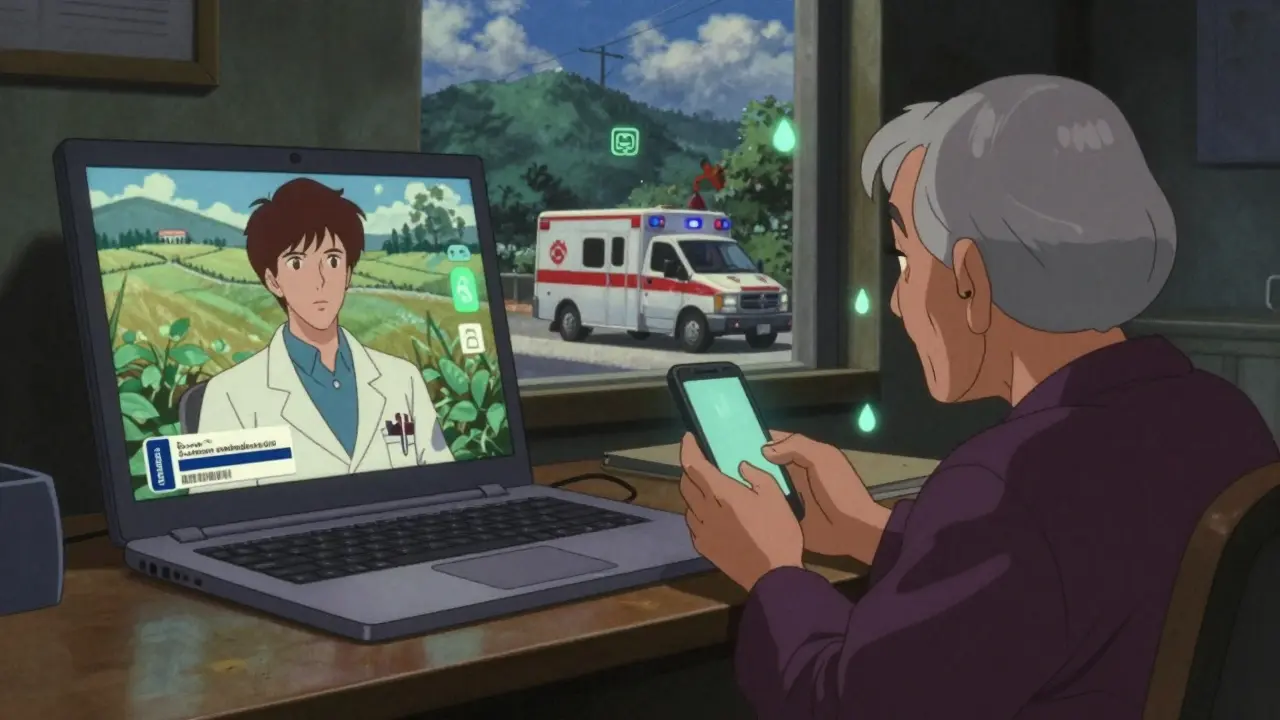
One of the few bright spots was the sudden rise of telehealth for addiction treatment. Before the pandemic, only 1% of opioid use disorder prescriptions were given over video. By April 2020, that number jumped to 95%. The government allowed doctors to prescribe buprenorphine remotely and let patients take home methadone for weeks instead of days. For many, this was a game-changer. Rural patients no longer had to drive hours. People with unstable housing could get treatment without leaving their homes.But not everyone benefited. Older adults struggled with Zoom calls. People without reliable internet or smartphones were left out. A study found that 67% of addiction treatment centers reported disruptions during the first wave. Many didn’t have the tech, the training, or the staff to switch to virtual care. For some, the loss of in-person support was worse than the drug shortage itself. Group therapy, peer check-ins, and face-to-face counseling weren’t just helpful - they were lifesaving. Losing them meant more relapses, more overdoses.
The Hidden Cost: Who Got Left Behind?
The pandemic didn’t create inequality - it exposed it. People with private insurance had better access to telehealth. Low-income communities, Black and Latino neighborhoods, and rural towns saw the worst outcomes. One reason? Drug supply chains were built to save money, not save lives. Manufacturers stopped making low-profit generics because they weren’t profitable. Distributors prioritized high-margin drugs. Pharmacies stocked what sold fast - not what was needed.Meanwhile, people who used drugs faced double punishment: criminalization and neglect. Many avoided testing or treatment because they feared being reported to police. Harm reduction workers reported that people stopped carrying naloxone because they didn’t trust emergency responders. The system was designed to ignore them - and the pandemic made it worse.
What’s Changed Since 2020?
The good news? Some fixes stuck. The FDA now requires manufacturers to report shortages earlier. The 2023 National Defense Authorization Act included new rules for supply chain transparency. Some states now allow pharmacists to dispense emergency supplies of critical drugs without a new prescription. Naloxone distribution increased by 30% in cities like Boston.The bad news? The root problems remain. The U.S. still depends on foreign factories for most of its medicine. There’s no national plan to build domestic production. Telehealth rules are being rolled back. Medicaid and Medicare are tightening restrictions on take-home methadone. And overdose deaths? They keep rising. In 2022, over 107,000 people died from drug overdoses - the highest number ever recorded.
The pandemic didn’t cause the drug crisis. It just made it visible. What we learned is that when supply chains are built for profit, not people, they break under pressure. And when healthcare systems ignore the most vulnerable, the cost isn’t just measured in dollars - it’s measured in lives.


Comments
Jonathan Noe
February 15, 2026This post nails it. I work in pharma logistics, and what happened wasn't a glitch-it was a system built on thin ice. We knew China and India were the backbone, but no one wanted to admit how fragile it was. When the ports shut, we saw entire batches of metformin vanish overnight. Hospitals started calling us asking if we could 'just get them something, anything.' It wasn't about profit. It was about survival. And now? We're still playing whack-a-mole with shortages. The FDA's new rules are a band-aid. We need domestic manufacturing. Not just for pandemics. For every damn day.
Rachidi Toupé GAGNON
February 15, 2026Fentanyl on the streets? 😔 That's not a drug problem. That's a betrayal. People were already hanging by a thread, and then the supply chain just... snapped. I'm not mad. I'm heartbroken. We need to treat addiction like healthcare. Not crime. Not a moral failure. Just... care. 💔
Jim Johnson
February 15, 2026Y'all gotta remember-telehealth saved lives, no cap. My cousin in rural Kentucky was on methadone for 5 years. Before the pandemic? She drove 90 mins every day. After? She got her dose mailed. No more missed days. No more shame. Yeah, not everyone had Wi-Fi, but for those who did? It was a game-changer. Stop acting like it's all bad. Some of us got a lifeline. And we ain't lettin' go.
Vamsi Krishna
February 17, 2026Honestly, this whole situation is a textbook case of capitalism failing the vulnerable. The U.S. outsources 80% of its medicine because it's cheaper, then wonders why people die? That's not negligence. That's intentional. And now they're rolling back telehealth? Are you kidding me? This isn't about policy. It's about who gets to live and who gets to be forgotten. The system was never meant to save you. It was meant to profit from your desperation.
Sophia Nelson
February 18, 2026So... you're telling me the real crisis was that people couldn't get their blood pressure meds? I mean, I get it, but let's not pretend this is worse than losing a job or a loved one. People are dramatic.
Skilken Awe
February 19, 2026Oh wow, another 'systemic failure' narrative. Let me guess-you also think the moon landing was faked? You think we're supposed to believe that 80% of our meds come from China? That's not supply chain-it's geopolitical warfare. And you're blaming pharma? Bro. The real villain is the government that let this happen. And now you want to 'fix' it with more bureaucracy? Brilliant.
steve sunio
February 20, 2026This whole thing is just woke propaganda. Fentanyl? Nah. It's just that people got lazy and stopped taking care of themselves. Telehealth? Who needs that? Back in my day, we walked 5 miles to get medicine. And we liked it. Now everyone wants a Zoom call and a hug. Pathetic.
Neha Motiwala
February 22, 2026I knew this was coming. I told my sister in 2019: 'The drugs are going to be poisoned. The government is going to let people die. They don't care. They're all connected. Big Pharma. The FDA. The WHO. It's all one big machine. They want us weak. They want us scared. And now look-overdoses up 27%! It's not coincidence. It's a PLAN.'
athmaja biju
February 22, 2026India produces 40% of the world's generic medicines. We are not responsible for American policy failures. You outsource your supply chain, then cry when it breaks? This is why the West always fails. You think you can outsource everything and still win. You cannot. We made the medicine. You made the mess.
Robert Petersen
February 23, 2026I just want to say-thank you for writing this. It’s not easy to face how broken things are. But we can’t fix what we refuse to see. I’ve worked with people who lost their meds during the pandemic. Some of them didn’t make it. Others did, because someone showed up. Not with a policy paper. Just with a coffee, a listening ear, and a naloxone kit. That’s what matters. We need more of that. Not more bureaucracy. More humanity.
Craig Staszak
February 25, 2026The real tragedy isn't the shortage. It's that we still treat addiction like a crime. We had a chance to change that. We blew it. Telehealth worked. Naloxone worked. Harm reduction worked. But instead of scaling what helped-we rolled it back. Why? Because it's easier to ignore than to fix. We're not just failing people. We're failing ourselves.
Write a comment