
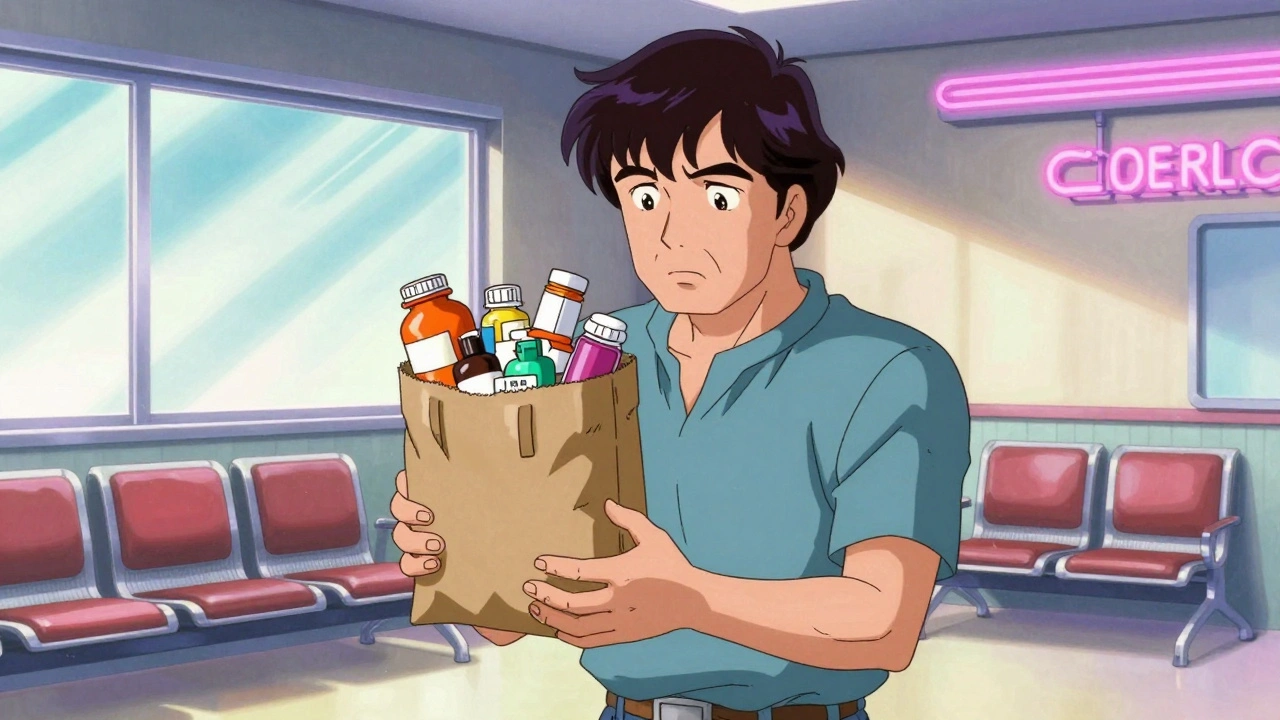
Bringing your pill bottles to a doctor’s appointment isn’t just a good idea-it’s one of the most effective ways to prevent dangerous medication errors. Every year, tens of thousands of people are hospitalized because of mistakes in their medication lists. Many of these errors happen because patients forget what they’re taking, mix up doses, or stop taking pills without telling their doctor. The solution? Bring the actual bottles.
Why Pill Bottles Matter More Than Your Memory
Your memory is not reliable when it comes to medications. Studies show that 60-70% of patients get at least one thing wrong when listing their meds by memory. You might think you’re taking two pills a day, but you’ve been skipping them on weekends. You might say you’re not taking aspirin anymore, but you still have the bottle in your drawer. You might forget that your cousin gave you a bottle of turmeric capsules last month because your knee was sore. The Joint Commission, a leading healthcare safety organization, made medication reconciliation a national patient safety goal back in 2006. Since then, research has consistently shown that when doctors physically check each pill bottle-labels, expiration dates, dosage instructions-they catch errors that electronic records and patient interviews miss. A 2024 study from the American Academy of Family Physicians found that using actual pill bottles reduces medication discrepancies by 67% compared to just asking patients what they take. That’s not a small number. It means fewer bad reactions, fewer hospital trips, and more confidence that your treatment plan is safe.What Exactly Should You Bring?
It’s not just prescription pills. You need to bring everything you take, even if you think it doesn’t matter.- All prescription medications in their original containers
- All over-the-counter drugs (pain relievers, antacids, sleep aids, allergy pills)
- Vitamins and supplements (iron, calcium, fish oil, melatonin)
- Herbal remedies and teas (ginkgo, echinacea, St. John’s wort)
- Any pills you’ve stopped taking-even empty bottles
The Brown Bag Method: The Simplest Way to Get It Right
The easiest way to prepare is called the “brown bag review.” Two days before your appointment, grab a clean brown paper bag (or any reusable bag). Go through every drawer, cabinet, and bathroom counter where you keep meds. Take out every bottle, box, or packet-even the ones you haven’t touched in months. Don’t sort them. Don’t throw anything away. Just put it all in the bag. On the day of your appointment, bring that bag. Don’t try to organize it. Don’t label it. Just hand it to your doctor or nurse. They’ll go through it with you, one item at a time. Practices that use this method report a 38% reduction in time spent on medication review. Why? Because they don’t have to ask you 20 questions. They just look at the labels.What If You Use Pill Organizers?
If you use a weekly or monthly pill organizer, bring it-but also bring the original bottles. Your organizer might have 14 pills in one compartment. But which ones are those? Is it the 5 mg or the 10 mg? Is it the brand name or generic? When did the pharmacist fill it? Was it last week or three months ago? A 2023 study showed that 77% of older adults use pill organizers. But only 23% keep their original bottles. That’s a dangerous gap. Your organizer is a tool for convenience. The bottle is the official record. At your appointment, lay out your organizer and the bottles side by side. Your doctor will compare them. If the pills don’t match, they’ll ask why. Maybe you switched brands. Maybe you ran out and took a different dose. Maybe you started taking something new. That’s the whole point.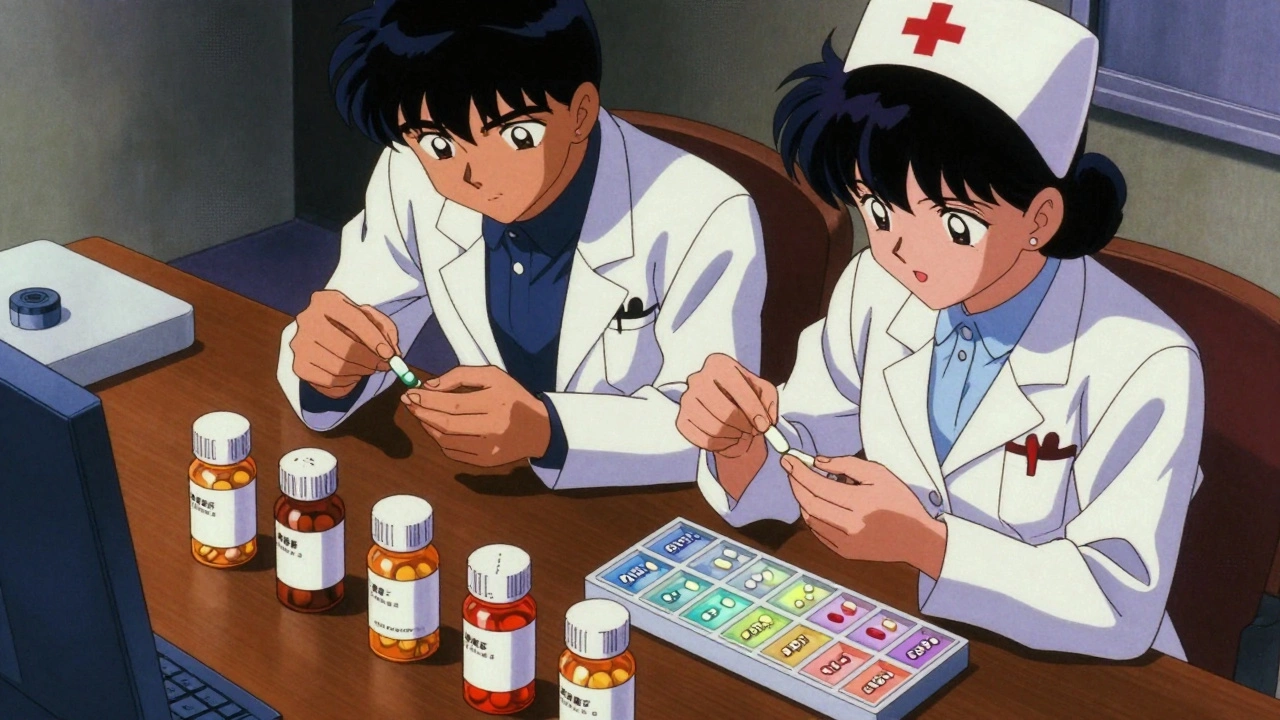
What About Discontinued or Expired Meds?
Don’t throw away empty bottles. Keep them. A 2023 study found that 63% of patients throw away empty prescription bottles. That means if you stopped taking a medication last month, your doctor has no way of knowing you ever took it. That can lead to dangerous mistakes. If you’ve already thrown them away, take a photo of each label before you toss it. Many pharmacies now let you download your full medication history from their app. Save that PDF. Bring it with you. Even if a pill is expired, bring it. Expired meds can still tell your doctor what you were prescribed. A bottle of expired metoprolol tells them you have high blood pressure. A bottle of expired gabapentin tells them you’ve had nerve pain. That history matters.What If You’re Too Overwhelmed?
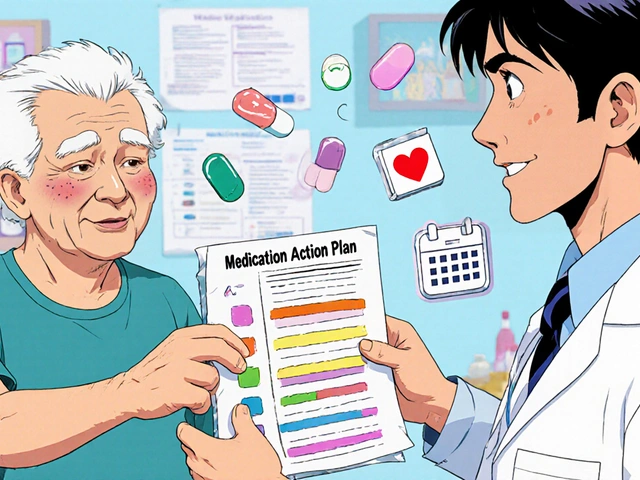
If you’re taking 10, 15, or 20 different medications, it’s easy to feel like you’re drowning. You’re not alone. Nearly half of adults over 65 take five or more medications. That’s called polypharmacy-and it’s one of the biggest safety risks in modern healthcare. You don’t have to do this alone. Ask your pharmacist for help. Most pharmacies now offer free medication reviews. They’ll sit with you, check your list, and tell you what’s safe to keep, what’s outdated, and what might interact badly. You can also use apps like Medisafe or MyTherapy. These apps let you scan pill labels and build a digital list synced with your pharmacy. Bring your phone to the appointment. Show the screen. But still bring the bottles. Apps can glitch. Labels don’t.Why Telehealth Won’t Replace the Bottle
You might think, “I can just hold my pill bottles up to the camera during a Zoom visit.” But that’s not enough. A 2024 study from the American Medical Association found that virtual medication reviews miss 22% of discrepancies that in-person visits catch. Why? Because your doctor can’t see if the pills are crushed, discolored, or stored in a damp bathroom. They can’t tell if you’ve been taking half a pill because you ran out. They can’t see if you’ve got a bottle of old antibiotics you’ve been saving “just in case.” The physical bottle has more than just a label. It has the pharmacy stamp, the lot number, the expiration date printed in ink-not a digital file. It’s the only version that meets FDA standards.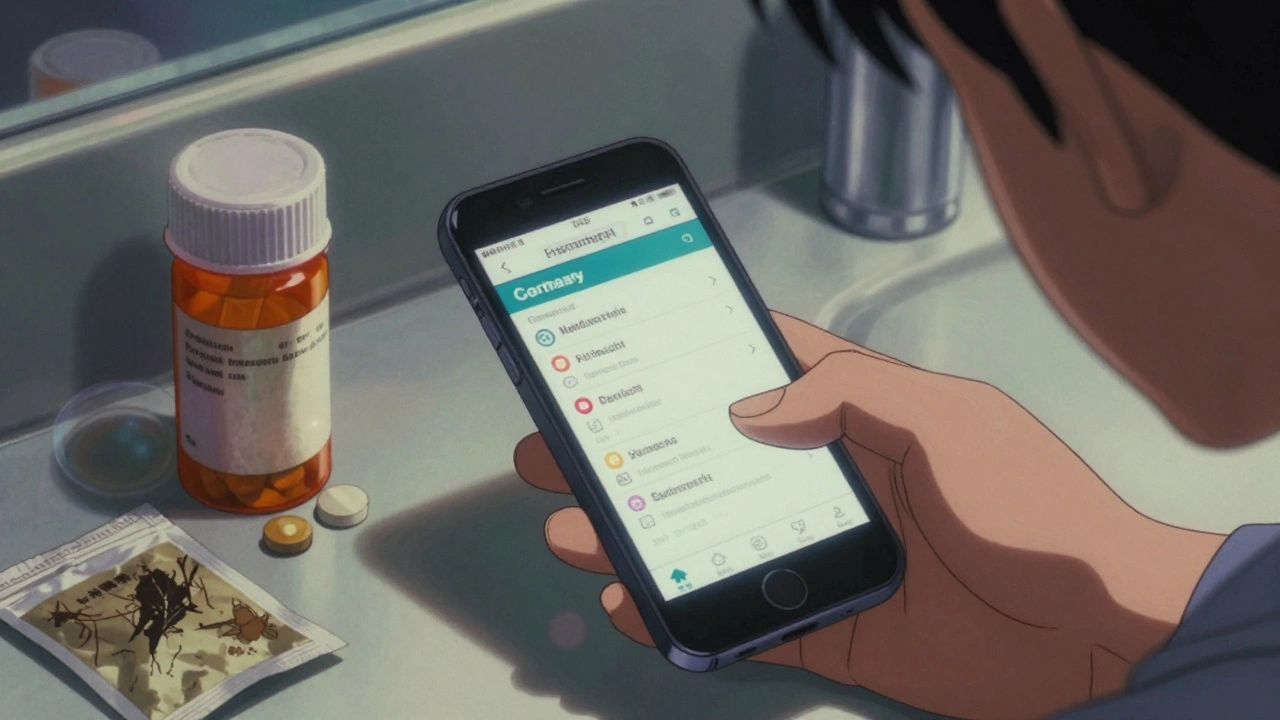
What Happens When You Do This Right?
When you bring your pill bottles, your doctor doesn’t just update a list. They change your care. One nurse in California reported catching three dangerous drug interactions in one month just because patients brought their bottles. One patient was taking two blood thinners at the same time. Another was mixing an antidepressant with an herbal supplement that caused severe dizziness. Both were on the verge of a fall or stroke. Doctors who use this method report a 32% drop in adverse drug events. That means fewer ER visits, fewer hospital stays, and more peace of mind.What to Do After the Appointment
After your visit, your doctor will give you a revised list. Make sure it matches what you brought. If they removed a pill, ask: “Why?” Was it because you stopped taking it? Or because they think it’s not needed? Make sure you understand. If they added a new one, ask: “What’s this for? When should I take it? What side effects should I watch for?” Then, update your pill organizer. Throw out the old bottles you no longer need. But keep photos of them. Store your new list in your phone, your wallet, or on your fridge.Final Tip: Make It a Habit
Don’t wait for your annual checkup. Make bringing pill bottles part of every visit-whether it’s for a cold, a rash, or a blood pressure check. Medication safety isn’t a one-time task. It’s a habit. The more you do it, the easier it gets. And the safer you stay.Do I need to bring every pill bottle, even if I haven’t used it in months?
Yes. Even if you haven’t taken a medication in months, the bottle tells your doctor what you were prescribed and why you stopped. That context helps them avoid repeating mistakes or prescribing something that could interact with what you’re still taking.
Can I just show a list from my pharmacy app instead of bringing bottles?
No. Pharmacy apps are helpful, but they don’t show what you’re actually taking at home. You might have skipped doses, switched brands, or added supplements not in your record. The physical bottle is the only source that includes all FDA-required details like lot numbers and expiration dates.
What if I don’t know what some of my pills are for?
That’s very common-19% of patients admit they don’t know what most of their pills are for. Bring the bottles anyway. Your doctor or pharmacist can look up the label and explain each one. Knowing why you take each pill helps you take it correctly and spot problems early.
Should I bring supplements and herbal products?
Absolutely. Many herbal products interact with prescription drugs. St. John’s wort can reduce the effectiveness of blood thinners. Calcium supplements can interfere with thyroid medication. Even if you think they’re “natural,” they’re still active substances that affect your body.
Is it okay to bring pills in a pill organizer?
Yes-but only if you also bring the original prescription bottles. Organizers are for convenience, not accuracy. Labels on bottles include the pharmacy name, dosage, instructions, and expiration date. Organizers don’t. Your doctor needs both to verify what you’re really taking.
What if I’m embarrassed about having unused or expired meds?
You shouldn’t be. Doctors see this every day. Keeping old meds is normal. What matters is that you’re being honest and helping them keep you safe. In fact, many patients feel relief when they realize their doctor isn’t judging them-they’re just trying to prevent harm.
Can I take photos of my pill labels instead of bringing bottles?
Photos are better than nothing, but they’re not a substitute. Labels on bottles include tiny print, lot numbers, and pharmacy stamps that photos often miss. Also, if a pill looks discolored or broken, your doctor needs to see the actual bottle-not a picture.
How far in advance should I gather my meds?
Start 24 hours before your appointment. This gives you time to find everything without rushing. If you’re on a complex regimen, set a reminder to gather your meds the night before. Many clinics even call patients the day before to remind them.
Do I need to bring my vitamins and supplements?
Yes. Vitamins, minerals, and supplements can interact with prescription drugs. For example, vitamin K can interfere with blood thinners like warfarin. Magnesium can affect kidney function in people on certain diuretics. Your doctor needs to know everything you’re taking.
What if I forget to bring my pills to the appointment?
Call your doctor’s office right away. Many clinics can call your pharmacy for a fill history. But that’s not perfect-it won’t show what you’re actually taking at home, or what you’ve stopped. If you forget, try to bring the bottles to your next visit and ask for a follow-up review.




Comments
Walker Alvey
December 2, 2025Bring your pills? Wow. What a radical idea. Next they’ll tell us to brush our teeth before kissing. I’m sure the FDA has a 12-step program for this too. Just hand over the brown bag like a surrendering prisoner. The system wins again. 🙃
Adrian Barnes
December 3, 2025It is imperative to underscore the profound clinical significance of physical medication reconciliation. The absence of verifiable pharmaceutical containers constitutes a systemic vulnerability in patient safety protocols. Empirical data from peer-reviewed journals consistently corroborate the efficacy of this methodology. Failure to comply is not merely negligent-it is an ethical breach of the duty of care.
Jack Arscott
December 4, 2025Love this 🙌 I brought my bag last week and my doc actually paused and said ‘wow, you’re the first person who didn’t just hand me a list.’ We caught a dangerous interaction with my fish oil and blood thinner. So simple. So powerful. 🥹
Matt Dean
December 5, 2025Everyone needs to read this. I’m telling my whole family. My grandma forgot she was still taking that old blood pressure med for 3 years. She thought she was off it. She was dizzy all the time. She thought it was just aging. No. It was the pill. Bring the damn bottles. Save your life.
Jaswinder Singh
December 5, 2025Bro, you think this is hard? Try being 72 and taking 17 pills and your kid is overseas and you don’t even know what half of them are for. I bring the bottles. But I also cry in the car after because I’m so tired of being a pharmacy. This isn’t advice. This is survival.
Bee Floyd
December 6, 2025There’s something quietly revolutionary about handing over a brown bag full of forgotten pills and expired supplements. It’s not just about safety-it’s about dignity. The doctor sees your life in those bottles: the grief you medicated, the insomnia you fought, the hope you held onto with turmeric tea. No app can capture that. The bottle holds the story.
Jeremy Butler
December 6, 2025It is axiomatic that pharmacological accuracy is contingent upon verifiable physical artifacts. The reliance upon digital proxies or patient recollection constitutes a fallacy of epistemic authority. The pharmaceutical label, as mandated by the Federal Food, Drug, and Cosmetic Act, possesses immutable evidentiary value. Any deviation from this standard is a violation of clinical epistemology.
Courtney Co
December 8, 2025Wait, so you’re saying I have to go through ALL my drawers? And dig up that bottle from 2019? And what if I don’t want to? What if I’m ashamed? What if my mom used to hoard pills like this and I associate it with trauma? Are you just gonna ignore that? Why is everyone so obsessed with bottles? Why can’t we just trust each other? 😭
Shashank Vira
December 9, 2025How tragic. The modern human has been reduced to a walking pharmacy inventory. We have lost the art of trusting intuition, of living with ambiguity. We now bow before the plastic container, the expiration date, the FDA stamp-as if these are divine tablets. But what of the soul? What of the person behind the pills? We have mistaken documentation for healing.
Write a comment