

When the temperature climbs, most people think about staying cool, drinking water, and avoiding the sun. But for seniors taking certain medications, heat isn’t just uncomfortable-it can be deadly. Many common prescriptions silently weaken the body’s ability to handle heat, turning a hot summer day into a medical emergency. The risk isn’t theoretical. In 2022, the CDC reported that over 600 Americans died from heat-related causes, and nearly half were seniors on medications that interfere with temperature control. The problem is growing worse as heat waves become more frequent and intense. But the good news? Most of these deaths are preventable-if you know what to look for and how to act.
Which Medications Make Seniors More Vulnerable to Heat?
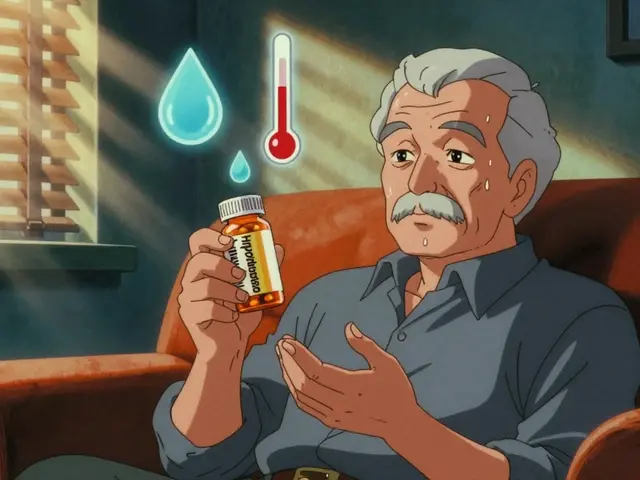
Not all medications are created equal when it comes to heat. Some are silent killers in high temperatures. Diuretics like hydrochlorothiazide and furosemide, often prescribed for high blood pressure or heart failure, make seniors pee more. That sounds helpful-until it isn’t. These drugs reduce thirst by 30-40%, according to a 2022 study in the Journal of the American Geriatrics Society. That means a senior might not feel thirsty even as their body is drying out. They’re dehydrating without realizing it.
Then there are ACE inhibitors and ARBs-drugs like benazepril and losartan. These are common for blood pressure, but they also dull the thirst signal by about 25%. Combine them with a diuretic, and the risk multiplies. The body loses fluids faster while the brain stops telling the person to drink more. The result? Blood volume drops by 10-15%, blood pressure plummets, and fainting or falls become likely.
Antipsychotics like quetiapine and clozapine, often used for dementia-related agitation, disrupt the brain’s thermostat. Research from the Mayo Clinic shows these drugs can raise core body temperature by 1.5-2.0°F on their own. That’s enough to push someone into heat stroke without ever stepping outside.
Anticholinergic meds-think Benadryl, Tylenol PM, or even some bladder control pills-shut down sweating. Sweating is the body’s main cooling system. When it’s reduced by 35-50%, heat builds up fast. One study found seniors on these drugs were three times more likely to suffer heat exhaustion than those not taking them.
And don’t forget sun-sensitive drugs. Certain antibiotics like doxycycline, antifungals like griseofulvin, and even some antidepressants make skin burn in half the time it normally would. The FDA reports these drugs can increase sunburn risk by 400-600%. A quick walk to the mailbox can turn into a painful, dangerous burn.
Why Seniors Are at Higher Risk
It’s not just the meds. Aging itself makes the body less able to handle heat. Sweat glands don’t work as well. Blood vessels don’t dilate as efficiently. The brain doesn’t register thirst as strongly. By age 70, the body’s ability to cool down drops by 40% compared to a 30-year-old.
And most seniors aren’t on just one of these risky drugs. The National Center for Health Statistics says 87% of adults 65 and older take two or more prescription medications. That means multiple mechanisms are working against them at once-less sweating, less thirst, less blood volume, higher core temperature. It’s a perfect storm.
Chronic conditions make it worse. Seniors with heart disease, kidney problems, or diabetes already have compromised systems. Heat stresses those systems further. A 2023 CDC report found that 43% of heart failure patients on fluid restrictions developed dangerous electrolyte imbalances during heat waves. Their doctors told them to limit fluids to protect their heart-then the heat made that advice deadly.
What to Do: A Practical Prevention Plan
Prevention isn’t complicated. It’s about consistency and awareness.
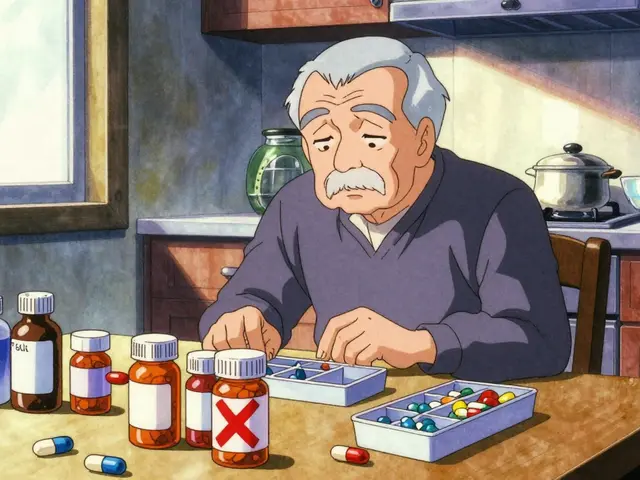
1. Review meds before summer. Every spring, sit down with the senior’s doctor or pharmacist. Ask: “Which of these medications increase heat risk?” Don’t assume the doctor knows. Many don’t. Bring a full list-including over-the-counter pills, supplements, and creams. The CDC’s 2023 clinical guidance says structured medication reviews reduce heat-related ER visits by 37% in seniors over 75.
2. Adjust fluid intake carefully. Drink 8-10 eight-ounce glasses of water daily during hot weather. But if they’re on fluid restrictions for heart or kidney disease, don’t increase water without checking with their doctor. Instead, ask if temporary adjustments are safe. For those on diuretics, choose electrolyte drinks with 120-150 mg of sodium per 8 ounces. Avoid caffeine and alcohol-they increase urine output by 40-60% and make dehydration worse.
3. Keep the home cool. Air conditioning isn’t a luxury-it’s a lifesaver. The CDC recommends keeping indoor temps below 78°F (25.6°C). If there’s no AC, use fans and open windows at night. Close blinds during the day. A cool room can drop perceived temperature by 5-7°F.
4. Dress smart. Wear loose, light-colored cotton clothing. Synthetic fabrics trap heat. Cotton lets skin breathe. A wide-brimmed hat and UV-blocking sunglasses help too.
5. Protect skin from the sun. Use broad-spectrum SPF 15+ sunscreen. Reapply every two hours-or after sweating. Even cloudy days can burn skin if they’re on sun-sensitive meds. Check the FDA’s list of photosensitizing drugs if you’re unsure.
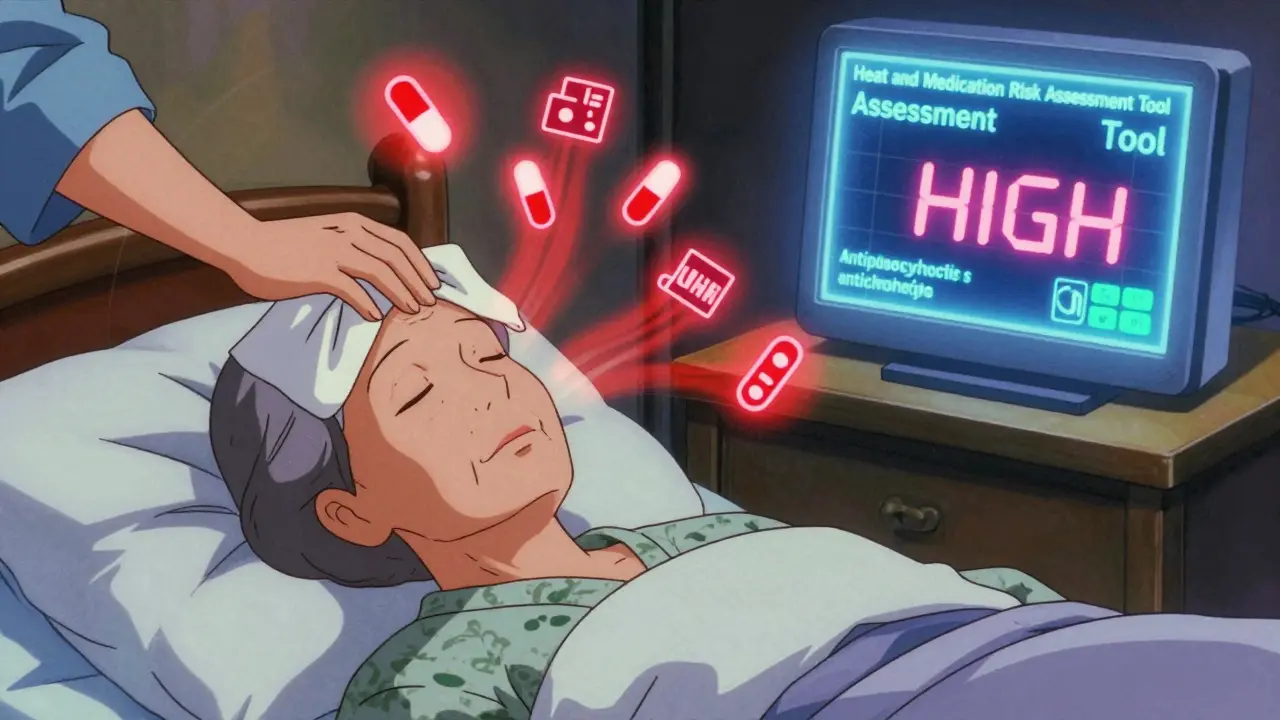
Watch for the Warning Signs
Heat exhaustion doesn’t always look like the movies. Seniors might not sweat, feel dizzy, or complain of headache. Instead, they might just seem confused, quieter than usual, or unsteady on their feet.
Early signs to watch for:
- Unusual tiredness or weakness
- Muscle cramps, especially in legs
- Nausea or vomiting
- Dizziness or fainting
- Confusion or trouble speaking
- Dark urine or very little urine
Heat stroke is an emergency. Signs include:
- Body temperature above 103°F (39.4°C)
- Hot, dry, or damp skin (no sweating)
- Rapid, strong pulse
- Loss of consciousness
If you see these, call 911 immediately. While waiting, move them to a cool place, loosen clothing, and apply cool cloths to the neck, armpits, and groin. Don’t wait to see if they “get better.” The CDC says 65% of heat exhaustion cases turn into heat stroke within 2-4 hours without treatment.
How Caregivers Can Help
If you’re caring for an older adult, make heat safety part of your daily routine. Check in twice a day during heat waves-morning and evening. Ask: “Are you feeling okay?” not “Are you hot?” Seniors often say they’re fine even when they’re not.
Use the “I’M OK” program model: daily temperature checks, hydration logs, and activity tracking. Senior living communities that used this system saw 33% fewer hospitalizations in 2022.
Plan outings around the weather. Go to the library, mall, or community center during peak heat hours (10 a.m. to 4 p.m.). Avoid errands on days with heat advisories. If they live alone, set up a daily check-in call or use a smart speaker with voice reminders to drink water.

New Tools Are Here to Help
In 2023, the CDC launched the Heat and Medication Risk Assessment Tool (HM-RAT). It’s free and online. You enter the senior’s medications and zip code, and it gives a personalized risk score based on local weather forecasts. The National Institute on Aging partnered with the EPA to create HeatRisk.gov, which combines medication risk with real-time heat index data. Over 1.2 million seniors used it during the 2023 summer.
There’s even new research on supplements. A Phase 2 trial at the NIA showed a special electrolyte-cooling blend improved thermoregulation by 28% in seniors on multiple meds. While it’s not available yet, it shows how seriously the medical community is taking this issue.
What Happens If You Do Nothing?
Climate change isn’t a future problem. By 2050, the CDC predicts extreme heat days will increase by 50%. That means more seniors will be exposed to dangerous conditions. Without action, heat-related medication problems will become one of the top five preventable causes of death in older adults.
But you don’t have to wait for policy changes or new drugs. The tools are already here: medication reviews, hydration plans, cool homes, sun protection, and early symptom recognition. These aren’t just suggestions-they’re proven lifesavers.
One call to a doctor. One conversation about meds. One check-in on a hot afternoon. That’s all it takes to keep someone safe. Heat doesn’t discriminate. But knowledge does.
Can seniors stop taking their meds during a heat wave?
No. Never stop or change medications without talking to a doctor. Stopping blood pressure meds or diuretics suddenly can cause dangerous spikes in blood pressure, fluid buildup, or heart rhythm problems. Instead, ask your doctor if the dose can be temporarily lowered or if timing can be adjusted-for example, taking a diuretic in the morning so the body has time to adjust before bedtime. Always get professional advice before making changes.
Do all seniors on diuretics need to drink more water?
Not necessarily. Seniors with heart failure or kidney disease often have strict fluid limits to avoid complications. Drinking more water could make their condition worse. The key is to talk to their doctor before changing anything. For those without fluid restrictions, aim for 8-10 glasses of water daily during heat. For those with restrictions, ask if a small increase is safe, and consider electrolyte drinks with sodium to replace lost minerals without overloading fluids.
Is it safe for seniors to use fans during heat waves?
Fans help only if the air is cooler than body temperature. When outdoor temps exceed 95°F, fans just blow hot air around and can make things worse by speeding up dehydration. In those cases, air conditioning is essential. If you don’t have AC, go to a cooling center, library, or mall. Fans are fine during mild heat, but never rely on them alone during extreme heat events.
What should I do if a senior seems confused but isn’t showing other heat symptoms?
Confusion is a major red flag. Research shows 78% of seniors experience early cognitive changes during heat stress-even before sweating or dizziness. Don’t wait for classic signs. Move them to a cool place, offer water if they can swallow safely, and call their doctor immediately. If confusion worsens or they become unresponsive, call 911. Heat stroke can progress fast, and brain damage can occur within minutes.
Are natural remedies like cooling patches or herbal teas safe for seniors on meds?
Some natural products can interact with medications. Herbal teas like hibiscus or dandelion can act as natural diuretics, which may worsen dehydration. Cooling patches may seem helpful, but they don’t lower core body temperature. Stick to proven methods: water, shade, AC, and medical advice. Always check with a pharmacist before trying new supplements or herbs, even if they’re labeled “natural.”



Comments
Greg Quinn
December 30, 2025It's wild how we treat heat like a minor inconvenience when it's basically a silent assassin for seniors on meds. I've seen my grandfather go from sharp as a tack to confused and shaky in under an hour during a heat wave-no sweating, no complaints, just... gone. The body doesn't scream before it shuts down. We need to stop waiting for the obvious signs.
Lisa Dore
January 1, 2026This is so important. My mom’s on three of these meds and I never realized how dangerous the combo was. I started printing out the CDC’s list and keeping it on the fridge next to her water bottle. Now she drinks a glass every time she walks past. Small change, huge difference. Thanks for making this so clear.
Sharleen Luciano
January 2, 2026Let’s be honest-this article reads like a public health pamphlet written by someone who’s never met a real senior. You list every possible risk factor like it’s a grocery list, but you don’t address the systemic failure: most elderly people live in homes without AC, can’t afford electrolyte drinks, and their doctors are too rushed to even read the medication list. This isn’t about hydration logs-it’s about poverty, neglect, and a healthcare system that treats aging like a bug to be fixed, not a human condition to be honored.
Jim Rice
January 2, 2026Wait-so you’re telling me we should just let seniors drink more water even if they have heart failure? That’s reckless. My uncle died from fluid overload because his ‘concerned’ daughter ignored his doctor’s orders. You can’t just ignore medical restrictions because it’s hot. This article is dangerously oversimplified.
Henriette Barrows
January 4, 2026Thank you for writing this. I’ve been terrified for my aunt since last summer. She doesn’t say much, but she’s been more tired, and I thought it was just aging. Now I know to look for confusion, not just sweating. I’m scheduling her med review this week. You’re right-it’s not complicated. It’s just easy to overlook.
Alex Ronald
January 6, 2026As a geriatric nurse, I’ve seen too many heat-related ER visits. The biggest mistake? Assuming the patient knows what’s happening. Many seniors don’t connect ‘feeling weird’ with heat. I tell families: if they’re acting off, assume it’s heat until proven otherwise. And always check their meds-especially OTC stuff. Tylenol PM is a silent killer in July.
Teresa Rodriguez leon
January 6, 2026My mother passed last August. They said it was ‘natural causes.’ I know better. She was on hydrochlorothiazide and Benadryl. No one warned us. I’m not crying for sympathy-I’m screaming so someone else doesn’t lose their person because no one told them the truth.
Manan Pandya
January 7, 2026This is an excellent and well-researched piece. The integration of clinical data with practical, actionable steps is commendable. Especially the emphasis on structured medication reviews and the HM-RAT tool. In India, where elderly populations are growing rapidly and AC access is limited, such resources could be transformative if localized appropriately.
David Chase
January 8, 2026AMERICA IS DROWNING IN MEDICAL BULLSHIT. 🤬 STOP TELLING SENIORS TO DRINK WATER LIKE THEY’RE AT A YOGA RETREAT. 🌡️ THEY’RE ON DRUGS THAT KILL THEM AND THE GOVERNMENT DOESN’T CARE. 🇺🇸 MY GRANDMA DIED BECAUSE HER DOCTOR WAS TOO BUSY TO READ THE LABELS. 🚨 THIS ISN’T ‘PREVENTABLE’-IT’S MURDER BY NEGLIGENCE. 🔥 #HEATMURDER #STOPTHEKILLING
Emma Duquemin
January 9, 2026OMG I JUST REALIZED MY 82-YEAR-OLD NEIGHBOR TAKES QUETIAPINE AND BENADRYL. 😱 I’VE BEEN ASKING HER TO WATER HER PLANTS AT NOON. SHE’S BEEN SWAYING LIKE A PALM TREE IN A STORM. I’M GOING OVER RIGHT NOW WITH A COOLER OF WATER AND A FAN. THIS ARTICLE JUST SAVED A LIFE. THANK YOU. 💙🫶
Kevin Lopez
January 9, 2026Thermoregulatory compromise. Polypharmacy synergy. Autonomic dysfunction. Dehydration-induced hypovolemia. These aren’t ‘risks’-they’re pharmacokinetic cascades. The solution? Not ‘drink more water.’ It’s a multidisciplinary clinical intervention. This article is dangerously reductive.
Joe Kwon
January 10, 2026Great breakdown. I’ve been using the HM-RAT tool with my dad’s meds and it flagged two drugs I didn’t even know were risky. Took it to his pharmacist-they adjusted timing and switched his nighttime antihistamine. No more midnight bathroom trips and he’s been way more alert. Small tweaks, big impact.
Fabian Riewe
January 11, 2026My dad’s 78, on a diuretic, and hates drinking water. So I started making him iced herbal tea (no caffeine) with a pinch of salt in the morning. He thinks it’s a treat. Turns out, it’s basically a DIY electrolyte drink. He’s been way better this summer. Sometimes the best fixes are the quiet ones.
Amy Cannon
January 12, 2026Oh my goodness, this is just so incredibly important, I mean, like, wow, I never thought about how the meds and the heat and the aging all just… stack up, you know? Like, it’s not just one thing, it’s this whole… cascade, and I think we need to talk about this more, like, in schools and stuff, because my grandma, she just… she didn’t know, and now she’s gone, and I just wish someone had told us.
Himanshu Singh
January 12, 2026good article! i have uncle in india he on blood pressure med and he say he feel dizzy in summer. i will share this with him. also, i think fan not good when temp above 95, my friend say fan blow hot air and make it worse. thanks for info!
Write a comment