
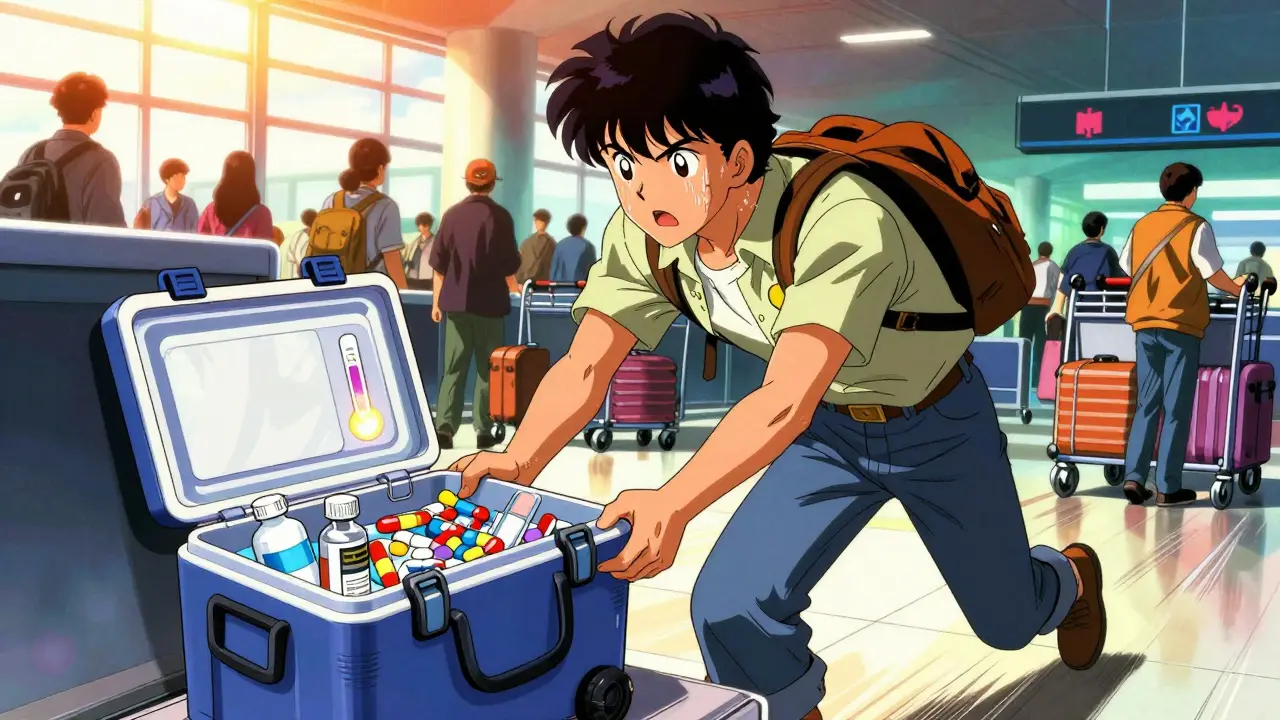
When you're traveling in a hot climate, your medications aren't just sitting in your bag-they're fighting for their life. Heat doesn't just make you sweaty; it can break down your pills, insulin, inhalers, and even birth control. And if they lose potency, you're not just inconvenienced-you're at risk.
Why Heat Destroys Medications
Most medications are designed to stay stable between 68°F and 77°F (20°C to 25°C). That’s not "room temperature" as most people think of it-especially in summer. In a car parked under the sun, temperatures can hit 140°F (60°C) in under 30 minutes. That’s hotter than an oven on broil.Insulin, EpiPens, and hormonal medications like birth control pills or patches start degrading above 86°F (30°C). A 2022 study from Cedars-Sinai found that after just 24 hours at 104°F (40°C), some hormones lost up to 32% of their effectiveness. That’s not a small drop. That’s the difference between protection and pregnancy. Between safety and emergency.
Even solid pills aren’t safe. Tablets and capsules can crack, stick together, or lose their chemical structure. Inhalers like albuterol can explode if left in a hot car. And once a medication degrades, you can’t tell by looking at it. No discoloration. No smell. Just silence-until your asthma attack hits or your blood sugar spikes.
What Medications Are Most at Risk?
Not all meds are equally sensitive, but these are the ones you can’t afford to gamble with:- Insulin: Loses potency fast above 86°F. Once degraded, it won’t lower blood sugar-no warning, no second chance.
- EpiPens: Epinephrine breaks down in heat. A failed EpiPen during anaphylaxis is life-threatening.
- Hormonal contraceptives: Birth control pills, patches, and rings can become ineffective. One nurse on Reddit reported a patient got pregnant after leaving her pills in a hot car for two days.
- Anti-seizure meds: Even a 10% drop in effectiveness can trigger seizures.
- Inhalers: Propellant pressure changes can make them stop working-or worse, spray too hard.
- Antibiotics and chemotherapy drugs: Heat alters their chemistry, reducing kill rates and increasing side effects.
And don’t forget supplements. Melatonin, thyroid meds, and even some vitamins can degrade. If it’s something you take daily, treat it like medicine.
What Not to Do
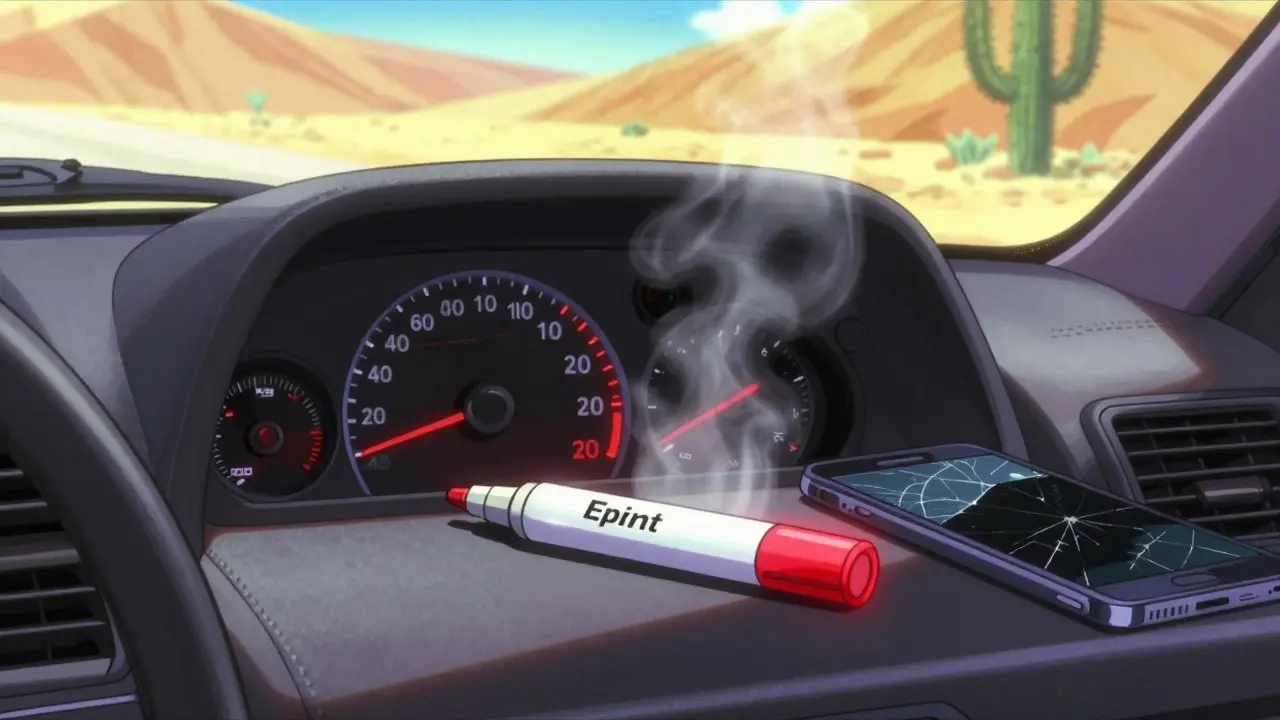
These are the most common-and dangerous-mistakes travelers make:- Leaving meds in the glove compartment: That’s the hottest spot in the car. Temperatures there can hit 140°F in minutes.
- Storing in the trunk: Even worse. Trunks trap heat and have no airflow.
- Putting meds in checked luggage: Airplane cargo holds can drop below freezing or spike above 120°F. Insulin freezes and shatters. Other meds cook.
- Leaving them on the beach towel or hotel windowsill: Sunlight + heat = chemical breakdown.
- Assuming "it’s only for a few hours": Degradation starts in minutes. You don’t need 24 hours to ruin a dose.
One traveler in Arizona left his EpiPen in the car while grabbing coffee. When he used it later during an allergic reaction, nothing happened. He ended up in the ER. His EpiPen had been exposed to 118°F for 45 minutes.
How to Pack Medications Right
Follow this simple system every time you travel:- Keep meds with you: Always in your carry-on. Never checked. TSA allows all medications through security-just keep them in original bottles with labels.
- Use an insulated cooler bag: Not a regular lunchbox. Use a medical-grade insulated bag like the MedActiv Travel Case ($34.99) or Frio Insulated Wallet ($24.99). These use phase-change materials to hold 59°F-77°F for up to 72 hours-even in 100°F heat.
- Use cold packs, but not directly on meds: Freeze two gel packs for 24 hours. Wrap them in a thin towel. Place them on the sides of the bag, not touching the pills or vials. Direct contact can freeze insulin or make pills brittle.
- Use a thermometer: The American Society of Health-System Pharmacists now recommends carrying a small digital thermometer. Check your bag’s internal temp every few hours. If it’s above 86°F, act fast.
- For refrigerated meds, use a smart cooler: The MyMediCarrier ($89.95) or TempSure Medication Cooler ($129.99) use Bluetooth to monitor and maintain exact temps. One user in Phoenix kept insulin at 42°F during a 102°F road trip-verified by the built-in sensor.
Pro tip: If you’re hiking or at the beach, put your cooler bag in the shade, cover it with a towel, and point a small portable fan at it. That can drop internal temps by 12-15°F.
Air Travel: The Hidden Danger
Flying isn’t safe just because you’re in the cabin. Checked bags go into cargo holds that can drop to 20°F or rise to 120°F. That’s why the American Journal of Health-System Pharmacy found refrigerated meds degrade 47% faster in standard coolers during long flights.Here’s what to do:
- Carry all meds in your personal item or carry-on.
- Use a pharmaceutical-grade cooler for insulin or other refrigerated drugs.
- Request a hand-check at security if your cooler looks bulky. TSA is trained to handle medical coolers.
- Don’t let your bag sit on the tarmac. Board early. Keep it with you.
By 2024, airlines like Delta and Emirates plan to install temperature-controlled compartments in cabins specifically for medications. But for now, you’re still the only one who can protect your meds.

What to Do If You Suspect Damage
You can’t always tell if a medication’s ruined. But here are signs:- Insulin looks cloudy or has clumps (it should be clear).
- Pills are cracked, sticky, or smell odd.
- An inhaler doesn’t spray properly or feels lighter.
- Birth control pills are discolored or stuck together.
If you see any of this, stop using it. Don’t guess. Call your pharmacist. The FDA says if a medication was exposed to extreme heat for more than 24 hours, you should consult a professional before taking another dose.
Some travel insurance plans now cover replacement costs for heat-damaged meds. Allianz Global Assistance reported a 37% increase in these claims from 2021 to 2022. Check your policy.
What’s Changing in 2026
The industry is catching up. Since late 2023, the FDA requires drug manufacturers to include temperature stability info on labels. Look for a small icon or text like: "Keep below 86°F."By 2024, new labels will include color-coded heat indicators-like a thermometer that turns red if exposed to dangerous temps. Pharmacies are also starting to hand out free insulated bags with prescriptions for high-risk meds.
And the global market for medical travel coolers is growing fast-projected to hit $2.3 billion by 2030. That’s because more people are traveling, and the planet is getting hotter.
Final Rule: Treat Your Meds Like a Baby
You wouldn’t leave a baby in a hot car. Don’t leave your meds there either. Every pill, every vial, every inhaler is a lifeline. Heat doesn’t care if you’re on vacation. It doesn’t care if you’re in a hurry. It just degrades.Take five minutes before you leave. Pack your meds right. Use the right bag. Carry a thermometer. Check the temp. It’s not extra. It’s essential.
Because when you’re far from home, your meds are the only thing standing between you and a medical crisis. Don’t let the sun steal them.
Can I leave my insulin in the car for an hour if it’s not sunny?
No. Even on cloudy days, car interiors can reach 100°F+ within 20 minutes. Insulin starts degrading above 86°F. One hour is enough to reduce its effectiveness. Always carry it with you in an insulated cooler.
Are regular coolers good enough for medications?
Not really. Standard coolers let temps swing wildly-up to 22°F above or below target. That’s enough to ruin insulin or hormones. Use a pharmaceutical-grade cooler designed for meds. They maintain steady temps within 2°F of your target, even in extreme heat.
What if I don’t have a cooler? Can I use a ziplock bag with ice?
It’s better than nothing, but risky. Ice can melt and soak your pills. Water can ruin tablets and capsules. If you must, wrap the ice in a towel first, then place it beside-not touching-the meds. Use it only for short trips under 4 hours. For anything longer, get a proper insulated bag.
Do I need to keep all my pills refrigerated?
No. Only medications labeled for refrigeration-like insulin, certain antibiotics, and hormones. Most tablets and capsules are fine at room temperature (68°F-77°F). But if you’re unsure, assume it needs cooling. Check the label or ask your pharmacist.
Can heat make my medication dangerous, not just ineffective?
Yes. Degraded medications can produce harmful byproducts. For example, degraded tetracycline antibiotics can cause kidney damage. Expired or overheated epinephrine may not work at all during an allergic reaction-leading to fatal outcomes. Heat doesn’t just reduce effectiveness-it can turn medicine into a risk.
What should I do if my medication gets too hot during travel?
Stop using it immediately. Call your pharmacist or doctor. The FDA recommends consulting a professional if a medication was exposed to extreme heat for more than 24 hours. Don’t guess-replace it if possible. Your health isn’t worth the risk.
Is it safe to carry medications in a purse or backpack in hot weather?
Only if you’re in a shaded, cool environment. A purse left on a hot beach chair or in direct sunlight can reach 110°F+. Always use an insulated bag-even if you’re just walking to the hotel. Heat exposure starts in minutes. Protect your meds like you’d protect your phone or wallet.



Comments
Barbara Mahone
January 21, 2026Just got back from a trip to Arizona and learned this the hard way. Left my insulin in the glovebox for a quick errand-didn’t even think twice. Ended up with a spike that landed me in urgent care. Now I carry a Frio wallet everywhere. No excuses. Heat doesn’t wait for you to be ready.
Also, the thermometer tip? Genius. I bought a $12 digital one from Amazon and clip it to the bag. Checks every 3 hours. Peace of mind is worth it.
Ashok Sakra
January 21, 2026OMG I DID THIS TOO!!! My cousin’s wife got pregnant because her birth control melted in the car!! She cried for 3 days!! I told her she should’ve known better but she said she was just buying snacks!! Like??? How dumb is that??
Andrew Rinaldi
January 22, 2026It’s wild how little we think about the chemistry behind our meds until something goes wrong. We treat pills like they’re just little candies, but they’re engineered molecules with very narrow stability windows.
The fact that degradation leaves no visible trace is the scariest part. No warning label. No smell. Just silence until your body fails. It’s a quiet crisis, and we’re all just lucky if we’ve never been on the wrong end of it.
Also, props to the author for mentioning the FDA’s new labeling standards. That’s real progress.
Gerard Jordan
January 23, 2026THIS. 👏🏽 I’ve been using the MyMediCarrier on all my trips since last summer. It’s pricey, but I’d rather pay $90 than end up in the hospital. Also, I put a little emoji sticker on it: 💊❄️-makes it easy to spot in the overhead bin. My flight attendant even asked about it and said they’re starting to see more people use these now. Small wins!
Pro tip: Freeze your gel packs the night before and wrap them in a thin sock. No leaks, no mess. Just chill meds. 🙌
lokesh prasanth
January 25, 2026Insulin degrades fast. So do pills. Trunk bad. Glovebox worse. Airplane cargo = death zone. Use cooler. Done.
Why is this even a post? It’s basic. If you’re dumb enough to leave meds in a car, you deserve what happens.
Malvina Tomja
January 26, 2026Let me just say-this is the most irresponsible thing I’ve seen in a long time. People treat their medications like they’re snacks. You wouldn’t leave your phone in the sun, but you’ll leave your life-saving drugs in a hot car? That’s not negligence, that’s arrogance.
And don’t get me started on people who think "a ziplock with ice" is fine. That’s not storage, that’s a science experiment gone wrong. You’re not a child. You’re an adult. Act like one.
Also, the fact that this post even needs to exist is a national embarrassment. We need mandatory meds safety training with prescriptions. Like, right now.
MARILYN ONEILL
January 28, 2026Wow. I’m so glad someone finally said this. I’ve been saying this for years. You think you’re being smart by just tossing your meds in your purse? You’re not. You’re just being lazy.
And no, your "regular cooler" isn’t good enough. That’s like saying your cardboard box is good enough to protect your laptop from a hurricane.
I use the TempSure. It’s expensive. But so is dying. So is getting pregnant because your birth control turned to mush. So is going blind from bad insulin.
Do the right thing. Or don’t. But don’t act surprised when your body betrays you.
Philip Williams
January 29, 2026Thank you for this comprehensive and clinically accurate guide. I’ve worked in pharmacy for 18 years and can confirm every point made here. The degradation rates cited are consistent with FDA stability data.
One addition: For those traveling internationally, always carry a copy of your prescription and a letter from your prescriber. Some countries have strict regulations on even common medications, and heat damage combined with legal issues can compound the crisis.
Also, if you’re using a smart cooler with Bluetooth, ensure your device is charged. I’ve seen too many cases where the sensor died mid-trip and the user assumed everything was fine.
This isn’t just advice-it’s a public health imperative.
Write a comment