

When you take a medication, you expect it to work - not too much, not too little. But for some drugs, the line between helping you and harming you is razor-thin. These are called narrow therapeutic index drugs, or NTI drugs. If your dose is just a little off - even 10% - you could end up with serious side effects, or the drug might not work at all. This isn’t about being careless. It’s about how these specific medicines behave in your body. Understanding NTI drugs can mean the difference between staying healthy and ending up in the hospital.
What Makes a Drug Have a Narrow Therapeutic Index?
Every drug has a sweet spot: the amount that treats your condition without causing harm. For most medications, there’s a wide buffer - you can miss a dose or take a little extra and nothing bad happens. NTI drugs don’t have that buffer. The difference between the lowest dose that works and the lowest dose that causes toxicity is tiny. Often, it’s less than double.
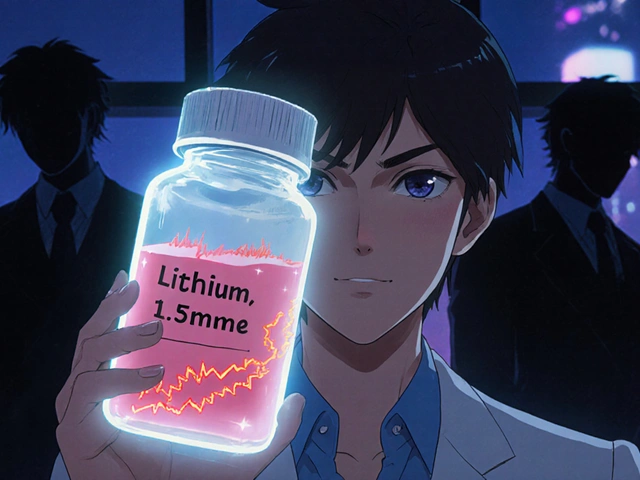
Think of it like driving a car with no gas gauge. You know you need fuel, but you can’t tell how much is left. If you add too little, you stall. Too much, and you flood the engine. NTI drugs work the same way. A blood level of 0.6 mmol/L of lithium might keep your mood stable. At 1.5 mmol/L, you start shaking, feeling confused, or even having seizures. That’s a 2.5-fold difference - and it’s not rare.
The FDA defines NTI drugs as those where small changes in dose or blood concentration can lead to life-threatening reactions or permanent disability. These aren’t theoretical risks. Real people have had strokes from too much warfarin, kidneys damaged by too much tacrolimus, and thyroid problems from switching levothyroxine brands.
Common NTI Drugs You Might Be Taking
You might not realize you’re on an NTI drug. Here are the most common ones:
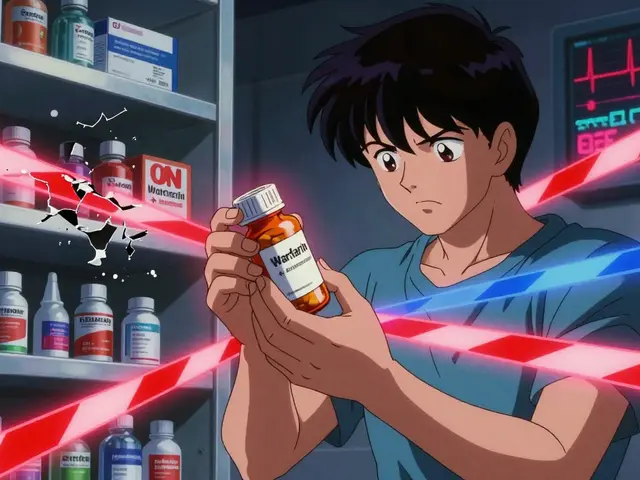
- Warfarin (Coumadin, Jantoven): Used to prevent blood clots. Your INR must stay between 2.0 and 3.0. Above 3.5, bleeding risk spikes.
- Lithium (Lithobid): For bipolar disorder. Therapeutic range: 0.6-1.2 mmol/L. Above 1.5, toxicity hits fast.
- Levothyroxine (Synthroid): For hypothyroidism. Even small changes in brand or formulation can throw your TSH off by 50% or more.
- Digoxin (Lanoxin): For heart failure and irregular heartbeat. Therapeutic level: 0.5-0.9 ng/mL. Above 2.0, you risk fatal heart rhythms.
- Tacrolimus (Prograf): For transplant patients. Too low? Organ rejection. Too high? Kidney failure.
- Phenytoin (Dilantin) and Carbamazepine (Tegretol): For seizures. Levels fluctuate easily with diet, other meds, or even sleep.
- Methotrexate (Trexall): For autoimmune diseases and some cancers. Even small overdoses can damage bone marrow.
These aren’t rare prescriptions. Millions of people take them. But most don’t know how fragile their balance is.
Why Generic Switches Can Be Dangerous
One of the biggest risks with NTI drugs is switching between brand-name and generic versions - or even between different generic brands.
For most drugs, generics are identical in effect. But for NTI drugs, tiny differences in how the pill is made - the fillers, the coating, the way it dissolves - can change how much of the drug enters your bloodstream. That’s why the FDA requires stricter testing for NTI generics. While regular generics must be 80-125% as effective as the brand, NTI generics must stay within 90-111%. That’s a much tighter window.
Still, it’s not foolproof. A patient on warfarin switched from brand Coumadin to a generic. Within a week, their INR jumped from 2.5 to 4.1. They bled internally and needed emergency treatment. Another person on levothyroxine switched generics and saw their TSH spike from 1.8 to 8.4 - causing fatigue, weight gain, and depression. These aren’t isolated cases. A 2021 study found hospitalizations for NTI drug complications were 2.3 times higher when patients switched between generic manufacturers.
Some states, like North Carolina, now require pharmacists to get your doctor’s approval before swapping NTI drugs. But in many places, you can still get switched without knowing.

Monitoring Is Not Optional - It’s Lifesaving
If you’re on an NTI drug, regular blood tests aren’t a suggestion. They’re your safety net.
- Warfarin users need INR checks every 1-4 weeks, especially when starting or changing doses.
- Lithium levels are checked every 3-6 months - or more often if your dose changes.
- Tacrolimus levels are tested twice a week right after a transplant, then gradually less often.
- Levothyroxine patients usually get TSH tested every 6-8 weeks after a dose change.
Skipping tests because you “feel fine” is dangerous. Toxicity doesn’t always come with obvious symptoms. By the time you feel dizzy, nauseous, or confused, it might already be too late.
Keep a log. Write down your dose, when you took it, any new symptoms, and your test results. Patients who track their meds and symptoms have 32% fewer adverse events than those who don’t. It’s not about being obsessive - it’s about being informed.
What You Can Do to Stay Safe
You’re not powerless. Here’s how to take control:
- Know your drug. Ask your doctor: “Is this an NTI drug?” If they’re unsure, ask for the name and look it up in DrugBank or the FDA’s guidance documents.
- Stick to one brand. If your prescription works, don’t let the pharmacy switch it without your consent. Say: “I’m on an NTI drug. I need the same version every time.”
- Never skip blood tests. Treat them like appointments you can’t miss. Set phone reminders.
- Watch for interactions. Grapefruit juice, certain antibiotics, and even high-fiber diets can change how NTI drugs work. Tell every doctor - including dentists - what you’re taking.
- Learn the warning signs. For warfarin: unusual bruising, nosebleeds, blood in urine or stool. For lithium: tremors, slurred speech, confusion. For digoxin: nausea, vision changes, irregular heartbeat. Call your doctor immediately if you notice these.
Also, avoid buying NTI drugs online from unverified pharmacies. Counterfeit or poorly made versions can be deadly. Stick to licensed U.S. pharmacies.

The Future: Better Tools, Fewer Risks
Things are improving. The FDA is working on a formal list of NTI drugs with clear criteria - expected by late 2024. They’re also requiring barcode scanning in hospitals for 12 high-risk NTI drugs to prevent dosing errors.
Genetic testing is changing the game. For warfarin, two genes (CYP2C9 and VKORC1) explain up to 60% of why people need different doses. By 2026, doctors may routinely test these genes before prescribing. That could cut adverse events by 35%.
Mobile apps cleared by the FDA now help patients track doses, symptoms, and lab results. Some even alert you if your INR or lithium level is trending out of range.
But technology doesn’t replace vigilance. The best tool you have is your own awareness.
Real Stories, Real Consequences
One patient on lithium had three hospitalizations in two years because her levels kept fluctuating. After starting regular blood tests and sticking to the same generic brand, she’s been stable for eight years. Another switched levothyroxine brands and gained 20 pounds in two months - not from eating more, but because her thyroid was underactive. Once she switched back, the weight came off.
These aren’t rare. In a survey of 1,200 NTI drug users, 63% needed a dose change within three months. Nearly one in three had a serious event - bleeding, toxicity, or organ rejection - because their levels were off.
But here’s the good news: with the right knowledge and habits, you can take these drugs safely for decades. You don’t have to live in fear. You just need to be smart, consistent, and vocal about your care.
Are all generic drugs dangerous for NTI medications?
No, not all generics are dangerous. But NTI drugs require stricter standards, and even small differences in manufacturing can matter. Some generics are just as safe as the brand - if you’ve been on them for months without issues. The risk comes from switching between different generic brands or from unverified sources. Always ask your pharmacist if the generic you’re getting is the same one you’ve used before.
Can I stop taking my NTI drug if I feel fine?
Never stop or change your dose without talking to your doctor. Even if you feel fine, your blood levels might be dropping below the therapeutic range. For example, stopping levothyroxine can cause your TSH to rise slowly over weeks - you won’t feel it until you’re exhausted, depressed, or gaining weight. NTI drugs work behind the scenes. Your symptoms don’t tell the whole story.
Why do I need blood tests so often?
Your body doesn’t process NTI drugs the same way every day. Diet, stress, other medications, even your sleep cycle can change how much of the drug enters your bloodstream. Blood tests are the only way to know if you’re in the safe zone. Waiting until you feel sick means you’re already at risk.
Is there a list of all NTI drugs?
The FDA doesn’t publish an official list, but experts agree on the most common ones based on clinical guidelines and monitoring requirements. The drugs listed in this article - warfarin, lithium, levothyroxine, digoxin, tacrolimus, phenytoin, carbamazepine, and methotrexate - are the most widely recognized NTI drugs. New ones are being added as research continues.
Can my pharmacist switch my NTI drug without telling me?
In many states, yes - unless you specifically ask them not to. Pharmacists are allowed to substitute generics unless the prescription says “Dispense as Written” or “Do Not Substitute.” If you’re on an NTI drug, always tell your pharmacist: “I need the same version every time.” If they say they can’t, ask your doctor to write “Dispense as Written” on the prescription.
What to Do Next
If you’re on an NTI drug, start today:
- Check your last blood test result. Do you know what it was?
- Look at your prescription bottle. Is it the same brand you’ve always taken?
- Set a reminder for your next lab appointment - don’t wait for the pharmacy to call.
- Write down one warning sign you should watch for - and tell a family member.
You don’t need to be a medical expert. You just need to be informed. NTI drugs are powerful - and they demand respect. With the right habits, you can take them safely, effectively, and without fear.




Comments
Elizabeth Choi
November 27, 2025Just had my INR jump from 2.8 to 4.3 last month after my pharmacy switched my warfarin brand. No warning. No call. I ended up in the ER with a subdural hematoma. Blood tests aren't optional-they're your only lifeline. Always ask for the brand. Always log your numbers. Don't trust the system to protect you.
Savakrit Singh
November 29, 2025Respected sir/madam, this is an exceptionally well-drafted exposition on NTI pharmacokinetics 🙏. In India, we face rampant substitution of generics without therapeutic equivalence validation. The FDA’s 90–111% bioequivalence window is still too permissive for drugs like tacrolimus 🚨. I recommend mandatory pharmacogenomic screening prior to prescription, especially for CYP3A4/5 polymorphisms. 📊💡
Jebari Lewis
November 30, 2025Okay, I need to say this: this post is one of the most important things I've read all year. I'm a transplant patient on tacrolimus, and I switched generics twice last year because my insurance forced it. I didn't know what I was doing. My creatinine spiked. I lost 15 pounds in a month. I didn't connect the dots until my nurse screamed at me in clinic. Don't wait for a crisis. Ask for your brand. Write down your levels. Set alarms. This isn't paranoia-it's survival. And if your pharmacist tries to swap it without asking? Tell them to call your doctor. Now.
Emma louise
December 1, 2025Wow. So now we're treating adults like toddlers who can't handle a generic pill? Next they'll make us wear wristbands that say 'I AM TOO STUPID TO SWITCH BRANDS.' 🤡
Leo Adi
December 3, 2025Back home in Kerala, my uncle was on lithium for 22 years. He switched generics once-no one told him it was risky. He got confused, stopped eating, ended up in a psych ward. We learned the hard way. Now he only gets his pills from the same pharmacy. Same brand. Same batch. He’s stable. Simple. No drama. Just respect the medicine.
Melania Rubio Moreno
December 4, 2025wait so like… if i switch from synthroid to a generic i might gain weight? and no one tells me?? that’s wild. i just thought i was eating too much carbs 😅
Gaurav Sharma
December 5, 2025Stop being naive. This isn’t about 'trust.' It’s about profit. Pharma companies profit from switching. Hospitals profit from ER visits. Doctors profit from labs. You’re a revenue stream. Get tested. Demand consistency. Or die quietly.
Shubham Semwal
December 6, 2025lol you think this is new? I've been on carbamazepine since 2010. Every time my script gets switched, I get a headache for a week and my seizures get worse. My neuro says 'it's fine' but I know better. I pay cash for the brand now. Screw insurance. My brain is worth more than $15.
Write a comment