

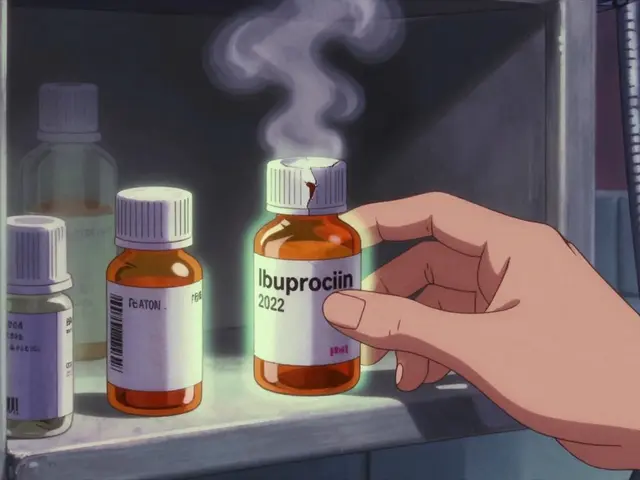
You open your medicine cabinet and find a bottle of ibuprofen from 2022. The label says it expired last month. Do you toss it? Take it anyway? Many people assume expired meds are dangerous-maybe even toxic. But the truth is more complicated than that. The expiration date on your pill bottle isn’t a death sentence for the drug. It’s a manufacturer’s guarantee-not a biological countdown.
What an Expiration Date Actually Means
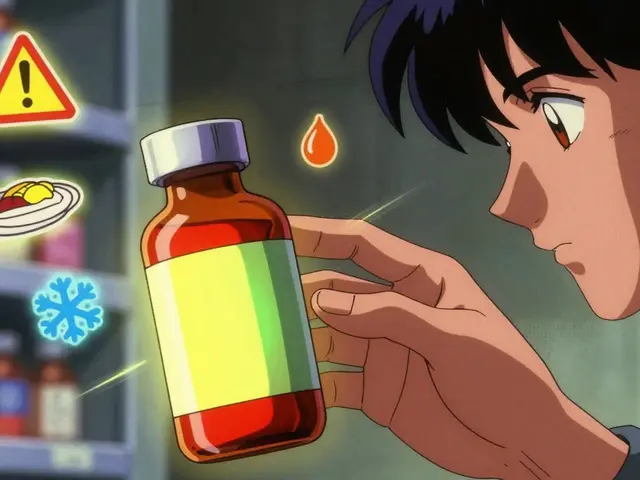
The expiration date on your medication is the last day the manufacturer guarantees the drug will work as intended, based on testing done under ideal storage conditions. That’s it. It doesn’t mean the drug suddenly turns poisonous or loses all effectiveness the moment the date passes. The U.S. Food and Drug Administration (FDA) has required expiration dates since 1979, not to scare people into throwing away pills, but to ensure that when you buy a medicine, you can trust its strength and safety. Manufacturers test their drugs under controlled conditions-usually 25°C (77°F) and 60% humidity-to see how long the active ingredient stays above 90% of its labeled potency. Once it drops below that threshold, they set the expiration date. Most drugs get dates between 12 and 60 months after production. But here’s the catch: those tests are done in labs, not your bathroom cabinet.Most Expired Drugs Are Still Safe-If Stored Right
A massive U.S. military study called the Shelf Life Extension Program (SLEP) tested over 3,000 lots of 122 different drugs, some more than 15 years past their printed expiration dates. The results? About 88% of them still worked. Ciprofloxacin? 97% potent 12 years later. Amoxicillin? Still 94% effective eight years past expiration. These weren’t lucky finds. These were rigorously tested samples kept in sealed, climate-controlled storage. That’s not an anomaly. Dr. Lee Cantrell, who led research for the California Poison Control System, found that 12 common prescription drugs retained 90% potency even 28 to 40 years after their expiration dates-when stored properly. So why do we still get warned against using expired meds? Because the FDA’s job is to protect people from risk, not to give out loopholes. They can’t guarantee safety for every scenario, so they err on the side of caution.When Expired Medications Can Be Dangerous
Not all drugs are created equal. Some degrade quickly-and dangerously. These are the ones you should never use past their expiration date:- Nitroglycerin (for chest pain): Loses half its potency in just 3 to 6 months after opening-even before the expiration date. Using expired nitroglycerin during a heart attack could be fatal.
- Insulin: Starts breaking down if stored above 8°C (46°F). Even a few weeks past expiration can mean your blood sugar isn’t controlled, leading to dangerous highs or lows.
- Liquid antibiotics (like amoxicillin suspension): Once mixed with water, they’re good for only 14 days. After that, bacteria can grow in the liquid, and the drug loses effectiveness. Taking it could turn a simple infection into a serious one.
- EpiPens: Epinephrine degrades by 15-20% per year after expiration. In anaphylaxis, that drop could mean not enough medicine reaches your system to save your life.
- Warfarin: This blood thinner becomes unpredictable when expired. One dose might be too weak, the next too strong-both can cause serious bleeding or clots.
Storage Matters More Than You Think
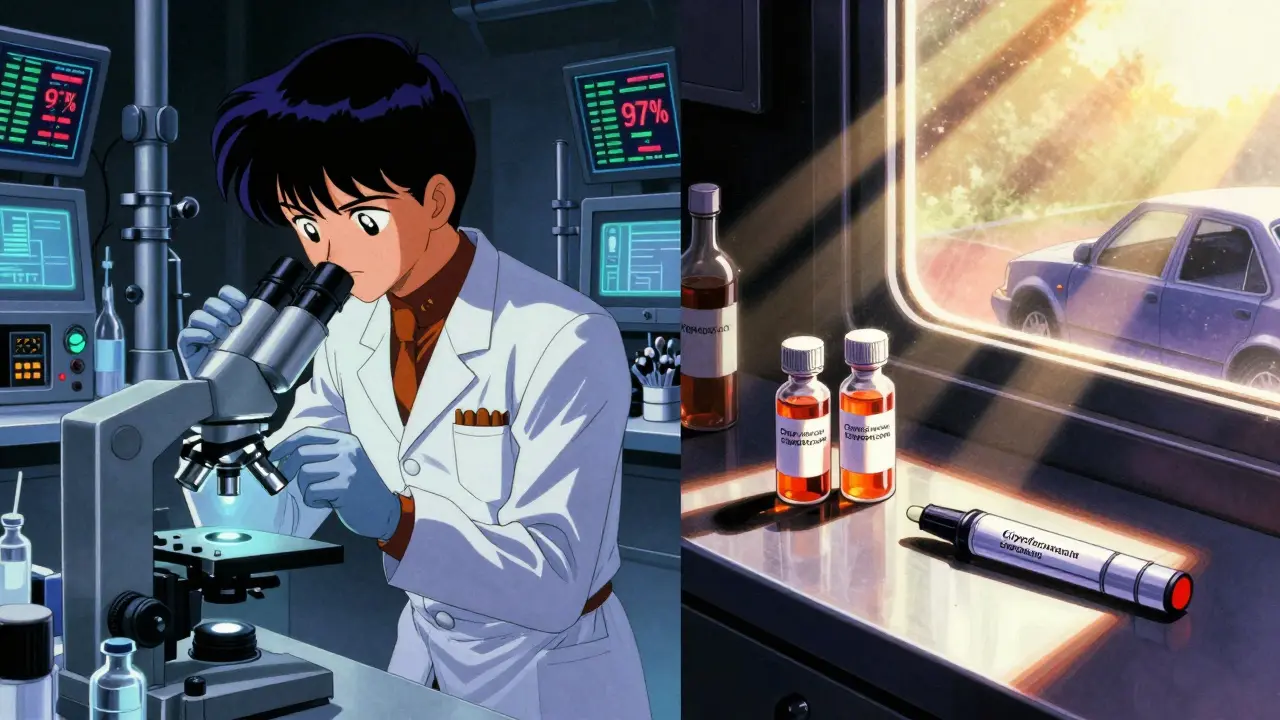
Your medicine’s real shelf life depends more on where you keep it than what’s printed on the label. The FDA says most drugs are stable for years-but only if stored correctly. Here’s what actually ruins them:- Bathrooms: Humidity levels hit 75-85% during showers. Moisture breaks down tablets and capsules. Don’t store pills there.
- Hot cars or windowsills: Heat speeds up degradation. A pill stored at 30°C (86°F) can lose potency 40-60% faster than one kept at 25°C (77°F).
- Light exposure: Some drugs, like tetracycline or certain antidepressants, break down under sunlight. Keep them in their original dark bottles.
- Loose containers: Taking pills out of their blister packs or bottles exposes them to air and moisture. Always keep them sealed.
What to Do With Expired or Unused Medications
You don’t need to flush most expired drugs. In fact, flushing is only recommended for a few high-risk ones like fentanyl patches or oxycodone tablets, listed on the FDA’s Flush List. For everything else, use a drug take-back program. In 2023, the DEA collected over 900,000 pounds of unused or expired medications through National Prescription Drug Take-Back Days. There are more than 5,800 permanent collection sites across the U.S.-often at local pharmacies or police stations. You can find one near you by visiting the DEA’s website or calling your pharmacy. Pharmacists also help manage expiration dates. Most community pharmacies apply their own beyond-use dates when dispensing medications. For example:- Oral tablets: Usually labeled good for 1 year after dispensing
- Eye drops: 30 days after opening
- Reconstituted antibiotics: 14 days max
Is It Ever Okay to Use an Expired Drug?
For non-critical, stable medications-like your daily blood pressure pill, statin, or antidepressant-the risk is low if stored properly and shows no signs of damage. Dr. Joel Davis, chief pharmacist at Johns Hopkins, says in some cases, like during a medication shortage, using an expired ACE inhibitor might be acceptable for short-term use. But here’s the rule: never use an expired drug for anything life-threatening. No antibiotics for an infection you can’t afford to treat. No EpiPen for an allergic reaction. No insulin for diabetes. Don’t risk it. If you’re unsure, ask your pharmacist. They can tell you if the drug is in the low-risk category and whether it’s likely still effective. Many pharmacies now use temperature-monitoring devices to track storage conditions-so they know if your meds were ever exposed to heat or moisture.The Bigger Picture: Waste and Innovation
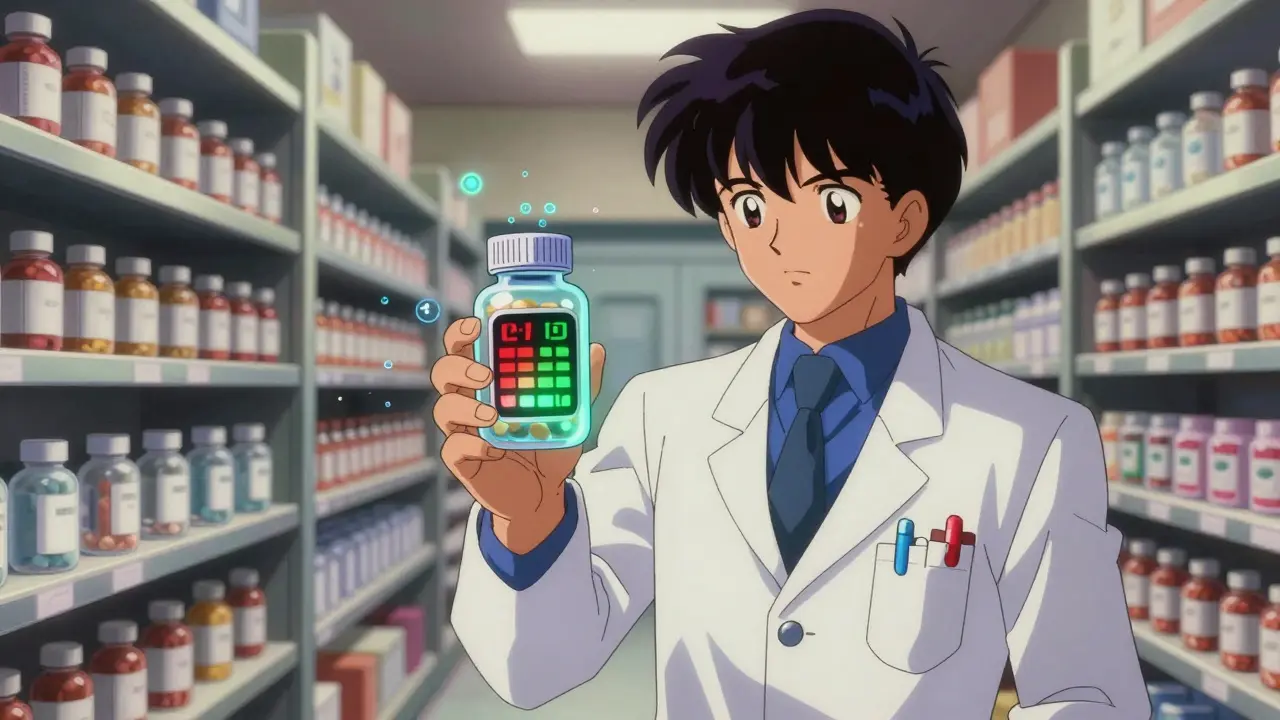
Every year, Americans throw away $765 billion worth of medication because of expiration dates. That’s 13-15% of total pharmaceutical spending. The military saves $1.2 billion annually by extending expiration dates on stockpiled drugs through testing. New tech is starting to change this. Smart packaging with time-temperature indicators (TTIs) is now used in 32% of biologic shipments. These labels change color if the drug was exposed to heat, giving you real-time info-not just a printed date. The FDA is testing Bluetooth-enabled sensors that update expiration dates based on actual storage history. Early results show a 22% drop in unnecessary discards for insulin. Researchers at the University of Utah are building AI models that predict remaining potency based on your home’s temperature and humidity. One trial got 89.7% accuracy. We’re moving toward a future where expiration dates aren’t fixed labels-but dynamic indicators tied to real-world conditions. Until then, use common sense: check the condition, know the drug, and when in doubt, ask a professional.Quick Safety Checklist
- Don’t use: Nitroglycerin, insulin, liquid antibiotics, EpiPens, warfarin past expiration.
- Probably okay: Pills like statins, blood pressure meds, antidepressants-if stored cool, dry, and unchanged.
- Always check: Color, smell, texture. If it looks or smells wrong, throw it out.
- Store properly: Cool, dry place-never the bathroom or car.
- Dispose safely: Use a take-back site. Don’t flush unless it’s on the FDA’s list.
- Ask your pharmacist: They know your meds and your storage habits.
Expiration dates are a safety net-not a guarantee of death. Most drugs don’t turn toxic. But some can turn useless. And in medicine, useless can be just as dangerous as toxic.



Comments
Becky Baker
December 26, 2025So let me get this straight-we’re supposed to trust some lab test from 1998 that says my 15-year-old ibuprofen is still good? Meanwhile, my bathroom is basically a sauna and my meds have been baking in a hot car since 2020. Yeah right. I’m tossing it. No thanks, FDA, I don’t wanna be your guinea pig.
Natasha Sandra
December 27, 2025OMG this is so important!! 🙌 I used to toss all my meds like they were expired milk, but now I’m like… wait, maybe my anxiety pills are still chillin’ at 90%? 😅 Also, PLEASE stop storing meds in the bathroom-your shower is basically a steam room for drugs. 💊🚫💦 I keep mine in a little tin in my dresser now. So much safer! 🌿
Erwin Asilom
December 27, 2025The distinction between manufacturer guarantee and actual stability is critical. The FDA’s expiration dates are conservative by design, not because drugs become toxic. Stability data from the SLEP program is robust and widely cited in pharmacology literature. Storage conditions are the primary variable in real-world degradation-not time alone. For non-critical, solid-dose oral medications stored at ambient temperatures below 25°C, potency retention beyond the labeled date is statistically significant. The risk is not in the compound, but in uncontrolled variables.
Sumler Luu
December 28, 2025I’ve been keeping my blood pressure meds in a sealed jar in the closet since 2021. They look fine-no discoloration, no smell. I’ve never had an issue. But I’d never risk an EpiPen or insulin. I think the key is knowing what’s high-risk vs. low-risk. And honestly? I’d rather pay $5 for a new bottle than gamble with my health.
sakshi nagpal
December 29, 2025This is a fascinating perspective, especially coming from a country where medicine waste is a major concern. In India, many people reuse expired medications out of necessity, not negligence. The real issue is access-not expiration dates. While I agree with the safety guidelines, we must also consider equity. Not everyone can afford to replace pills every year. Perhaps future solutions should include affordable retesting programs or community pharmacy monitoring systems.
Sandeep Jain
December 29, 2025bro i just checked my drawer and my amoxicillin is from 2020… it looks fine tho? like no weird smell or anything. i mean i got a cold last week and i took it and i felt better? maybe im lucky? idk but i ain’t throwin’ out my meds just ‘cause a date passed. also why is the bathroom bad? i live in a tiny apartment, where else am i supposed to keep it?
roger dalomba
December 31, 2025Wow. A 1,200-word essay on how not to throw away pills. Groundbreaking. I’m sure the FDA is weeping with joy. Next up: ‘The Shocking Truth About Milk Expiration Dates-It’s Just a Suggestion.’
Brittany Fuhs
January 2, 2026Let’s be real-this whole ‘expirations are just suggestions’ thing is a luxury for people who can afford to replace meds. Meanwhile, I’m supposed to trust some guy in a lab coat who’s never seen my humid basement? And now we’re supposed to buy ‘smart packaging’? Please. The real problem? Corporate greed. They don’t want you using 15-year-old pills-they want you buying new ones every 12 months. I’m keeping my statins. And my EpiPen? Yeah, I’m throwing that one out. But the rest? Nah. I’m not your cash cow.
Write a comment