
You walk into the pharmacy, hand over your script, and see two different prices on the screen. One looks reasonable; the other makes you wince. You ask the pharmacist about the difference, and they tell you the generic version is "just the same." But is it really? When you spend money on medicine that goes straight into your body, vague assurances don't cut it. You need to know exactly what you are swallowing, why the price gap exists, and when it might matter if you pay extra for the original.
This isn't just about saving cash at the checkout counter. It's about understanding the regulatory machinery that approves these pills and knowing the rare times where switching might require a conversation with your doctor before it becomes risky.
What Actually Defines a Generic Drug
To understand the value proposition, you have to strip away the marketing buzzwords. Generic Drugs are defined by pharmaceutical equivalents of brand-name medications that contain the same active ingredients, dosage forms, strengths, and routes of administration. They function under a specific legal framework established by the Hatch-Waxman Act, specifically the Drug Price Competition and Patent Term Restoration Act of 1984.
When you take a brand-name pill, you are consuming an active ingredient-say, atorvastatin for cholesterol. That molecule is patented. Once that patent expires, other manufacturers can step in. They don't need to reinvent the wheel. Under current regulations, these new entrants must prove their version works the same way in the human body. They achieve this through bioequivalence testing. This means the generic must deliver the same amount of active ingredient into your bloodstream at roughly the same speed as the name-brand version.
The U.S. Food and Drug Administration (FDA) sets strict boundaries for this. The acceptable range for how much gets absorbed is generally between 80% and 125%. A comprehensive study published in the Journal of the American Medical Association (JAMA) analyzed over 2,000 bioequivalence studies. They found that generic drugs demonstrated an average variation of 3.5% in absorption compared to the brand name. To put that in perspective, that tiny margin sits well within the regulatory safety limits. From a pure chemistry standpoint, the engine inside the car is identical.
The Financial Reality of Pricing Differences
If the chemistry is the same, why the massive price gap? It comes down to who pays for the research and development (R&D). Brand-name manufacturers invest heavily to discover new molecules and run clinical trials. The FDA estimates this process averages $2.6 billion per approved drug. They hold patents to recoup those costs. Once the patent protection ends, generic companies can enter the market.
Generic manufacturers do not repeat the expensive safety trials. They only prove bioequivalence. Because there is competition among multiple generic producers once the patent expires, prices plummet. Data from GoodRx shows an average savings of 82.5% based on 2022 pricing data. Consider Lipitor (atorvastatin). Before generics entered the market, the cost was around $130 a month. Within five years of generic entry, the price dropped to less than $1 per month.
| Metric | Brand-Name Medications | Generic Drugs |
|---|---|---|
| Average Prescription Cost | $100+ (varies widely) | 80-85% Lower |
| Market Share (Prescriptions) | 11% | 90% |
| Market Share (Total Spending) | 74% | 26% |
| R&D Requirements | Full Clinical Trials | Bioequivalence Proof Only |
Despite generics dominating the volume of prescriptions filled-accounting for roughly 9 out of 10 scripts in the U.S.-brand-name drugs still drive the majority of total drug spending. According to the Congressional Budget Office, brand drugs represent 11% of dispensed prescriptions but account for 74% of total drug spending. For the healthcare system, this shift has saved an estimated $1.67 trillion between 2007 and 2016 alone.
Safety, Quality, and Manufacturing Standards
There is a persistent myth that lower price equals lower quality control. This is incorrect regarding the regulatory oversight. All manufacturing facilities, whether producing brand or generic medicines, must meet the Good Manufacturing Practice (GMP) requirements enforced by the FDA. They are subject to the same rigorous standards for quality, strength, purity, and potency.
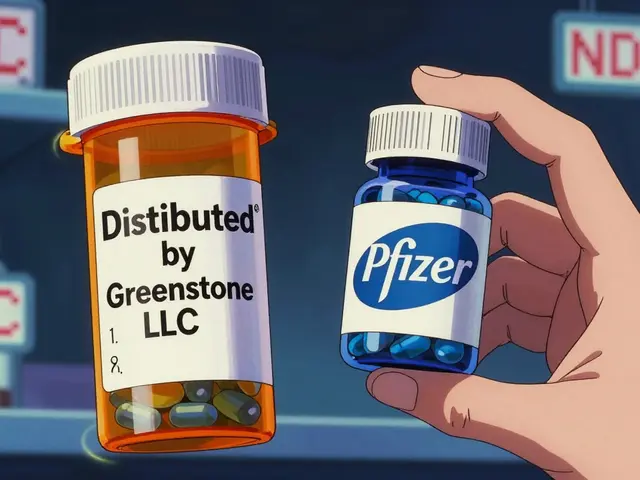
However, generics may look different. Trademark laws prevent a generic pill from being an exact copy of the brand version. The shape, color, and size can vary. More importantly, the inactive ingredients-the fillers, binders, preservatives, and dyes holding the pill together-can differ. These differences rarely affect therapeutic outcome, but they matter for people with specific sensitivities. If you have a severe allergy to a specific dye or filler used in the generic formulation, you could react to it even if the active drug is identical.
We also have to address the source of the drugs. While most production meets high standards, oversight matters. A 2023 Government Accountability Office (GAO) report noted that foreign manufacturing facilities had a higher rate of observations during inspections compared to domestic ones. This doesn't mean all imported generics are unsafe, but it highlights why supply chain transparency remains a priority for regulators.
The Critical Exceptions: Narrow Therapeutic Index Drugs
For the vast majority of patients, switching to a generic causes no issues. There is a specific category of medications where precision is non-negotiable. These are known as Narrow Therapeutic Index (NTI) drugs. This group includes medications like warfarin, levothyroxin, and certain antiepileptic drugs.
With these substances, the difference between a dose that works and a dose that harms is extremely small. Dr. Michael Privitera, a neurologist specializing in epilepsy, noted in a 2017 study that switching between different generic formulations of levetiracetam was associated with a significant increase in seizure-related hospitalizations. The American Academy of Neurology acknowledges that for certain NTI drugs, consistent sourcing from the same manufacturer is clinically important.
This does not mean you must always buy the brand name. Often, staying with the *same* generic manufacturer is sufficient. If you notice adverse effects after a switch, or if you fall into a high-risk category, discuss this with your physician. Many states allow doctors to write "dispense as written" on the prescription to lock in a specific brand or manufacturer, though insurance coverage may change.
Navigating Pharmacy Laws and Substitution
Understanding the mechanics of getting your medicine is part of the equation. Forty-nine U.S. states have automatic substitution laws. This means the pharmacist must dispense the generic version if available unless the prescription explicitly blocks it. The goal is patient access and affordability.
In recent years, patient feedback platforms like Drugs.com and social media communities have highlighted friction points. A review analysis showed that while 87% of users reported identical experiences with common generics like lisinopril, about 13% taking narrow therapeutic index drugs reported issues when switching between manufacturers. Medicare Plan Finder data indicates cost is the primary driver for 68% of beneficiaries choosing generics.
Complex generics-such as inhalers or topical creams-present another layer. As of 2022, the FDA approved only 12 complex generics compared to just 3 in 2017. These harder-to-copy devices remain expensive. The FDA launched the Complex Generic Drug Initiative to improve this, but until then, these categories often lack direct competitors.
The Future of Pharmaceuticals: Biosimilars
Looking forward, the market is shifting toward biologics. Traditional generics work for small chemical molecules. Biologics are large proteins produced in living cells. They cannot be exactly copied, only mimicked. These copies are called biosimilars.
The FDA has approved over 35 biosimilars. Companies like Teva and Sandoz dominate this space. Despite approvals, adoption is slower than traditional generics. The RAND Corporation analysis notes biosimilars represent only 3% of the biologics market. With blockbuster drugs like Humira losing patent protection recently, this segment is projected to grow. By 2030, global generic usage is expected to rise to 70% of total prescriptions, driven by aging populations needing affordable care.
You now have the full picture. The choice usually favors generics for cost efficiency and equivalent safety, but awareness of specific drug classes ensures you make the right call for your health.
Frequently Asked Questions
Can pharmacists swap my prescription without asking?
Yes. In 49 states, pharmacists are legally required to dispense a generic version if available and therapeutically equivalent, unless your doctor specifies otherwise on the script using a "dispense as written" notation.
Are generic drugs strictly the same as brand names?
They must contain the exact same active ingredient in the same strength. However, inactive ingredients like fillers and dyes can differ, and the appearance of the pill may change.
Which medications should I be careful about switching to generics?
Be cautious with Narrow Therapeutic Index (NTI) drugs, such as blood thinners, thyroid hormones, and anti-seizure medications, where slight variations in absorption can impact clinical outcomes.
Why are brand-name drugs so much more expensive?
Brand manufacturers charge a premium to recover the billions spent on initial research, development, and clinical trials, whereas generic makers only fund bioequivalence testing.
Is there a difference in quality control?
No. Both brand and generic facilities must adhere to the same FDA Good Manufacturing Practice (GMP) standards to ensure purity, strength, and potency.





Comments
Calvin H
March 29, 2026At this point you're basically paying extra just so your prescription looks expensive when the pharmacist smiles at you.
Ruth Wambui
March 30, 2026They want us blindfolded while the big pharma lizards pull the strings from their underground boardrooms.
Did anyone else notice how the study funding comes from the very companies making these pills?
The truth is buried under layers of bureaucratic jargon designed to confuse us all.
Jonathan Sanders
March 31, 2026You really believe the lizard people run a clinical trial approval process don't you?
It gets exhausting reading your conspiracy theories when the data is right there on the table.
I'm tired of pretending your paranoia helps anyone manage their insulin costs.
emma ruth rodriguez
April 1, 2026The regulatory framework established by the Hatch-Waxman Act is quite precise regarding bioequivalence metrics.
Furthermore, the FDA mandates that Good Manufacturing Practice standards apply equally to both categories of production facilities.
Thus, patients should feel confident in the structural integrity of generic options provided they are approved.
Rick Jackson
April 3, 2026Fair point on the GMP standards.
We definitely need to balance skepticism with practical accessibility.
Katie Riston
April 4, 2026When we talk about medicine we are really talking about trust.
Trust is a fragile thing in modern society.
The system relies on us believing experts who may have incentives.
Incentives are driven by profit margins rather than public health outcomes sometimes.
Yet we accept the binary choice presented to us without question.
Generic drugs represent a form of democratization of healthcare access.
However democratization does not necessarily equal equity for everyone involved.
Those with narrow therapeutic index medications live on the edge of stability.
Stability is something none of us truly understand until it is taken away.
We must consider the invisible labor involved in testing bioequivalence rigorously.
Rigor does not always translate to perfect outcomes for individual bodies.Bodies react to variables we cannot see or predict with current technology.
Technology itself is just another tool used to manage the risk equation.
We pay for risk management whether we call it branding or compliance.
Perhaps the true cost is the anxiety we spend worrying about which pill to swallow.
Brian Yap
April 6, 2026G'day mates.
Down here we get similar issues with PBS listings versus the original brands.
I've found my skin reactions changed when the dye switched up on the antihistamine tablets :/
Much better price though for sure.
Michael Kinkoph
April 7, 2026I simply refuse to compromise on quality!!!
Brand names carry a certain prestige that indicates superior research investment!!
To suggest they are identical is a gross understatement of intellectual property rights!!!!!
Beccy Smart
April 7, 2026Saving money is important but not if you are going to die 🚑💊.
We need to be responsible with our health choices.
Please read the label before swallowing anything blindly!! 😰
sanatan kaushik
April 7, 2026This is simple science!
If the molecule is same then effect is same!
Why do people waste money on fancy logos?
Carolyn Kask
April 7, 2026The United States leads the world in pharmaceutical regulation for a reason.
Foreign imports introduce risks that American taxpayers should not bear.
We support domestic manufacturing standards which protect our national health security.
Write a comment