
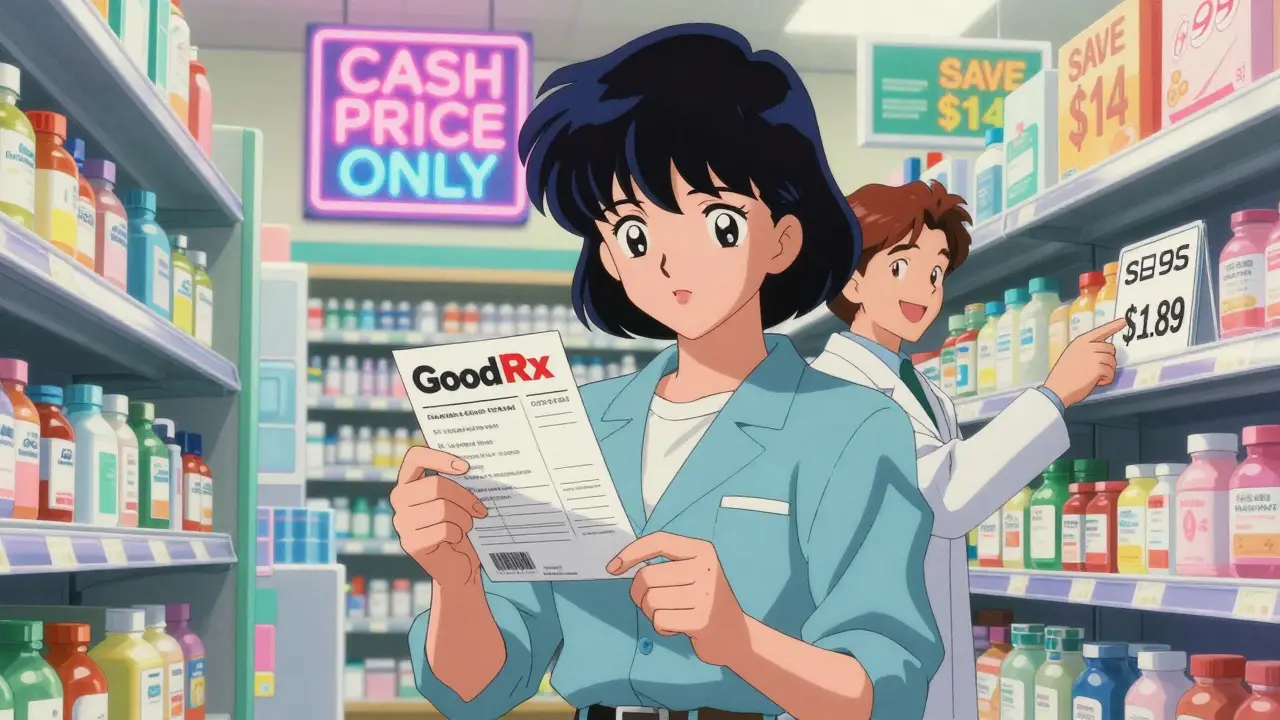
Every year, millions of Americans pay far more than they need to for their prescriptions. You walk into a pharmacy, hand over your card, and walk out with a bill that feels unfair-especially when you don’t have insurance or your deductible is sky-high. But what if you could pay $2 for metformin instead of $15? Or $98 for insulin instead of $345? It’s not magic. It’s pharmacy price shopping.
Why Your Prescription Costs So Much (And Why It Varies So Wildly)
Pharmacies don’t set prices randomly. They’re caught in a web of negotiations between drug manufacturers, pharmacy benefit managers (PBMs), and their own profit goals. A drug like atorvastatin (generic Lipitor) can cost $4.50 at one store and $140 at another-even in the same ZIP code. That’s not a mistake. It’s how the system works. Manufacturers give deep discounts to big buyers like Walmart or CVS, but those savings don’t always show up at the register. Meanwhile, independent pharmacies might charge more on paper but offer hidden discounts to loyal customers. The result? You’re paying whatever the pharmacy decides to charge you that day-unless you ask for the cash price before using insurance.Always Ask for the Cash Price First
This is the single most important step. Even if you have insurance, Medicare, or Medicaid, ask for the cash price before they process your claim. Why? Because sometimes, the cash price is lower than your insurance copay. A 2023 guide from LifeCare Advocates found that nearly 40% of people who asked for the cash price saved money. For example, someone with Medicare Part D paid $12 for a generic blood pressure med with insurance-but the cash price was just $5. That’s $7 saved every month. Multiply that by six prescriptions, and you’re talking $420 a year. Don’t assume your insurance is helping. Ask. Always.Use Discount Tools-But Don’t Rely on Just One
Apps like GoodRx, RxSaver, and WellRX aren’t insurance. They’re discount cards that negotiate lower prices directly with pharmacies. GoodRx alone serves over 200 million users and claims users save an average of 88% on generics and 42% on brand-name drugs. But here’s the catch: prices change by the hour. A drug might be $3.99 at Walgreens with GoodRx today, but $1.89 at a local independent pharmacy tomorrow. That’s why you need to check at least three apps before you pay. In 2023, a Reddit user named u/MedSaver2023 found that metformin cost $15.99 at a national chain without a coupon-but just $1.89 with a GoodRx coupon at a nearby independent pharmacy. That’s an 88% drop. Another user in Chicago found insulin prices ranging from $98 to $345 across four pharmacies within two miles. Don’t trust one app. Cross-check. Use GoodRx, RxSaver, and WellRX together. If two out of three show the same low price, you’ve found a real deal.Supermarkets and Mass Merchants Are Your Best Friends
A 2021 NIH study found that generic cardiovascular medications cost nearly half as much at supermarkets like Kroger or Safeway compared to national chains like CVS or Walgreens. Why? Because these stores use prescriptions as loss leaders. They make money on groceries, not pills. Kroger’s $4/$9 program for generics is one of the most consistent savings tools in the country. You can get 30-day supplies of common meds like lisinopril, levothyroxine, or azithromycin for $4. At Walmart, the same meds are often $10 or less. Even Target and Costco offer competitive cash prices. Costco’s pharmacy is open to the public, and you don’t need a membership to fill a prescription there. Just walk in, ask for the cash price, and compare it to your GoodRx quote.
Independent Pharmacies Often Have Hidden Deals
Big chains have fixed prices. Independent pharmacies? They have flexibility. Many don’t advertise discounts, but they’ll give them to regulars. A 2023 UnityPoint Health survey found that 38% of independent pharmacists offered unadvertised discounts to customers who came in often. Build a relationship. Ask if they have any special pricing. Mention if you’re on a tight budget. Pharmacists are people too-and many want to help. Some independents even have their own discount cards. Ask if they offer a loyalty program or a cash discount for paying in full. It doesn’t hurt to say, “I’m trying to keep my costs low. Do you have any deals for cash payers?”Mail-Order Options for Long-Term Savings
If you take the same meds every month, mail-order pharmacies can cut your costs dramatically. RXOutreach.com is a nonprofit that provides generic medications to people with household incomes at or below $45,000 (300% of the federal poverty level in 2023). You can get 90-day supplies of common drugs for as little as $10-$25. Even if you have insurance, RXOutreach can still be cheaper than your copay. And unlike some mail-order services, they don’t require you to switch your entire plan. Other options include Blink Health and HealthWarehouse, both of which offer transparent cash pricing and ship directly to your door. Just make sure the pharmacy is licensed and accredited by the National Association of Boards of Pharmacy (NABP).Brand-Name Drugs Are Harder to Save On
Here’s the harsh truth: discount apps like GoodRx rarely save you much on brand-name drugs. The NIH study showed that for brand-name medications, the discounted cash price was often the same as the regular cash price. One HealthUnlocked user reported GoodRx saved them nothing on Humira-but knocked $75 off the price of the generic alternative their doctor suggested. That’s the key: ask your doctor if a generic is available. In most cases, it is. If you’re stuck with a brand-name drug and can’t afford it, ask about patient assistance programs. Most big drugmakers (like Pfizer, AbbVie, and Roche) offer free or low-cost meds to qualifying patients. Visit NeedyMeds.org to find them.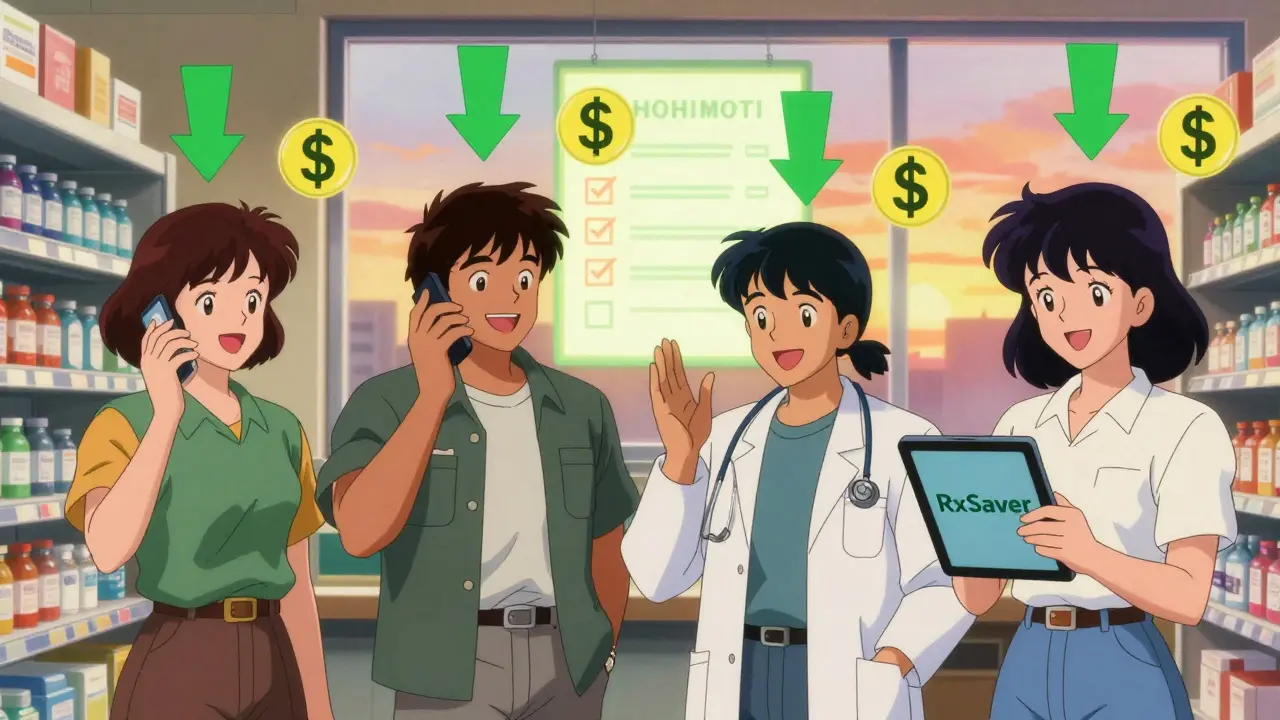
Medicare Users: Don’t Skip Open Enrollment
If you’re on Medicare Part D, your plan’s formulary and pharmacy network change every year. What was cheap in 2024 might be expensive in 2025. During open enrollment (October 15 to December 7), compare plans using Medicare’s Plan Finder tool. Some plans have preferred pharmacies where your copays are lower. Others cover more generics. One user saved $180 a year just by switching to a plan that included Walmart as a preferred pharmacy. Also, remember: the Inflation Reduction Act caps out-of-pocket drug costs at $2,000 a year starting in 2025. But that’s a cap, not a discount. You’ll still overpay if you don’t shop around.What to Do When Prices Don’t Match Up
Sometimes, the app says $3.99, but the pharmacy says $12. That’s not rare. A 2022 Consumer Reports study found price mismatches occurred in 12.7% of cases. If this happens, ask the pharmacist to check again. Sometimes, the system just needs to refresh. If they still won’t honor the price, ask if they’ll match it. Many will, especially if you show them the printout or screenshot. If they refuse, go to another pharmacy. Don’t get stuck paying more because you’re too tired to keep looking.Final Checklist: Your 5-Minute Prescription Savings Plan
1. Ask for the cash price before using insurance or Medicare. 2. Check three apps: GoodRx, RxSaver, and WellRX. 3. Compare to supermarkets: Kroger, Walmart, Target, Costco. 4. Ask independents if they have hidden discounts. 5. Consider mail-order if you take meds long-term. It takes 10-15 minutes per prescription. But over a year, that time can save you hundreds-or even thousands.Frequently Asked Questions
Can I use GoodRx if I have insurance?
Yes. Always ask for the cash price with GoodRx first. Sometimes, the discounted cash price is lower than your insurance copay. You can’t combine them, but you can choose the cheaper option.
Why is my prescription cheaper at Walmart than at my local pharmacy?
Walmart and other big retailers use prescriptions to drive foot traffic. They sell common generics at near-cost prices because they make money on other items you buy while you’re there. Independent pharmacies don’t have that volume, so they often charge more unless they offer a special deal.
Are generic drugs as good as brand-name drugs?
Yes. The FDA requires generics to have the same active ingredients, strength, dosage, and effectiveness as brand-name drugs. The only differences are inactive ingredients (like fillers) and packaging. Generics save you money without sacrificing quality.
Can I buy medications from Canada to save money?
While some people do, importing drugs from Canada is technically illegal under U.S. law. The FDA doesn’t guarantee the safety or authenticity of drugs from foreign sources. Stick to U.S.-licensed pharmacies, even if they’re mail-order. The risk isn’t worth the savings.
What if I can’t afford my meds even after shopping around?
Contact NeedyMeds.org or the Partnership for Prescription Assistance. Many drugmakers offer free or low-cost programs for low-income patients. You can also ask your doctor about samples or alternative medications. Never skip doses because you can’t pay-there are always options.



Comments
Roshan Aryal
January 4, 2026This whole article is a scam pushed by Big Pharma to make you think you can outsmart the system. The real reason prices vary is because pharmacies are forced to follow secret PBM contracts no one sees. You think GoodRx helps? It’s just a middleman taking a cut while the manufacturers laugh all the way to the bank. Cash prices? Ha. Try asking for a cash price at a CVS in rural Alabama and see how far you get.
Jack Wernet
January 6, 2026While the practical advice in this piece is sound, I would like to emphasize the ethical dimension of pharmaceutical pricing in the United States. The fact that a life-saving medication like insulin can vary by over 300% in price across a two-mile radius speaks to a systemic failure in healthcare policy. I commend the author for empowering patients with actionable steps, but we must also advocate for structural reform that ensures dignity over dollar signs.
Catherine HARDY
January 6, 2026Did you know that GoodRx is owned by a private equity firm that also owns a major PBM? They’re not helping you-they’re harvesting your data and selling it to insurers who then raise your premiums. The ‘cash price’ they show you? It’s often inflated to make the discount look bigger. I’ve seen pharmacies change prices mid-transaction after scanning the QR code. They’re tracking your search history. This isn’t savings-it’s surveillance capitalism with pills.
Vicki Yuan
January 6, 2026Thank you for this incredibly clear and practical guide! I’ve been using these exact strategies for over a year now and saved over $1,200 on my chronic meds. The key is consistency: I check GoodRx, RxSaver, and WellRx every single time, even if I’ve filled the same script before. Prices change hourly. I also always ask the pharmacist if they have a loyalty discount-I once got 50% off metformin just by asking nicely. Small efforts add up. You’ve got this!
melissa cucic
January 7, 2026It is, indeed, a remarkable and deeply troubling phenomenon-the disparity in prescription pricing-that exists not as an anomaly, but as a structural feature of the American pharmaceutical marketplace. One cannot help but wonder: if a 30-day supply of lisinopril can be purchased for $4 at Kroger, and $140 at a nearby Walgreens, what, precisely, is the value being assigned to human health? Is it a commodity? A privilege? A bargaining chip? The fact that individuals must become amateur pharmacoeconomists just to survive, rather than receiving care as a right, speaks volumes about the moral bankruptcy of the system.
saurabh singh
January 8, 2026Bro, this is gold. I’m from India and I came to the US last year-didn’t know you could pay $2 for metformin until I saw this. Now I tell all my friends: always ask for cash price first, even if you got insurance. Walmart and Costco are your new best friends. I used to pay $50 for my blood pressure meds, now I pay $4.99. No cap. Just walk in, smile, and ask. They don’t bite. Also, don’t trust apps blindly-sometimes the local pharmacy has a better deal and won’t tell you unless you ask. Keep it real, man.
Dee Humprey
January 9, 2026Just saved $87 this month using this method. 💪 I didn’t even know my local independent pharmacy had a cash discount until I asked. They gave me 30% off just because I said I was on a fixed income. Also-Walmart’s $4 list is legit. I get my thyroid med, metformin, and atorvastatin all for $4. I print the GoodRx coupon just to show them, and they match it. You don’t need to be rich to survive here-you just need to know how to ask. 🙏
Allen Ye
January 9, 2026While the mechanics of pharmacy price shopping are undeniably useful, I find myself compelled to reflect on the deeper epistemological implications of this behavior: that we, as citizens, have been forced into the role of price-optimizing consumers in a domain that ought to be governed by medical necessity and ethical obligation. The fact that a diabetic must compare $98 to $345 across four pharmacies within a two-mile radius is not a triumph of consumer agency-it is a symptom of a civilization that has outsourced the moral calculus of care to the marketplace. We are not empowered by these tools; we are merely surviving them. And yet, in this survival, we become the quiet architects of resistance-each cash-price inquiry, each coupon comparison, each visit to a supermarket pharmacy is a small act of civil disobedience against a system that treats human life as a line item. The real revolution isn’t in the app-it’s in the refusal to accept the price as fixed.
Write a comment