

Every year, over 1.3 million adverse drug events are reported to the FDA through MedWatch - but experts estimate that only 1% to 10% of actual incidents get reported. That means thousands of dangerous reactions go unnoticed, delaying life-saving safety updates. If you’ve experienced a strange or serious side effect from a medication - whether it’s a prescription, over-the-counter drug, or even a supplement - reporting it isn’t just helpful. It’s critical.
What Is MedWatch and Why Does It Matter?
MedWatch is the U.S. Food and Drug Administration’s official system for tracking safety problems with medical products. It’s not just for doctors. Anyone - patients, caregivers, pharmacists, nurses - can and should report adverse reactions. The goal? To catch dangers that didn’t show up in clinical trials. The FDA gets about 2 million reports a year through MedWatch and its sister system, FAERS (FDA Adverse Event Reporting System). Most of these come electronically now. In 2023, 95% of submissions were digital. These reports directly influence drug labels, safety warnings, and sometimes even product recalls. For example, in 2022, over 1,200 MedWatch reports of a rare but deadly infection called Fournier’s gangrene led to a black box warning on SGLT2 inhibitor diabetes drugs. That warning saved lives. Without those reports, the FDA might have never connected the dots.Who Should Report and What Needs to Be Reported?
You don’t need to be a medical expert to report. If something unexpected happened after taking a drug - even if you’re not sure it was caused by the medication - report it. The FDA defines an adverse event as any unintended, unfavorable medical occurrence after using a product. That includes:- Severe allergic reactions (rash, swelling, trouble breathing)
- Unexplained liver damage, kidney failure, or heart rhythm issues
- Psychiatric symptoms like sudden depression, suicidal thoughts, or hallucinations
- Unusual bleeding, bruising, or extreme fatigue
- Any reaction that required hospitalization or caused permanent harm
How to Report: Two Paths, Two Forms
There are two main ways to report, depending on who you are.If You’re a Healthcare Professional
Use FDA Form 3500. It’s a 5-page form with 45 fields. You’ll need:- Patient info (name initials or medical record number - no full Social Security number)
- Drug name, dose, start and stop dates
- Exact description of the adverse event - include timing, symptoms, and outcome
- Relevant lab results or imaging findings
- Other medications the patient was taking
- Your contact info (name, title, phone, email)
If You’re a Patient or Consumer
Use FDA Form 3500B. It’s simpler - just 3 pages and 30 fields. You don’t need medical training. Just answer honestly. You’ll need:- Your name and contact info (you can report anonymously if you prefer)
- The name of the drug (brand or generic)
- When you started and stopped taking it
- What happened - describe symptoms clearly
- When the reaction started and how long it lasted
- Whether you saw a doctor or went to the ER
- Any other medicines or supplements you were using
How to Submit Your Report
There are three ways to send your report:- Online - Go to FDA.gov/MedWatch and click “Voluntary Reporting.” Fill out the form in your browser. You can save progress and return later - but don’t close the tab until you’re done. The system doesn’t auto-save.
- By Phone - Call 1-800-FDA-1088. A live agent answers 95% of calls within 30 seconds. They’ll walk you through the details and file the report for you.
- By Mail - Download Form 3500 or 3500B from the FDA website, print, fill it out, and mail it to: MedWatch, HF-2, 5600 Fishers Lane, Rockville, MD 20857.

What the FDA Doesn’t Want - and What You Should Know
Some things are not handled by MedWatch:- Vaccines - Report those to VAERS (Vaccine Adverse Event Reporting System)
- Animal drugs - Contact the Center for Veterinary Medicine
- Medical devices - Yes, MedWatch takes those too, but if it’s a malfunctioning pacemaker or insulin pump, you can also report through the device manufacturer
- Compounded drugs - Starting in 2025, these will be required to be reported - but for now, voluntary reporting is still accepted
Common Problems and How to Avoid Them
Many people skip reporting because they think:- “It’s probably not serious.” - The FDA says: “If you’re unsure, report it.” Mild reactions that happen often are just as important as rare, severe ones.
- “I don’t know if the drug caused it.” - You don’t have to prove causation. Just describe what happened after taking the drug.
- “It’ll take too long.” - The online form takes 15-20 minutes. If you’re using an EHR with integration, it’s under 10 minutes.
- “No one will do anything.” - In 2021, MedWatch data led to 47% of all drug label changes. That’s real impact.
What Happens After You Submit?
Your report goes into the FAERS database. Trained analysts review it, code the event using standardized medical terminology (MedDRA v26.1), and look for patterns across thousands of similar reports. If enough people report the same issue - say, a new type of liver injury linked to a popular painkiller - the FDA may:- Update the drug’s label with a new warning
- Require a Risk Evaluation and Mitigation Strategy (REMS)
- Issue a public safety alert
- Order a recall
How the System Is Improving
The FDA knows MedWatch has flaws - especially underreporting. That’s why they’re making changes:- MedWatch Express - A mobile app pilot in 15 teaching hospitals cuts reporting time by 65%.
- MedWatch AI Assistant - Launching in 2024, this tool auto-fills 40% of the form from your clinical notes.
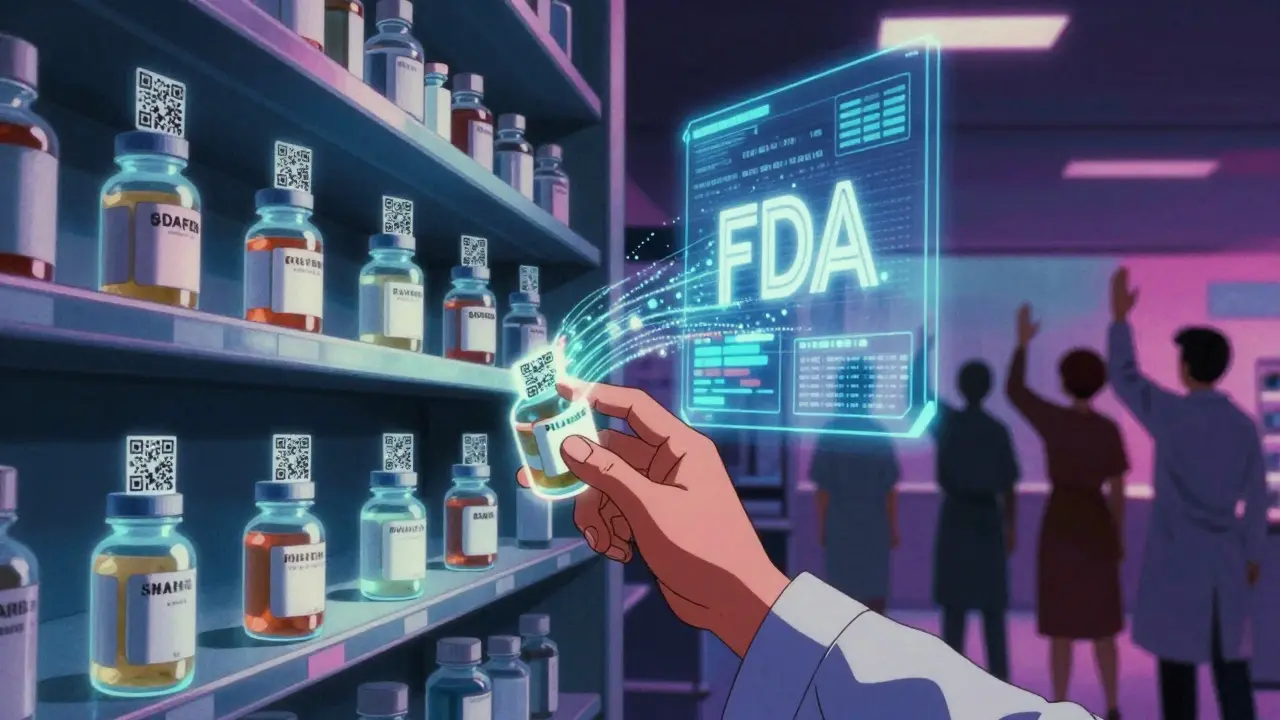
- “MedWatch Everywhere” - QR codes on prescription bags at major pharmacies (like CVS and Walgreens) let patients report in under 30 seconds.
- 2025 Mandate - All healthcare facilities must report electronically by January 2025 under the 21st Century Cures Act.
Final Thoughts: Your Report Matters
You might think one report won’t change anything. But in 2021, a single patient’s report about a rare skin reaction led to a nationwide alert on a common antibiotic. That reaction had only been seen three times before - and without that report, it might have been missed entirely. Reporting isn’t about blaming. It’s about protecting. Every time you report an adverse event, you help the FDA see the full picture. You help doctors make safer choices. You help future patients avoid harm. If you’ve had a bad reaction - even if it’s been months - report it now. The system is designed for you. Use it.Can I report an adverse event if I’m not sure the drug caused it?
Yes. The FDA encourages reports even when causality is unclear. They’re looking for patterns - if 50 people report the same unusual symptom after taking the same drug, that’s a signal worth investigating. You don’t need to prove the drug caused the problem. Just describe what happened after you took it.
Do I need to give my real name when reporting?
No. You can report anonymously. But if you provide contact information, the FDA may reach out if they need more details. If you’re a patient and want to be contacted, include your phone or email. If you’re a provider, include your professional details so the FDA can verify your report.
Can I report a side effect from an over-the-counter drug or supplement?
Yes. MedWatch accepts reports for prescription drugs, over-the-counter medicines, dietary supplements, and even some cosmetics. If it’s sold in the U.S. and you believe it caused harm, report it. Supplements are especially underreported - and that’s a growing concern for the FDA.
How long does it take for the FDA to act on a report?
There’s no set timeline. Some reports trigger alerts within weeks if they match a known pattern. Others sit in the database for months or years until enough similar reports accumulate. The system works on volume - one report might not change anything, but 500 reports on the same issue almost always leads to action.
Is there a mobile app for reporting?
Yes - the MedWatch Express app is currently in pilot testing at 15 major hospitals. It lets providers submit reports in under 5 minutes using voice-to-text and pre-filled templates. A public version is expected in 2025. For now, the FDA website works well on mobile browsers - just use Safari or Chrome on your phone.
What if I made a mistake on my report?
You can’t edit a submitted report, but you can file a new one. Just note in the new form: “Follow-up to Report #XXXXX” and include the original report number if you have it. The FDA tracks all submissions linked to the same patient or drug.
Can I report a reaction from a drug I took years ago?
Yes. The FDA accepts retrospective reports. Even if the reaction happened months or years ago, if it was serious and you’re only now connecting it to the drug, report it. Historical data helps identify long-term risks - especially for drugs taken chronically, like statins or antidepressants.
Next Steps: What to Do Right Now
If you’ve ever had a bad reaction to a drug:- Find the drug name - check the bottle or your pharmacy records.
- Write down what happened: symptoms, when they started, how long they lasted.
- Go to FDA.gov/MedWatch - click “Voluntary Reporting.”
- Fill out Form 3500B if you’re a patient, or Form 3500 if you’re a provider.
- Submit. You’re done.






Comments
Astha Jain
January 19, 2026lol why do u even bother with this form? its 2024 and we still gotta fill out paper stuff like its 1999? 🤡
Valerie DeLoach
January 20, 2026I’ve reported three reactions over the years - one was a weird rash from ibuprofen, another was brain fog after a new antidepressant, and the third was a sudden drop in blood pressure after a supplement. None of them were ‘life-threatening’ - but when you add them up, they tell a story. The FDA doesn’t need perfection. They need truth. And truth doesn’t come with a diagnosis label.
Phil Hillson
January 21, 2026This whole system is a joke honestly like why does it take 20 minutes to report something that took 3 seconds to happen? And dont even get me started on the fact that they dont even notify you if anything comes of it
Aman Kumar
January 23, 2026The systemic underreporting is a direct consequence of pharmaceutical capitalism's epistemological hegemony. Patients are not merely passive recipients of pharmacological interventions - they are epistemic agents whose phenomenological data must be valorized within the pharmacovigilance paradigm. Yet, the MedWatch interface remains a neoliberal artifact, designed to obscure structural accountability under the guise of individual responsibility.
Jake Rudin
January 24, 2026I’ve been waiting for someone to say this: reporting isn’t about blame - it’s about bearing witness. Every time you click ‘submit,’ you’re saying: ‘This happened to me, and I won’t let it be erased.’ The FDA doesn’t owe you a reply. But history owes you a record. And that’s more powerful than you think.
Lydia H.
January 25, 2026I reported my daughter’s reaction to a new ADHD med last year. She got really agitated, couldn’t sleep, started crying for no reason. I didn’t know if it was the drug or just puberty. But I reported it anyway. A few months later, I got an email saying 17 other people had reported the same thing. Now it’s on the label. That felt good. Like I actually did something that mattered.
Malikah Rajap
January 25, 2026I just want to say… you’re doing amazing, thank you for sharing this. I know it’s scary to speak up when you’re not sure if you’re ‘right’… but you’re not alone. I’ve been there. And honestly? I think we all need to be a little braver. 💛
Tracy Howard
January 27, 2026I'm Canadian and honestly, I'm shocked the US still relies on this archaic system. In Canada, we have a real-time, AI-assisted, integrated reporting portal that auto-flags patterns. Your system is like using a rotary phone in the age of 5G. Fix it. Or shut it down.
Erwin Kodiat
January 29, 2026I used to think reporting was pointless until my cousin died from a reaction to a generic antibiotic. The docs said it was ‘rare.’ Turns out, 42 other people had the same reaction - but no one reported it. If one person had spoken up, she’d still be here. So yeah. Report. Even if it’s messy. Even if you’re not sure. Just report.
Christi Steinbeck
January 29, 2026I’m a nurse and I’ve been pushing my hospital to integrate MedWatch into our EHR for years. We finally did it last month. Now every time someone logs ‘allergy’ or ‘adverse reaction,’ it auto-generates a report. We’ve submitted over 120 in 6 weeks. This isn’t just paperwork - it’s protection. Let’s make this normal.
Jacob Hill
January 31, 2026I just submitted my report… after 3 years. I had a weird tingling in my hands after taking that new migraine med. I thought it was stress. But last month, I read about someone else having the same thing. So I went back. Took me 12 minutes. Felt like I finally did the right thing. Thank you for this guide.
Lewis Yeaple
January 31, 2026The statistical power of pharmacovigilance is contingent upon the fidelity of spontaneous reporting systems. The current underreporting rate of 90–99% constitutes a significant source of Type II error in post-marketing surveillance, thereby compromising the validity of signal detection algorithms employed within the FAERS database. It is imperative that public education initiatives be scaled to mitigate this epistemic deficit.
Jackson Doughart
February 1, 2026I don’t know if this’ll get read, but I’m grateful for this post. I’ve been too scared to report my reaction - worried I’d sound crazy. But reading this made me feel like my experience matters. I just filed my report. Took 17 minutes. Felt like I exhaled for the first time in a year.
sujit paul
February 3, 2026I've noticed something. The FDA only acts when the drug is from a small company. Big pharma? They have lobbyists. They bury reports. I've seen it. This system is rigged. You report, they ignore. But they'll never admit it. So keep reporting - not for them. For the truth.
Write a comment