
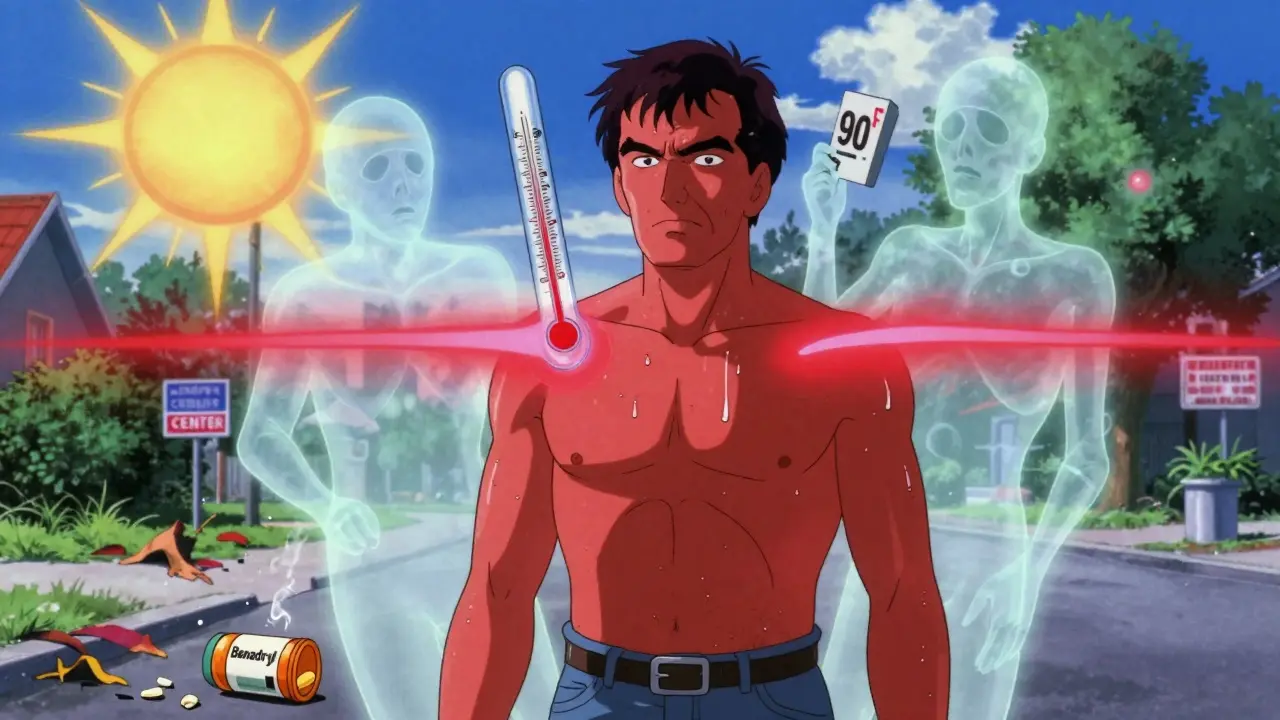
When the temperature climbs, your body sweats to cool down. That’s normal. But if you’re taking certain medications, your body might not sweat at all - even when it’s 90°F outside. This isn’t just uncomfortable. It’s dangerous. Decreased sweating from medications can lead to heat exhaustion, heat stroke, and even death. And many people don’t realize their meds are the cause.
Why Some Medications Stop You from Sweating
Sweating is your body’s main way to release heat. When your core temperature rises, nerves signal sweat glands to produce moisture. As it evaporates, it cools your skin. But some drugs block this process. They interfere with the chemicals your body uses to trigger sweat, reduce blood flow to your skin, or dry you out from the inside. The biggest offenders fall into a few key categories. Anticholinergic drugs - like oxybutynin for overactive bladder or diphenhydramine (Benadryl) for allergies - shut down acetylcholine, a neurotransmitter that tells sweat glands to activate. Studies show these drugs can cut sweating by 60 to 80%. That means even light activity in warm weather can turn into a medical emergency. Diuretics, often called water pills, force your kidneys to flush out fluid. Thiazide diuretics like hydrochlorothiazide and chlorthalidone can make you lose 1.5 to 2.5 liters of fluid a day. Less fluid means less sweat. Your body literally runs out of the water it needs to cool itself. Research from Kaiser Permanente found people on these drugs had 2.3 times higher risk of heat exhaustion during summer heat waves. Beta blockers - such as metoprolol and propranolol - don’t stop sweat production directly. Instead, they limit how much blood flows to your skin. Without that increased circulation, heat can’t escape. Studies show these drugs reduce skin blood flow by 25 to 40%. That’s like wearing a thick coat in the sun and wondering why you’re overheating.High-Risk Medication Classes
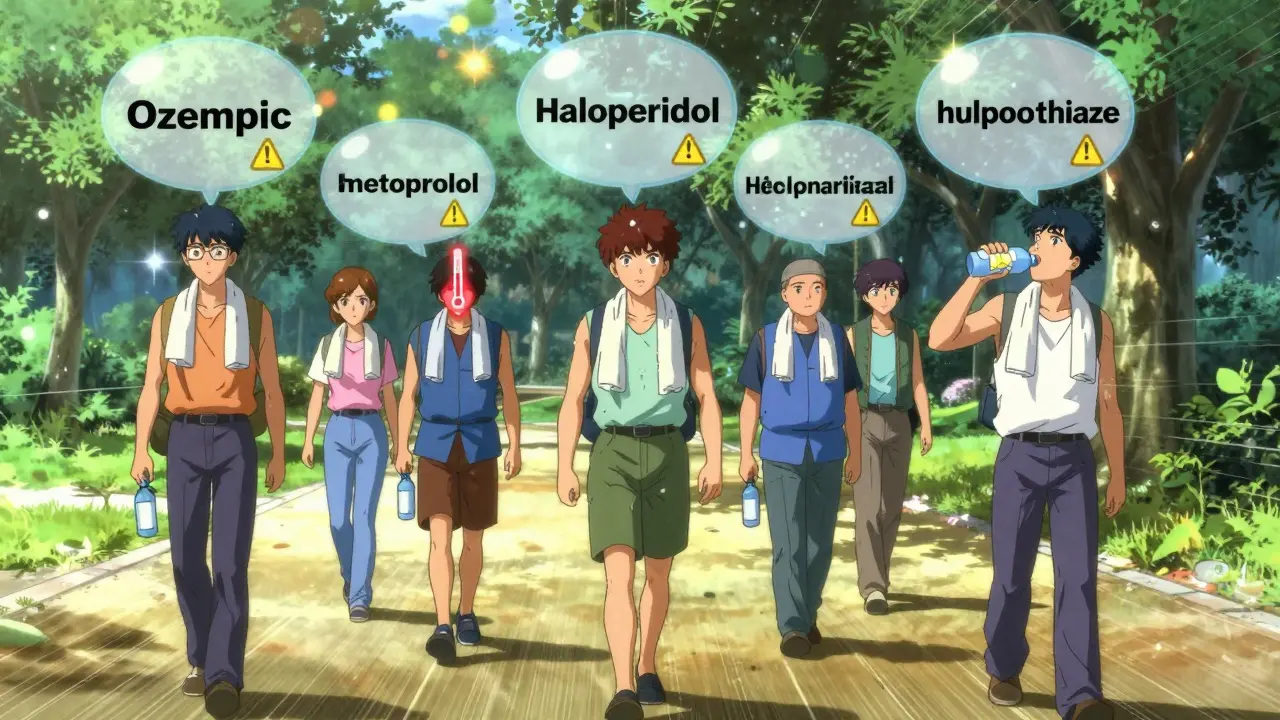
Not all drugs affect heat the same way. Some are more dangerous than others. Here are the top culprits based on clinical evidence:- Antipsychotics (haloperidol, olanzapine, risperidone): These are among the most dangerous. They don’t just reduce sweating - they mess with your brain’s thermostat. Your hypothalamus, which controls body temperature, gets confused. Heat stroke can happen even at 80°F. The CDC lists these as top-tier risk drugs.
- Tricyclic antidepressants (amitriptyline, clomipramine): These cut sweating by 65 to 75%. In contrast, newer SSRIs like fluoxetine and sertraline may actually make you sweat more - but that can lead to dehydration if you don’t drink enough.
- Stimulants (Adderall, Ritalin): These increase your metabolism by 15 to 25%. You generate more internal heat while your body’s cooling system is weakened. It’s a double hit.
- GLP-1 agonists (Ozempic, Wegovy): These weight-loss drugs suppress thirst. You might not feel thirsty even when you’re dehydrated. Clinical trials show a 40 to 50% drop in thirst sensation, making it easy to ignore your body’s warning signs.
- Lithium: Used for bipolar disorder, lithium is especially risky. When you’re dehydrated, lithium builds up in your blood. A 25 to 35% spike in concentration can cause toxicity - even at normal doses. The CDC warns this can happen at temperatures above 85°F.
What makes this worse? Polypharmacy. If you’re taking three or more of these drugs at once, your risk of heat-related illness jumps dramatically. A 2022 study found that adults over 65 on five or more medications had a 300% higher chance of heat stroke than younger, healthier people.
Warning Signs You’re Overheating
Most people think heat stroke means you’re hot and sweaty. But with medication-induced heat intolerance, you might not sweat at all. That’s the trick. Your body can’t cool down - and you don’t feel the warning. Watch for these symptoms, especially if you’re on high-risk meds:- Cramps in arms, legs, or stomach (happens in 65% of cases)
- Dizziness or lightheadedness (55%)
- Headache (70%)
- Flushed, red skin
- Nausea or vomiting (35%)
- Weakness or fatigue
- Confusion or trouble thinking clearly
- Hot, dry skin - no sweat at all
These signs usually show up within 30 to 90 minutes of being in the heat. If you’re on a medication that reduces sweating, don’t wait until you feel terrible. Act early.
How to Stay Safe in Hot Weather
You don’t have to give up your meds. But you do need to adjust how you live during hot weather. Here’s what works:- Drink more water: Add 500 to 1,000 mL (about 2 to 4 cups) to your daily intake during heat advisories. Don’t wait until you’re thirsty - especially if you’re on GLP-1 drugs.
- Avoid the sun between 10 a.m. and 4 p.m.: That’s when UV rays and heat are strongest. Even a short walk can be risky.
- Use air conditioning: If your home doesn’t have AC, go to a library, mall, or cooling center. The CDC says staying indoors above 90°F is critical for high-risk patients.
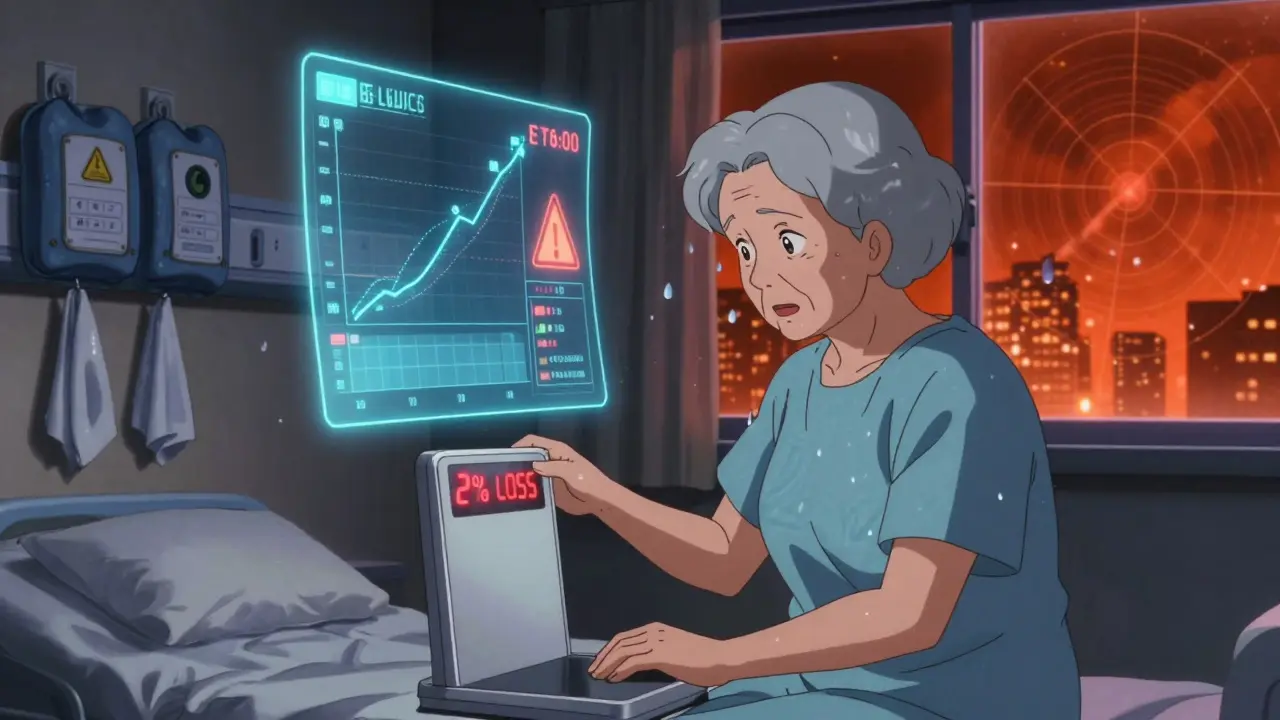
- Check your weight daily: A drop of more than 2% in body weight means you’re dehydrated. Weigh yourself in the morning before eating or drinking.
- Wear cooling gear: Cooling vests, damp towels, or even a spray bottle with water can lower your core temperature by 0.5 to 1.0°C - enough to prevent heat stroke.
- Use SPF 30+ sunscreen: Some blood pressure meds (like calcium channel blockers and ACE inhibitors) make your skin more sensitive to sunburn. Sunburn adds stress to your body’s cooling system.
If you’re on lithium, antipsychotics, or multiple diuretics, talk to your doctor about checking your blood levels during heat waves. Dehydration can turn safe doses into toxic ones.
What’s Changing in Healthcare
Doctors are starting to pay more attention. In 2023, the CDC updated its Heat and Medications Guidance for Clinicians, adding 17 new studies. Electronic health records like Epic now automatically flag patients on high-risk drugs during summer months. The FDA approved the first wearable core temperature monitor, TempTraq, in December 2023 - designed specifically for people on these meds. Research is moving fast. The NIH is funding a $2.5 million study to build AI tools that predict heat risk based on your exact medication mix. In the future, your phone might warn you: “Your meds increase heat stroke risk today. Stay indoors.”Bottom Line: Know Your Meds, Know Your Risk
Heat intolerance isn’t just a side effect. It’s a silent killer. And it’s growing worse as summers get hotter. In 2023, the planet was 1.18°C warmer than the 20th century average. By 2050, medication-related heat complications could rise by 40 to 60%. If you’re on any of these drugs - especially anticholinergics, diuretics, beta blockers, antipsychotics, or GLP-1 agonists - don’t assume you’re fine because you don’t feel sick. Your body might be shutting down its cooling system without telling you. Talk to your doctor. Ask: “Does this medication affect how my body handles heat?” Write it down. Keep a list of all your meds. Check your weight. Drink water. Avoid the sun. These aren’t just tips. They’re life-saving habits.Staying cool isn’t about comfort anymore. It’s about survival.
Can I stop taking my medication if it causes heat intolerance?
No. Never stop or change your medication without talking to your doctor. Many of these drugs treat serious conditions like high blood pressure, depression, or diabetes. Stopping them suddenly can be dangerous. Instead, work with your provider to adjust your routine - like avoiding heat, drinking more water, or switching to a different drug with lower risk.
Do all antihistamines cause decreased sweating?
No. Older antihistamines like diphenhydramine (Benadryl) and chlorpheniramine are strong anticholinergics and significantly reduce sweating. Newer ones like loratadine (Claritin), cetirizine (Zyrtec), and fexofenadine (Allegra) have much less effect on sweat glands. If you’re concerned, ask your pharmacist which type you’re taking.
Is heat intolerance worse for older adults?
Yes. As we age, our bodies naturally sweat less. Add medications that block sweating or cause dehydration, and the risk skyrockets. Older adults also often take multiple medications, increasing the chance of dangerous interactions. The American Geriatrics Society says adults over 65 on five or more drugs have a 300% higher risk of heat stroke than younger people.
Can drinking more water prevent heat stroke from medications?
It helps - but it’s not always enough. Diuretics flush out fluid faster than you can drink it. Anticholinergics prevent sweat glands from working, no matter how much water you have. GLP-1 drugs suppress thirst, so you won’t feel the need to drink. Water is critical, but you also need to avoid heat, monitor your body, and know your limits.
What should I do if I start feeling overheated?
Stop what you’re doing immediately. Move to a cool place. Drink water. Apply cool, wet cloths to your neck, armpits, and groin. If you have a thermometer, check your temperature. If it’s above 103°F, or if you feel confused, nauseated, or your skin is hot and dry, call 911. Heat stroke is a medical emergency. Don’t wait.
Are there any new medications that don’t affect sweating?
Yes. For example, non-stimulant ADHD meds like atomoxetine don’t affect heat regulation like Adderall or Ritalin. Newer antidepressants like SSRIs are less likely to cause heat intolerance than older tricyclics. Some newer bladder meds are being developed with lower anticholinergic activity. But most high-risk drugs still dominate prescriptions. Always ask your doctor if a safer alternative exists.




Comments
Kinnaird Lynsey
December 19, 2025So I’ve been on oxybutynin for years and never thought twice about sweating less in summer. Turns out I’ve been walking around like a human space heater with a broken AC. Thanks for the wake-up call. I’m drinking more water now and avoiding noon walks. Also, my cat now judges me when I sit too close to the fan.
Andrew Kelly
December 20, 2025Let me guess - this is another Big Pharma scare tactic. They want you to think your meds are dangerous so they can sell you ‘safer’ alternatives that cost 10x more. My grandpa took hydrochlorothiazide for 40 years and never got heat stroke. He also smoked, drank, and ate fried food daily. Maybe the real problem is climate hysteria?
Isabel Rábago
December 20, 2025People don’t realize how many of these drugs are prescribed like candy. My aunt was put on olanzapine for ‘mild anxiety’ - and now she can’t go outside without risking heat stroke. And no one told her. No warning label. No doctor’s note. Just a script and a smile. This isn’t medicine. It’s chemical negligence. And if you’re elderly, poor, or on Medicaid? You’re basically a lab rat for corporate profit.
Anna Sedervay
December 21, 2025One must consider the epistemological framework underpinning this discourse: the conflation of physiological response with pharmacological intervention, wherein the autonomic nervous system is reduced to a mere target of chemical modulation, rather than a dynamic homeostatic regulator. The FDA’s endorsement of TempTraq, while technologically laudable, represents a symptomatic palliation - not a systemic reconfiguration of pharmaceutical risk assessment protocols. One wonders whether the Hippocratic Oath has been subsumed by algorithmic prescribing engines.
Matt Davies
December 22, 2025Man, I used to think sweating was just annoying - now I see it as my body’s little army waving white flags at the sun. This post should be mandatory reading before you get prescribed anything that makes you feel like a zombie in a sauna. I’m telling my mate who’s on Ozempic to buy a cooling vest. He’s gonna thank me when he doesn’t pass out at the BBQ.
Mike Rengifo
December 22, 2025I’m on metoprolol and never realized why I get so wiped out in summer. I just thought I was getting old. Turns out my skin’s basically a brick wall when it comes to heat. I started carrying a spray bottle and now I’m not passing out after walking to the mailbox. Small wins, right?
bhushan telavane
December 23, 2025In India, we call this 'paani ki kami' - lack of water - but we never connect it to pills. My uncle takes blood pressure meds and still walks 5km in 40°C heat. He says, 'God will protect.' But I worry. Maybe this info should be printed on every prescription bottle here too.
Mahammad Muradov
December 23, 2025Actually, this is common knowledge in medical school. Anticholinergics suppress sudoriferous gland activity via M3 receptor antagonism. The real issue is that primary care physicians prescribe these without understanding autonomic pharmacology. It's not the drugs - it's the ignorance. If you're on lithium and live in Arizona, you're asking for trouble. No surprise there.
Mark Able
December 25, 2025Wait - so my 72-year-old mom’s on 7 meds and she goes to the park every day? Are you telling me she could die from a walk? I’m calling her right now. And then I’m calling her doctor. And then I’m calling the FDA. This is insane. Why isn’t this on the box?!
James Stearns
December 25, 2025It is an incontrovertible fact that the contemporary medical-industrial complex has systematically prioritized pharmaceutical efficacy over thermoregulatory safety. The normalization of polypharmacy among geriatric populations constitutes a profound ethical failure. One must ask: Is longevity, when achieved under the shadow of iatrogenic vulnerability, truly a victory? Or merely a prolonged surrender?
Nina Stacey
December 26, 2025I’ve been on amitriptyline for 8 years and I never knew I was at risk for heat stroke I mean I just thought I was always hot and tired and now I’m like oh wow so that’s why I get dizzy in the grocery store in July and I’ve been drinking water but I still forget sometimes and I think I should get one of those cooling vests but I don’t know where to buy one and also I’m scared to tell my doctor because I don’t want him to take me off my med because I feel better on it but also I don’t want to die in the sun and I’m just so confused now
Write a comment