
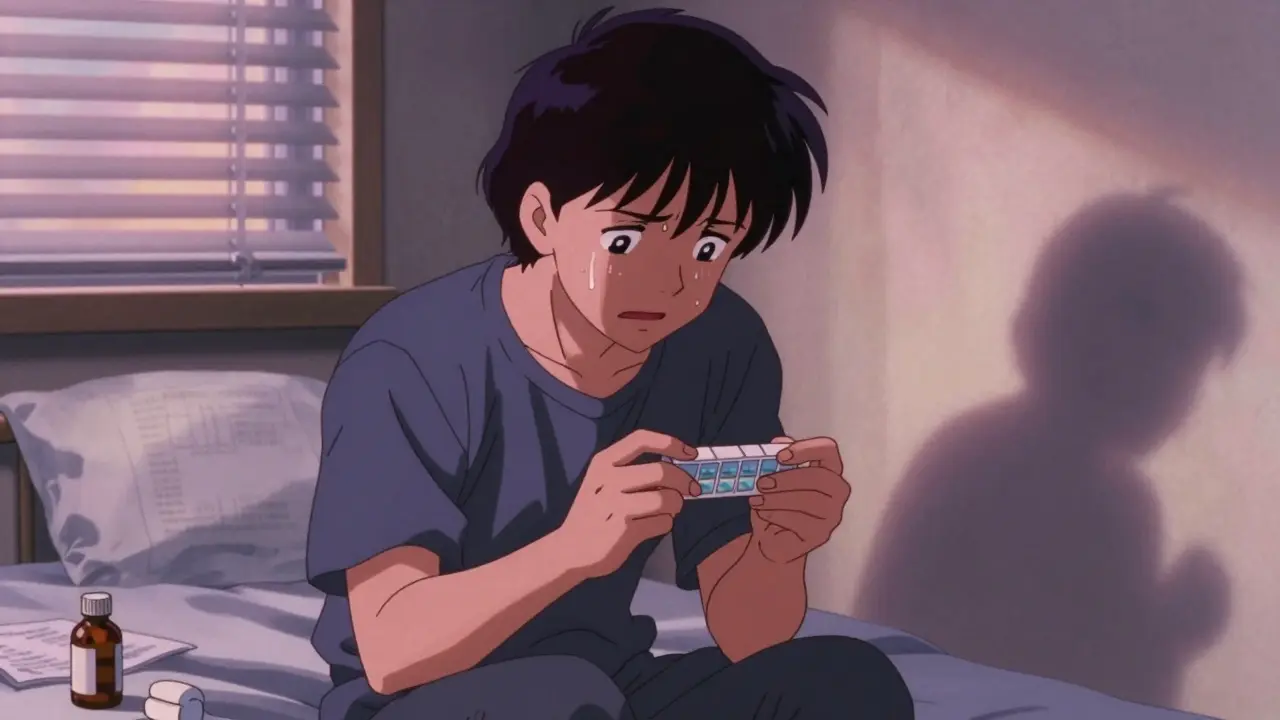
Stopping opioids after long-term use isn’t as simple as just quitting. If you’ve been taking them for weeks or months-whether for chronic pain, an injury, or surgery-your body adapts. When you cut back too fast, your nervous system goes into overdrive. That’s opioid withdrawal. It’s not just discomfort. It’s nausea, muscle cramps, anxiety, insomnia, and sometimes panic. And if you’re forced to stop abruptly, it can be dangerous.
Why Tapering Matters More Than You Think
The CDC updated its opioid prescribing guidelines in November 2022, and one message was crystal clear: don’t rush. Rapid tapers-like cutting your dose by 25% every few days-don’t just make you feel awful. They increase your risk of suicide by 3.5 times, according to a 2017 study. They also drive people back to opioids or even illegal drugs because the pain and distress become unbearable. A slow, controlled taper is the gold standard. It’s not about hitting a number-it’s about keeping you safe, stable, and in control. The goal isn’t just to stop opioids. It’s to get you to a point where you feel better without them.What Does a Safe Taper Look Like?
There’s no one-size-fits-all schedule. Your taper depends on how long you’ve been on opioids, your dose, your health, and your mental state. But here’s what works for most people:- Slow tapers reduce your daily dose by 5% to 10% every 1 to 4 weeks. This is the most common approach for people on long-term therapy (over 6 months).
- Medium tapers cut by 10% to 20% every 2 to 4 weeks. These work for people who’ve been on opioids for 3 to 6 months.
- Fast tapers (20%+ every few days) are rarely recommended and only considered if you’re on short-term therapy (under 2 weeks) and have no history of addiction or mental health issues.
For example, if you’re taking 100 mg of morphine equivalents daily, a slow taper might look like this:
- Week 1-4: Drop to 90 mg
- Week 5-8: Drop to 80 mg
- Week 9-12: Drop to 70 mg
- Continue reducing by 10 mg every 4 weeks until you’re off.
This could take 6 to 12 months. That sounds long. But for someone on high doses for years, it’s the only way to avoid hospitalization.
Common Withdrawal Symptoms (And When to Worry)
Withdrawal symptoms usually start 6 to 12 hours after your last dose and peak around days 2 to 4. They can last weeks. Here’s what most people experience:- Nausea and vomiting (87% of cases)
- Muscle aches and cramps (85%)
- Anxiety and restlessness (80%)
- Insomnia (78%)
- Diarrhea (75%)
- Sweating, chills, runny nose
- Increased heart rate and blood pressure
These are uncomfortable-but not usually life-threatening. But if you start having severe chest pain, confusion, hallucinations, or suicidal thoughts, get help immediately. That’s not normal withdrawal. That’s a medical emergency.
Medications That Help Ease Symptoms
You don’t have to suffer through this alone. There are FDA-approved and off-label options that make tapering tolerable:- Lofexidine (brand name Lucemyra): Approved in 2018 and expanded in 2024 to include an extended-release form. It reduces anxiety, sweating, and cramps without being addictive. Dose: 0.18-0.72 mg every 4-6 hours for up to 14 days.
- Gabapentin: Used for nerve pain and sleep. Start at 100-300 mg, increase slowly up to 1,800-2,100 mg per day in divided doses. Helps with anxiety and insomnia.
- Baclofen: A muscle relaxant. Often used at 5 mg three times daily, ramped up to 40 mg daily. Reduces muscle spasms and cravings.
- Clonidine: Older but still used. Lowers blood pressure and reduces sweating and anxiety. Can cause dizziness, so use with caution.
These aren’t magic pills. They don’t cure withdrawal. But they take the edge off. That’s enough to help you stick with your plan.
What Doesn’t Work (And Why)
Many people try to quit cold turkey. Others use home remedies like kratom, valerian root, or ibuprofen alone. These rarely work-and can be risky.- Kratom: Not FDA-approved. Can cause liver damage and lead to dependence itself.
- High-dose ibuprofen: Helps with aches but does nothing for anxiety, insomnia, or nausea.
- Alcohol or benzodiazepines: Dangerous mix. Can cause respiratory failure or overdose when combined with opioids.
There’s also the myth that “just push through it.” That’s not bravery. It’s self-harm. Withdrawal is a physiological event, not a test of willpower.
Non-Medical Strategies That Actually Help
Medication helps with symptoms. But lasting recovery needs more. Here’s what research shows works:- Cognitive Behavioral Therapy (CBT): Used by 41% of people who successfully taper. Helps reframe pain, manage cravings, and reduce anxiety.
- Acupuncture: Reported as helpful by 33% of patients in Oregon’s 2021 registry. May reduce nausea and improve sleep.
- Physical activity: Even walking 20 minutes a day reduces stress hormones and improves mood.
- Group support: Reddit’s r/OpiatesRecovery community has over 145,000 members. People who share their tapering journey report better outcomes.
- Sleep hygiene: No screens after 9 PM. Cool, dark room. Consistent bedtime. Insomnia is one of the hardest symptoms-but it improves with routine.
When Should You Not Taper?
Tapering isn’t always the right move. The CDC says: if your current dose isn’t putting you at imminent risk, don’t rush. You should pause or avoid tapering if:- You’re experiencing uncontrolled pain that’s not improving with other treatments
- You’re in active crisis (recent suicide attempt, homelessness, severe depression)
- Your doctor hasn’t discussed alternatives or offered support
- You’re being pressured by an insurer or clinic to quit fast
Insurers sometimes force rapid tapers to cut costs. But a 2021 Patient Advocate Foundation report found 63% of patients forced into fast tapers developed new mental health conditions. 22% ended up in the hospital. That’s not healthcare. That’s negligence.

How to Talk to Your Doctor About Tapering
You need a partner-not a boss. Here’s how to start the conversation:- “I want to reduce my opioids, but I’m worried about withdrawal. Can we make a plan together?”
- “Can we try reducing by 10% every month and see how I feel?”
- “What non-opioid options do you recommend for my pain?”
- “Can I get a referral to a pain specialist or therapist?”
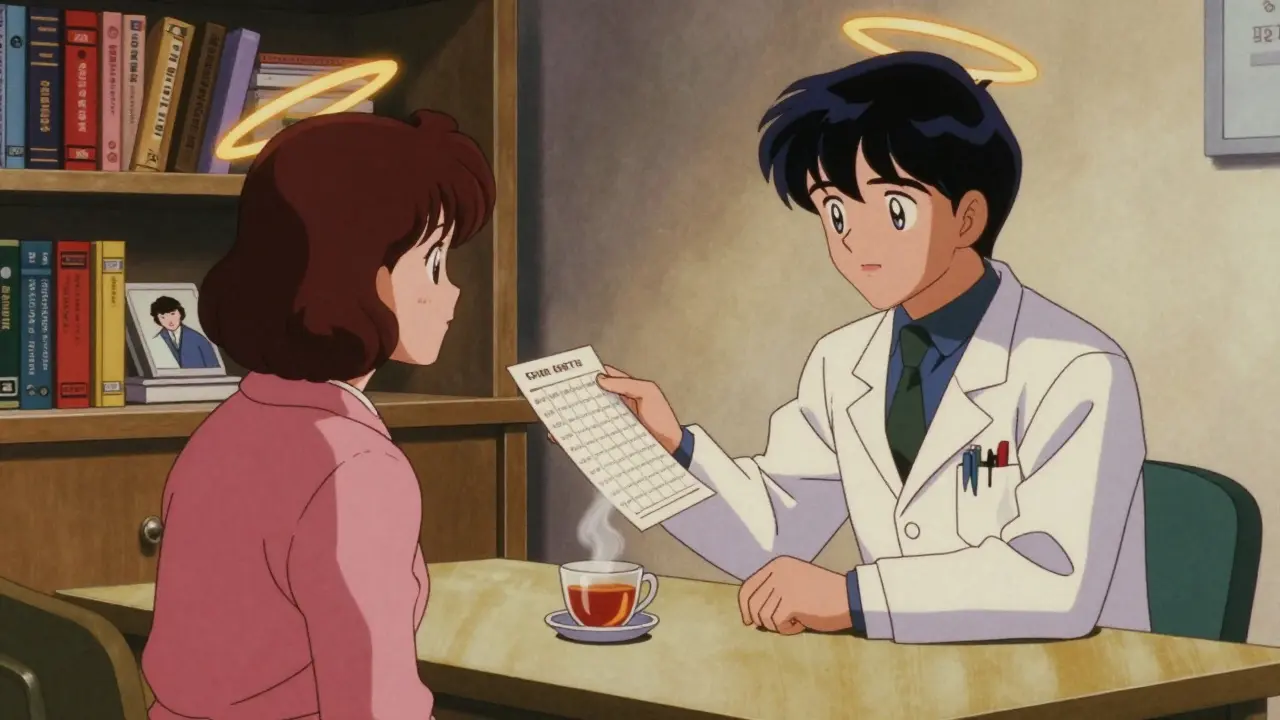
Ask for a written taper plan. It should include your starting dose, reduction schedule, backup meds, and when to pause. If your doctor refuses to make one, find another.
What Happens After You Stop?
Stopping opioids doesn’t mean your pain disappears. That’s why tapering is only step one. The next step is rebuilding your life without them.- Physical therapy can help restore mobility and reduce chronic pain.
- Mindfulness and meditation lower stress and change how your brain processes pain signals.
- Many people find relief with heat therapy, massage, or yoga.
- Some switch to non-opioid medications like duloxetine or pregabalin.
Studies show 78% of people who complete a slow taper report improved daily function. 65% say their sleep got better. That’s the real win-not just being “off opioids,” but feeling like yourself again.
Final Thoughts: This Is a Marathon, Not a Sprint
Opioid withdrawal isn’t something you beat in a week. It’s a process that takes months, sometimes years. And that’s okay. The goal isn’t speed. It’s safety. It’s stability. It’s getting your life back without trading one problem for another.If you’re thinking about tapering, start with one question: Who’s supporting me through this? If the answer is no one, find help. A doctor, a therapist, a support group. You don’t have to do this alone. And you don’t have to suffer to prove you’re strong.
How long does opioid withdrawal last?
Physical withdrawal symptoms usually peak within 72 hours and start to fade after 5-7 days. But some symptoms-like anxiety, insomnia, and cravings-can last weeks or months. This is called post-acute withdrawal syndrome (PAWS). It’s not dangerous, but it’s real. Slower tapers reduce the severity and duration of PAWS.
Can I taper off opioids at home?
It’s possible, but only under medical supervision. You need regular check-ins with a doctor to adjust your taper rate, manage symptoms, and screen for mental health risks. Tapering without support increases the risk of relapse, overdose, or suicide. Don’t try to do it alone.
What if my pain gets worse during tapering?
Breakthrough pain is common during tapering. Don’t automatically reach for more opioids. Talk to your doctor first. You may need non-opioid pain relief like gabapentin, physical therapy, or nerve blocks. Sometimes, pausing the taper for a few weeks helps your body adjust before continuing.
Is it safe to use marijuana to help with opioid withdrawal?
Some people report that medical marijuana helps with sleep, nausea, and anxiety. But there’s limited clinical evidence, and it’s not FDA-approved for this use. In states where it’s legal, it may be an option-but only under a doctor’s guidance. Avoid recreational use, as it can worsen anxiety or trigger relapse in some people.
How do I know if I need professional help?
You need help if you’ve tried to quit before and relapsed, if you have a history of depression or anxiety, if you’re using other substances, or if you’re feeling suicidal. Call a crisis line (988 in the U.S.) or see a pain specialist. You don’t have to wait until you’re in crisis to get support.
Next steps: If you’re considering tapering, write down your current daily dose and schedule. Then talk to your doctor about a slow, personalized plan. Bring this article with you. You deserve a safe, respectful path forward.


Comments
Tony Du bled
December 22, 2025Been through this twice. Slow taper saved my life. No drama, no heroics. Just 5% every month, gabapentin at night, and walks in the park. Took 10 months. Felt like a century. But I’m here, sober, and actually sleeping.
No need to brag. Just saying it’s possible if you don’t rush.
Kathryn Weymouth
December 22, 2025The CDC’s 2022 guidelines are clear: rapid tapers are not just ineffective-they’re dangerous. The 3.5x increased suicide risk cited in the 2017 study is corroborated by multiple longitudinal analyses, including the 2020 JAMA Psychiatry meta-analysis. This isn’t opinion. It’s evidence-based medicine.
Yet, insurance companies still enforce 30-day tapers. That’s not healthcare. It’s cost-cutting disguised as policy.
Herman Rousseau
December 24, 2025Hey, if you’re reading this and thinking about tapering-YOU GOT THIS. 💪
It’s not about being tough. It’s about being smart. Lofexidine? Try it. Acupuncture? Worth a shot. Walking 20 minutes? Do it. You don’t need to suffer to win.
I’ve seen people come out the other side and start businesses, go back to school, hold their kids again. It’s not magic. It’s patience. And you’re not alone.
Candy Cotton
December 25, 2025It is regrettably evident that the proliferation of unregulated alternatives such as kratom and marijuana, as referenced in the article, represents a dangerous capitulation to pseudoscientific remedies. The FDA’s approval of lofexidine was a watershed moment in evidence-based addiction medicine, yet the article’s inclusion of anecdotal support for unapproved substances undermines its credibility.
One must not confuse compassion with clinical negligence.
Julie Chavassieux
December 26, 2025…and then… you wake up… at 3am… sweating… heart racing… wondering if this is it…
…and you think… ‘I can’t do this’…
…but you do…
…because you have to…
…and then… one day… you realize… you haven’t reached for them… in 17 days…
…and you cry… not because it’s over…
…but because you made it…
…without pills…
…without shame…
Vikrant Sura
December 26, 2025Most of this is common sense. Why is this even an article? Also, why are we treating opioid withdrawal like it’s a special snowflake? People quit coffee cold turkey and don’t write essays about it.
Maybe the problem isn’t withdrawal. Maybe it’s that people got too comfortable with prescriptions.
Gabriella da Silva Mendes
December 28, 2025Okay but like… what if your doctor is just… gone? Like… I’ve been on 60mg oxycodone for 5 years and my doc retired last month and now the new one says ‘you’re not getting any more’ and I have to be off in 2 weeks? 😭
And I’m not even asking for more pills… I just want a PLAN…
And now I’m crying in my car because I don’t know how to breathe without them…
And Reddit is the only place I can say this without someone calling me weak.
…I just need someone to say… it’s okay to need help.
…and I’m not a junkie.
…I’m just… tired.
…and scared.
…and I’ve been alone for too long.
Kiranjit Kaur
December 29, 2025From India, I’ve seen so many people suffer silently because pain meds are hard to get and withdrawal support is nonexistent. This article? It’s a lifeline.
Even if you’re in a country where doctors don’t understand this, the science is the same. Slow taper. Gabapentin. Sleep routine. Walk outside. Breathe.
You’re not broken. You’re healing.
And you’re not alone. Not anymore.
Sai Keerthan Reddy Proddatoori
December 31, 2025Big Pharma pushed opioids for decades. Now they want us to quit fast so they can sell us gabapentin and lofexidine? Classic. The same companies that made billions off this crisis are now the ones writing the ‘safe’ taper guidelines. Don’t trust the system. Trust your body. And find your own path.
Sam Black
January 1, 2026When I started tapering, I thought I’d be some rugged hero pushing through pain. Turns out, the real strength was in asking for help. CBT didn’t fix my back. But it fixed how I thought about it.
Now I meditate. I journal. I talk to my dog. I don’t need pills to feel human.
And if you’re reading this? You’re already stronger than you think.
Jeremy Hendriks
January 3, 2026Withdrawal isn’t a battle. It’s a mirror. It shows you what you’ve been running from. The pain you’re feeling? It’s not just in your nerves. It’s in your soul.
And when you finally stop fighting it… you start living again.
That’s not recovery. That’s awakening.
Tarun Sharma
January 3, 2026Thank you for this comprehensive guide. I will share it with my patient who is preparing for tapering. Medical supervision is non-negotiable. Safety first.
Write a comment