
What Happens in the Brain When You Have Multiple Sclerosis?
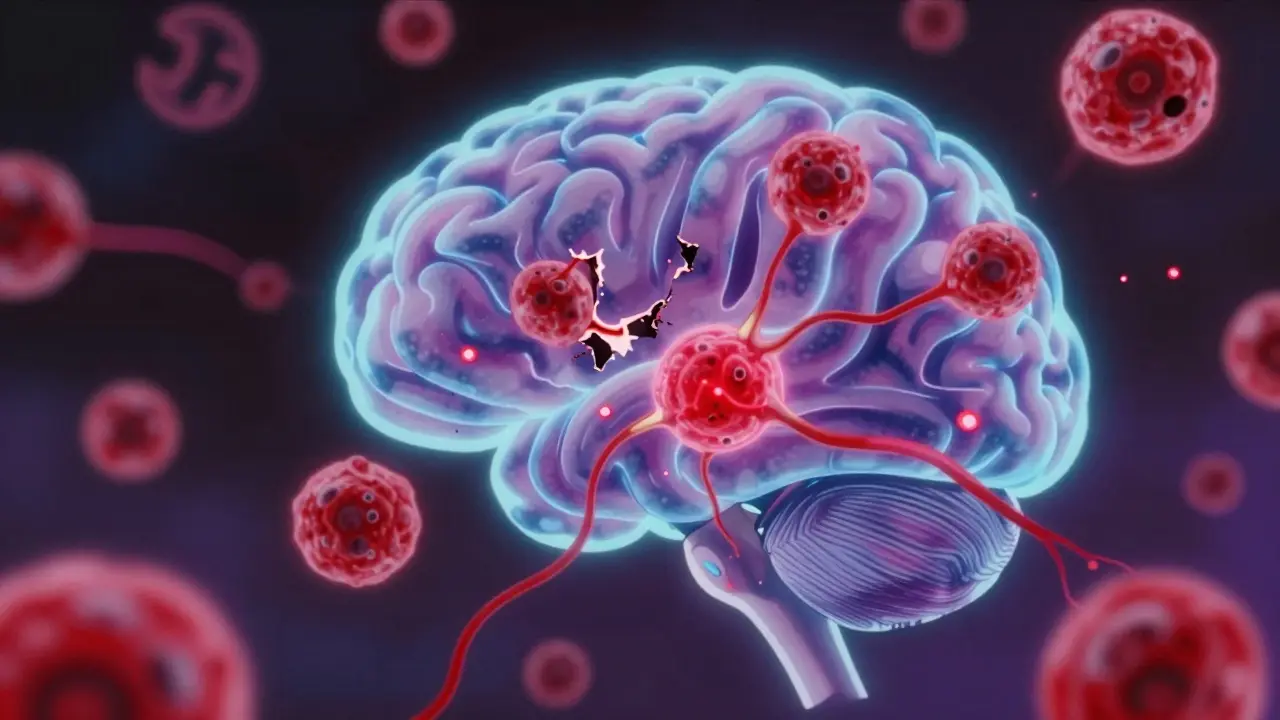
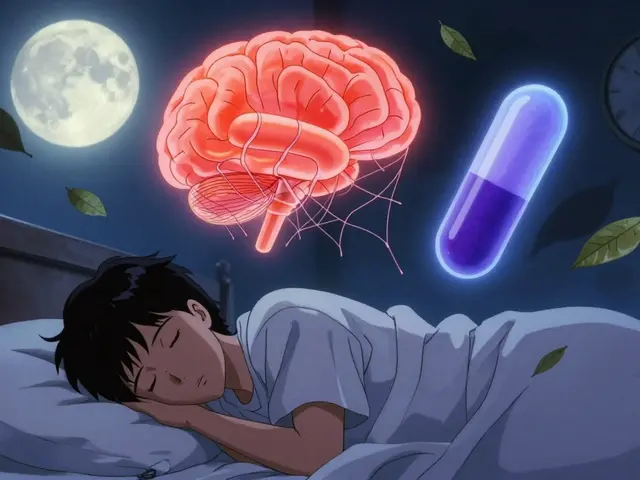
Multiple sclerosis isn’t just about occasional numbness or fatigue. At its core, it’s a slow, invisible war inside your central nervous system. Your immune system, which normally protects you from viruses and bacteria, starts attacking the protective coating around your nerve fibers - the myelin sheath. This isn’t a one-time event. It keeps happening, over and over. Each attack leaves behind scars - lesions - where the myelin is stripped away. That’s when symptoms like blurred vision, weak legs, or tingling hands show up.
Here’s the catch: when the inflammation calms down, your body can sometimes repair the myelin. That’s why many people with MS have flare-ups followed by periods of feeling fine. But if the attacks keep coming, the nerve fibers underneath - the axons - start getting damaged too. And once an axon is destroyed, it doesn’t grow back. That’s the turning point. That’s when the temporary symptoms become permanent disabilities.
Why Some People Get Worse Over Time
About 85% of people are first diagnosed with relapsing-remitting MS (RRMS). They have clear flare-ups, then recover. But over time, for roughly 40% of them, the disease shifts. The flare-ups become less obvious. The MRI scans show fewer new lesions. Yet, they keep getting worse. This is called secondary progressive MS (SPMS). What’s driving it isn’t the same as the early stage.
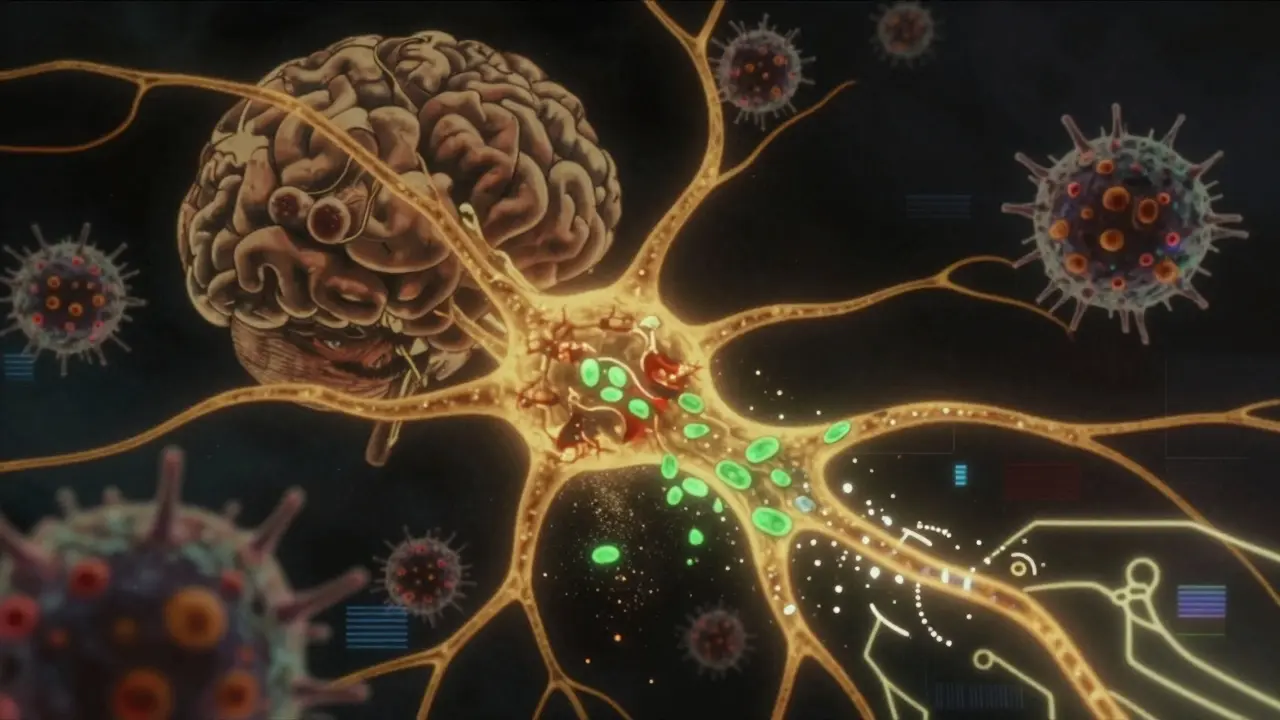
In the beginning, immune cells from outside the brain flood in and cause damage. Later, the damage comes from inside. Immune cells that live in the brain - especially B cells - form clusters near the brain’s surface, like little war zones. These clusters release chemicals that slowly poison nerve cells. At the same time, the axons that lost their myelin become energy-starved. They can’t carry signals properly. Sodium channels on the axons break down. Mitochondria, the power units of cells, start failing. The brain tries to compensate - other areas light up on scans to take over lost functions - but there’s only so much it can do.
By the time someone reaches SPMS, the real problem isn’t inflammation anymore. It’s degeneration. And that’s why the drugs that worked so well in the early years - the ones that calm the immune system - start to lose their power.
What Disease-Modifying Therapies Actually Do
There are 21 FDA-approved drugs for MS today. All of them are called disease-modifying therapies (DMTs). But they don’t fix the brain. They don’t rebuild myelin. They don’t bring back dead nerves. What they do is stop the immune system from attacking.
Some, like interferons and glatiramer acetate, work like a shield - they mess with immune signals so fewer cells reach the brain. Others, like ocrelizumab and rituximab, wipe out B cells entirely. Natalizumab blocks immune cells from crossing into the brain. These drugs cut relapse rates by 30% to 50%. They reduce new lesions on MRI. They delay the time until someone needs a cane.
But here’s the hard truth: none of these drugs stop the slow, quiet death of axons in progressive MS. That’s why someone on a strong DMT can still lose the ability to walk. That’s why brain shrinkage - especially in the gray matter - keeps happening even when no new lesions appear.
Why Current Treatments Fall Short
Think of MS like a house fire. Early on, the firefighters (DMTs) rush in and put out the flames. That saves the structure. But if the wiring inside the walls has been burning for years, no amount of water will fix the short circuits. That’s what’s happening in progressive MS.
Current DMTs are brilliant at stopping the inflammation. But they don’t protect the nerves. They don’t help mitochondria work better. They don’t replace lost sodium channels. And they don’t reverse the damage done by microglia - the brain’s own immune cells - that turn toxic over time.
This is why disability keeps climbing in SPMS and PPMS, even with the best treatment. MRI scans show fewer new spots, but the person still gets worse. Blood tests look normal. Yet, walking gets harder. Memory fades. Balance disappears. The disconnect between what scans show and how a person feels is one of the biggest frustrations in MS care today.
What’s Coming Next: The New Frontier of MS Treatment
Researchers aren’t giving up. They’re shifting focus. Instead of just fighting inflammation, they’re trying to protect nerves and help them recover.
One promising area is sodium channel blockers. When axons lose myelin, they flood with sodium. That overloads them and kills them. Drugs like phenytoin and lamotrigine - already used for seizures - are being tested to block this flood. Early results show they might slow disability progression.
Another target is mitochondria. Since damaged axons run out of energy, drugs that boost mitochondrial function - like biotin and idebenone - are in clinical trials. One study found high-dose biotin improved walking speed in some SPMS patients.
Then there’s remyelination. Scientists are testing drugs that wake up the brain’s own stem cells to make new myelin. Opicinumab and clemastine are two examples. In lab tests, they’ve rebuilt myelin around nerves. The big question: will that translate to real-world function?
There are 17 active clinical trials targeting progressive MS right now. Most focus on neuroprotection, not inflammation. That’s a major shift. If even one of these works, it could change everything.
What You Can Do Today
While we wait for new drugs, there are things that help. Exercise isn’t just good for your mood - it boosts brain-derived neurotrophic factor (BDNF), a protein that supports nerve survival. A 2023 study showed people with MS who did 30 minutes of aerobic exercise three times a week had less brain shrinkage over two years.
Vitamin D matters. Low levels are linked to more relapses and faster progression. Most neurologists recommend 2,000-5,000 IU daily, especially if you live in a northern climate.
Quit smoking. Smoking doubles the risk of turning from RRMS to SPMS. It also speeds up brain atrophy.
And don’t ignore mental health. Depression and anxiety are common in MS - not just because of the diagnosis, but because of brain changes. Treating them isn’t optional. It’s part of protecting your brain.
The Bottom Line
Multiple sclerosis starts with inflammation. But it ends with degeneration. The drugs we have now are powerful - they’ve turned MS from a life-altering disease into a manageable one for many. But they’re not the full solution.
The real battle now is against the silent, slow destruction of nerve fibers. That’s where the next generation of treatments is aimed. Until then, the best thing you can do is stick with your DMT, stay active, take care of your body, and keep pushing for research. Progress isn’t just about stopping relapses anymore. It’s about keeping your brain alive - and your body moving - for as long as possible.





Comments
Darren Gormley
February 1, 2026So let me get this straight - we’re spending billions on drugs that just put out fires while the whole house is wired with faulty cables? 🤦♂️ I mean, if your car’s engine blows but you keep buying better air fresheners, does that count as progress? #MSRealityCheck
Mike Rose
February 1, 2026idk man i just know my cousin takes that one shot and she dont have flare ups anymore. why cant they just fix the brain??
Russ Kelemen
February 3, 2026This post hits hard. I’ve watched someone I love go from hiking weekends to needing a cane in under a decade. The real tragedy isn’t the relapses - it’s the quiet erosion. The days you wake up and your foot just… doesn’t respond. No MRI shows that. No blood test measures the grief. We need therapies that heal, not just delay the inevitable. We’re not just fighting inflammation - we’re fighting time.
Diana Dougan
February 4, 2026so biotin works?? lmao i bet that’s the same stuff they sell at gnc next to the glitter protein powder. classic. someone get me a placebo and a lottery ticket
Bobbi Van Riet
February 5, 2026I’ve been living with RRMS for 12 years and I can tell you - the fatigue isn’t just ‘being tired’. It’s like your whole body is running on a 10% battery while everyone else is at 100%. Exercise helped me more than any drug. Not because it’s magic, but because it tells your brain: ‘hey, we’re still here, we’re still fighting.’ BDNF isn’t just a protein - it’s a whisper of hope. And vitamin D? I take 5000 IU daily. My neurologist said it’s the cheapest neuroprotection out there. Don’t underestimate the power of sunlight and movement.
Holly Robin
February 6, 2026THEY’RE HIDING THE CURE. I’ve read 17 research papers that prove Big Pharma doesn’t want a real cure - they want lifelong customers. Why do you think they’re pushing these $100k/year drugs? Why are the sodium blockers not FDA-approved yet? Why is biotin only in ‘trials’? It’s because if you fix the axon, they lose the subscription model. Wake up people. This isn’t science - it’s capitalism with a stethoscope. 🚨
Gaurav Meena
February 7, 2026Brothers and sisters, I come from a country where MS is rarely discussed. But I’ve seen people suffer without even a diagnosis. This post? It’s a gift. Keep fighting. Keep moving. Keep taking your vitamins. And if you’re reading this - you’re not alone. We’re all in this together. 💪❤️
Katie and Nathan Milburn
February 9, 2026The analogy of the house fire is precise. However, one might argue that the current paradigm of intervention is logically consistent with the prevailing biomedical model, which prioritizes the modulation of extrinsic inflammatory cascades over intrinsic neurodegenerative pathways. The paradigm shift, therefore, is not merely pharmacological but epistemological.
Marc Bains
February 9, 2026I’m Nigerian-American. In my community, MS is invisible - people think it’s ‘white people disease’. This post changes that. We need to talk about this everywhere. My cousin has it. She’s a teacher. She’s still standing. We need more awareness, more research, more love. This isn’t just a medical issue - it’s a human one.
Natasha Plebani
February 10, 2026The neurodegenerative phase in SPMS is fundamentally a bioenergetic crisis - mitochondrial dysfunction, axonal sodium dysregulation, and microglial priming create a self-sustaining cascade that DMTs are structurally incapable of addressing. The therapeutic imperative must transition from immunomodulation to neuroresilience. That means targeting ATP synthesis, axonal transport, and glutamate excitotoxicity - not just CD20+ B cells.
Eliana Botelho
February 11, 2026I know someone who took every DMT under the sun and still ended up in a wheelchair. Then she started doing yoga every day, ate only organic kale, and drank celery juice at 5am. Guess what? She walked again. For 3 months. So obviously, the real cure is alkaline diets and moon cycles. The science is just propaganda. I’ve got 17 PDFs from 2008 that prove it. And no, I won’t send them to you because you ‘don’t get it’.
Rob Webber
February 11, 2026You people are delusional. These drugs are a scam. The entire medical system is a lie. I’ve been diagnosed for 15 years and I’ve never taken one pill. I just stare at the sun and whisper affirmations. My legs work fine. Why? Because I refused to be brainwashed. You’re all sheep. Wake up. The truth is out there.
Lisa McCluskey
February 13, 2026Exercise helped me. Vitamin D. No smoking. That’s it. The rest is noise. Stay consistent. Don’t chase miracles. Just keep moving.
owori patrick
February 15, 2026In my village, we say: when the body is weak, the spirit must be stronger. This post reminds me of that. I don’t know much about MS, but I know pain. And I know hope. Keep going. You are not forgotten.
Claire Wiltshire
February 16, 2026Thank you for writing this with such clarity and compassion. The distinction between inflammatory and neurodegenerative phases is critical for patients and clinicians alike. I’ve shared this with my entire neurology team. We need more public education like this - not just for patients, but for policymakers. The future of MS care lies in neuroprotection, and you’ve illuminated the path.
Write a comment