
How Rare Are Allergic Reactions to Vaccines?
It’s natural to worry about allergic reactions after getting a vaccine. You hear stories online, see headlines, and wonder if it’s safe. The truth? Severe allergic reactions like anaphylaxis are extremely rare. Across all vaccines, anaphylaxis happens in about 1.3 cases per million doses. That’s less than one in a million. For context, you’re more likely to be struck by lightning in a given year than to have a serious allergic reaction to a vaccine.
Even during the height of the COVID-19 mRNA vaccine rollout, when rates were slightly higher, the number was still just 11.1 cases per million doses. That means out of nearly 2 million people who got the shot, only about 11 had anaphylaxis. And in almost every case, people recovered fully with prompt treatment.
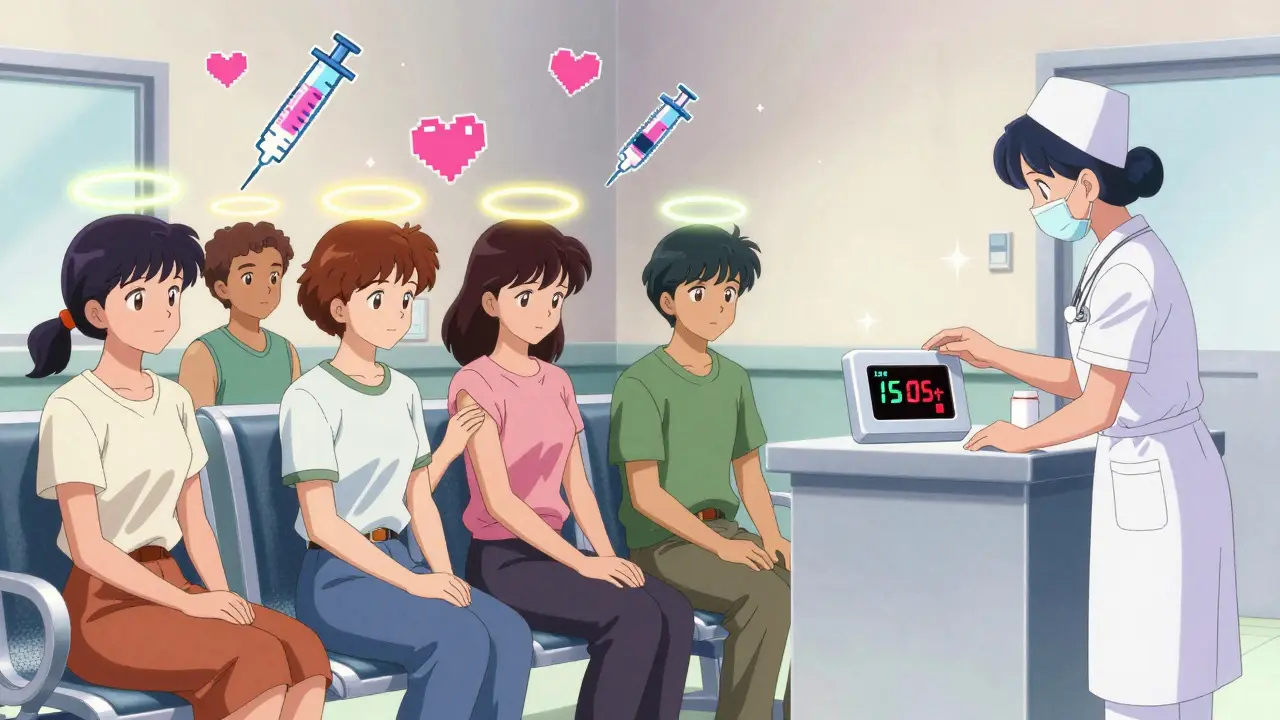
Most reactions happen fast - 86% within 30 minutes, and 71% within the first 15 minutes. That’s why clinics ask you to wait after getting vaccinated. It’s not because they expect problems - it’s because if one does happen, they’re ready to handle it immediately.
What Causes These Reactions?
People often assume it’s the virus component or the dead bacteria in the vaccine. But in most cases, it’s not. The real triggers are usually ingredients used to stabilize or deliver the vaccine. For example, polyethylene glycol (PEG) is found in mRNA vaccines like Pfizer and Moderna. A small number of people who are allergic to PEG have had reactions. Another ingredient, polysorbate 80, is chemically similar to PEG and can sometimes cause cross-reactions.
For years, egg allergy was a big concern with flu shots. But that changed after decades of studies. Over 4,300 people with known egg allergies - including more than 650 who had severe anaphylaxis to eating eggs - received flu vaccines without serious reactions. Today, no special precautions are needed. You don’t need to be observed longer, skip the shot, or get tested first.
Yeast allergies are another myth. Yeast is used to grow some vaccines, like hepatitis B and HPV. But only about 15 possible cases of yeast-related reactions have ever been reported across 180,000 allergy reports in the U.S. surveillance system. And even those weren’t confirmed. Aluminum, used as an adjuvant in many vaccines, can cause lumps at the injection site, but it doesn’t trigger anaphylaxis.
Who Is at Risk?
Most people who have had anaphylaxis after a vaccine already had other allergies. About 81% of those who reacted had a history of allergies - to food, medications, or insect stings. It’s not that vaccines cause new allergies. It’s that people who already have overactive immune systems are slightly more likely to react to something new.
Women are more likely to report reactions than men - about 81% of cases are in women. But that’s likely because women are more likely to get vaccinated overall and more likely to report symptoms. The average age of someone who reacts is around 40, but reactions have been seen in children as young as 3 months and adults up to 88.
If you’ve ever had anaphylaxis to any substance - even if it wasn’t a vaccine - talk to your doctor before your next shot. You don’t need to avoid vaccines. But you might benefit from being observed for 30 minutes instead of 15, and having epinephrine on hand.
How Are Reactions Monitored?
The U.S. has one of the most advanced vaccine safety systems in the world: VAERS, the Vaccine Adverse Event Reporting System. Run by the CDC and FDA, it collects reports from doctors, patients, and vaccine makers. It’s not perfect - anyone can file a report, even if it’s not confirmed. But it’s designed to catch signals. If a certain vaccine suddenly shows 10 times more reactions than usual, researchers investigate.
Since 1990, VAERS has helped spot rare issues. After the 1976 swine flu vaccine was linked to Guillain-Barré syndrome, the system was strengthened. Today, it receives 30,000 to 50,000 reports a year. Allergic reactions make up a tiny fraction. The system doesn’t prove causation - it flags patterns. Then, scientists dig deeper using large health databases like the Vaccine Safety Datalink, which tracks millions of real-world vaccination records.
Other countries have similar systems. The European Medicines Agency runs EudraVigilance, which handles over a million reports annually. The WHO supports 137 countries in running their own safety monitoring programs. These systems work together to catch problems early.
What Happens If You React?
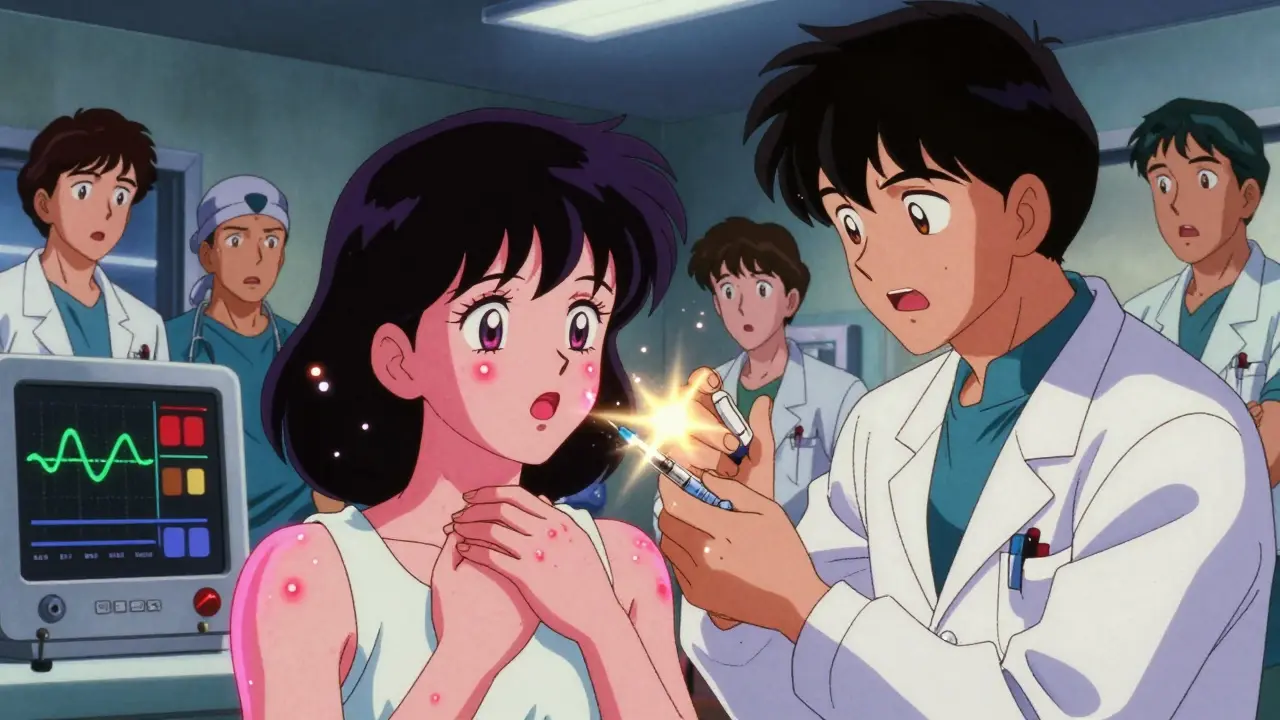
If you have a reaction, it usually starts within minutes. Symptoms can include hives, swelling of the face or throat, trouble breathing, rapid heartbeat, dizziness, or vomiting. These are signs of anaphylaxis - a medical emergency.
Every vaccination site is required to have epinephrine on hand. That’s the only treatment that can stop anaphylaxis in its tracks. A simple injection can reverse symptoms in seconds. Staff are trained to recognize the signs and act fast. Blood pressure monitors, timers, and emergency protocols are standard. In nearly all cases, people recover completely within hours.
Afterward, the reaction must be reported to VAERS. That’s not just a formality - it’s how we learn. If you had a reaction, you’re helping protect others. Your report could lead to better guidelines or even help identify a new trigger.
What About Future Vaccines?
New vaccines are coming - for RSV, shingles, malaria, and more. Each one brings new ingredients, and with them, new questions. That’s why research is ongoing. The National Institutes of Health is funding trials to test skin tests for PEG and other potential allergens. The goal? To one day predict who’s at risk before they even get the shot.
Scientists are also looking at mast cell biomarkers - tiny signals in the blood that might show someone is prone to overreacting. If this works, we could have a simple blood test in the next five to seven years. That doesn’t mean people will be turned away. It means we’ll know who needs extra care, and who doesn’t.
For now, the message is clear: vaccines are safe. The risk of a serious allergic reaction is far lower than the risk of getting sick from the disease they prevent. Measles, polio, whooping cough - these still exist. And they’re dangerous. The tools we have to stop them work. The systems watching over them work even better.
What Should You Do Before Getting Vaccinated?
- If you’ve had a severe allergic reaction to a vaccine before, talk to an allergist. They can help determine if it was truly the vaccine or something in it.
- If you’re allergic to PEG or polysorbate, let your provider know. They can choose a different vaccine if available.
- If you have a history of anaphylaxis to food, medication, or insects, you don’t need to skip vaccines - just stay for 30 minutes after your shot.
- Egg allergy? No special steps needed. Get the flu shot like anyone else.
- Don’t avoid vaccines because of fear of reactions. The data shows it’s safer to get vaccinated than not.
Myths vs. Facts
- Myth: You can’t get the flu shot if you’re allergic to eggs. Fact: Over 4,300 egg-allergic people have received flu vaccines safely. No extra steps are needed.
- Myth: Aluminum in vaccines causes allergies. Fact: Aluminum causes lumps at the injection site, not anaphylaxis. It’s not an allergen.
- Myth: Vaccine reactions are getting more common. Fact: Reporting has increased because we’re watching closer. Actual reaction rates haven’t risen.
- Myth: If you react once, you can never get another vaccine. Fact: Most people can safely get future vaccines after evaluation. The trigger is often a specific ingredient, not the vaccine as a whole.




Comments
Solomon Ahonsi
February 3, 2026So let me get this straight - you’re telling me I’m more likely to get struck by lightning than to have a bad reaction to a shot? Bro, I’ve seen people pass out from a flu shot. This feels like corporate PR with footnotes.
George Firican
February 5, 2026The real miracle isn't the vaccine - it's the collective human ability to turn a statistical anomaly into a cultural panic. We quantify risk with precision, yet emotionally equate rarity with inevitability. The body is not a machine to be fear-tested; it's a dynamic system that adapts, sometimes violently, sometimes beautifully. The wait time after vaccination? Not a precaution - it's a ritual of trust, a quiet acknowledgment that medicine is both science and surrender.
Matt W
February 6, 2026I had a friend who broke out in hives after the Moderna shot. Scared the crap out of us. But the nurse had epinephrine ready in 30 seconds. We stayed for 30 mins, she was fine by dinner. Honestly? If you're nervous, just sit. They’ve got this. No need to panic. 😌
Akhona Myeki
February 7, 2026In South Africa, we do not have the luxury of debating one-in-a-million risks. We have mothers burying children from measles. You speak of PEG and polysorbate as if they are alien chemicals - yet you have never seen a child choke on a cough syrup because you refused a vaccine. Your privilege is showing.
Sandeep Kumar
February 9, 2026Vaccines are fine for the masses but dont act like its some holy grail. PEG is in everything from laxatives to shampoo. If your body freaks out over that you probably shouldnt be injecting anything into yourself. Also why are women always the ones reacting? Coincidence? I think not
Vatsal Srivastava
February 10, 2026If you believe VAERS is a reliable system you're either naive or paid. Anyone can report anything. My uncle once reported that his cat sneezed after he got the flu shot. It got logged. The system is designed to scare not inform
Brittany Marioni
February 11, 2026I just want to say - thank you for writing this with such care. So many people are terrified, and this breaks it down without condescension. If you’ve had anaphylaxis before - you’re not broken. You’re not ‘overreacting.’ You’re just someone who needs a little extra support - and that’s okay. You deserve to be safe, and you deserve to be vaccinated. 💪❤️
Nick Flake
February 12, 2026This post just gave me chills 🥹. The fact that we have systems watching over us - quietly, relentlessly - while we scroll TikTok and panic about ‘toxins’... it’s humbling. I cried reading about the nurse with the epinephrine. That’s heroism. Not in capes - in protocols, timers, and trained hands. 🙏💉
Bob Hynes
February 12, 2026Man i read this and i was like... wait so the egg thing is totally fake? i mean i had a whole family meeting about that back in 2019. my aunt still wont get the flu shot. like... bro its 2024. we got data. we got science. stop listening to your cousin who watches Alex Jones. 🤦♂️
Eli Kiseop
February 14, 2026So if you had a reaction before you just wait longer? thats it? no blood test no nothing? seems kinda simple
Ellie Norris
February 16, 2026Just a quick note - I work in a GP clinic and we’ve had maybe 3 reactions in 8 years. All resolved in 10 mins. The staff are brilliant. And yes, we do keep epinephrine in the fridge next to the orange juice. Sorry if I spelt that wrong 😅
Write a comment