
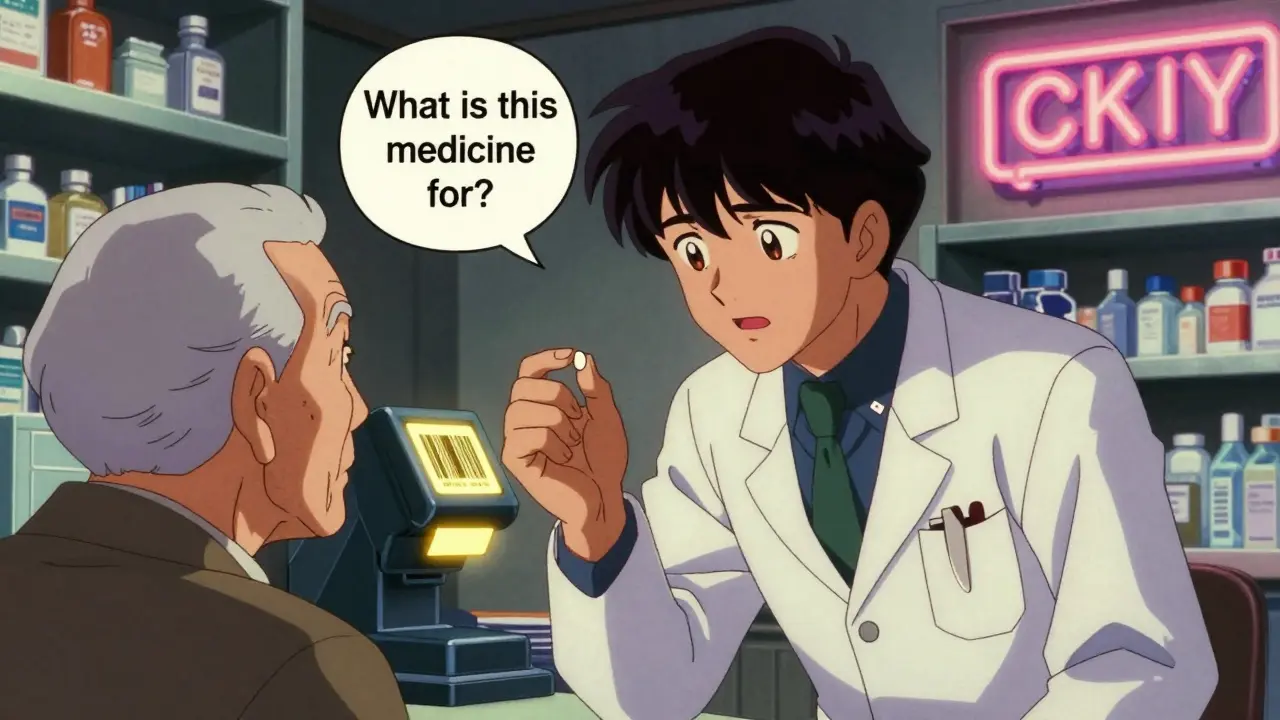
Every year, over 51 million dispensing mistakes happen in U.S. pharmacies. Most of them never reach patients-not because of barcodes or double-checks, but because a pharmacist asked a simple question: "What is this medicine for?" That’s the power of patient counseling. It’s not just about giving instructions. It’s the final, human safety net that catches errors no machine can spot.
Why Patient Counseling Catches More Errors Than Technology
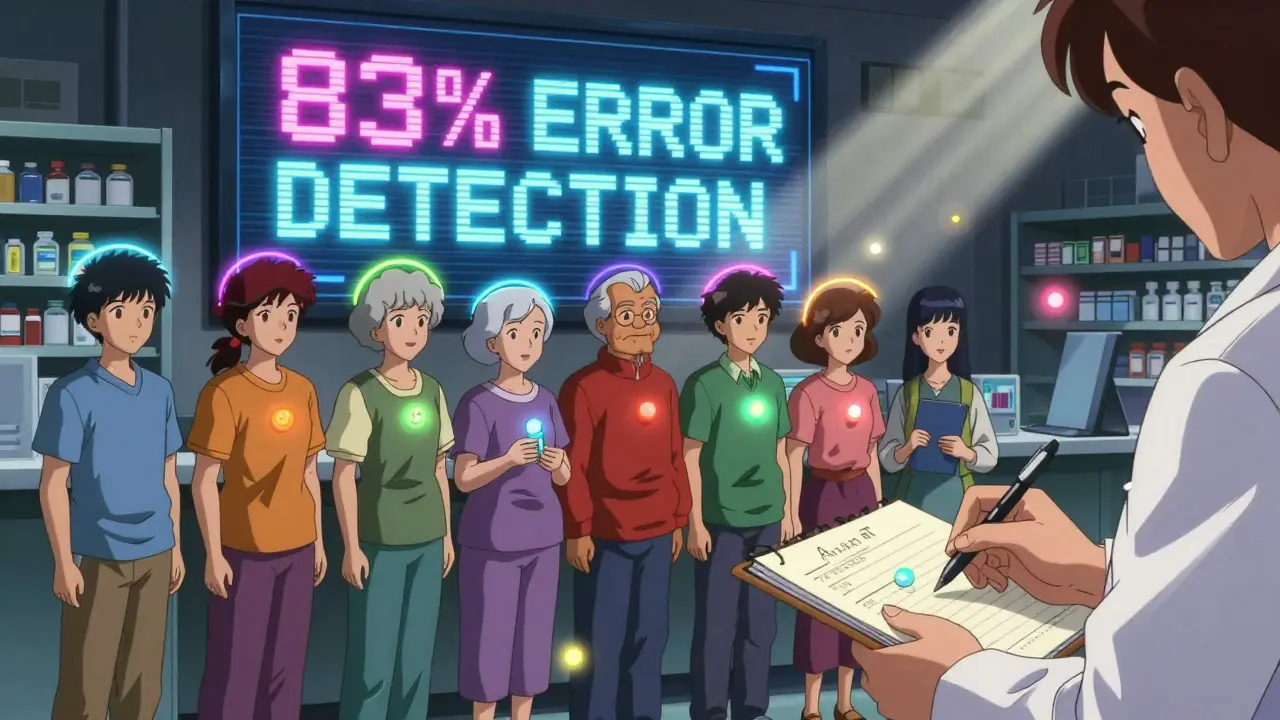
Barcode scanners catch about 53% of dispensing mistakes. Pharmacist double-checks catch 67%. But when pharmacists talk directly with patients, they catch 83%-according to Pharmacy Times. Why? Because technology checks the pill bottle. People check the person. A patient might say, "I’ve been taking this blue pill for my heart, but this one’s white and smaller." That’s a red flag. A barcode won’t notice that. A computer won’t ask why the patient thinks the pill looks different. But a pharmacist who listens? They’ll stop everything, pull up the prescription, and find the wrong strength was dispensed. That’s happened more than 1,200 times in CVS pilot stores in 2022 alone. The key isn’t just talking. It’s asking the right questions. Closed questions like, "Is this for your blood pressure?" miss mistakes. Open-ended ones like, "What do you understand this medicine is for?" catch 3.2 times more errors. Patients don’t always know the drug name-but they know what it’s supposed to do. If they say, "It’s for my diabetes," but the prescription is for high cholesterol, you’ve just caught a dangerous mix-up.The Four Critical Checks Every Pharmacist Must Do
Effective counseling isn’t random. It follows a proven structure. The American Pharmacists Association recommends four steps that take just under three minutes:- Verify identity and purpose - Ask: "What condition are you taking this for?" This catches 91% of errors on new prescriptions. A patient might think they’re getting a painkiller, but the script is for an antibiotic. If they can’t explain why they need it, something’s wrong.
- Check how they’ll take it - Ask: "Can you show me how you’ll take this?" This reveals misunderstandings. One patient said they’d crush a time-release pill because "it’s easier to swallow." That’s a life-threatening mistake. Teaching-back-where the patient explains it in their own words-boosts error detection by 68%.
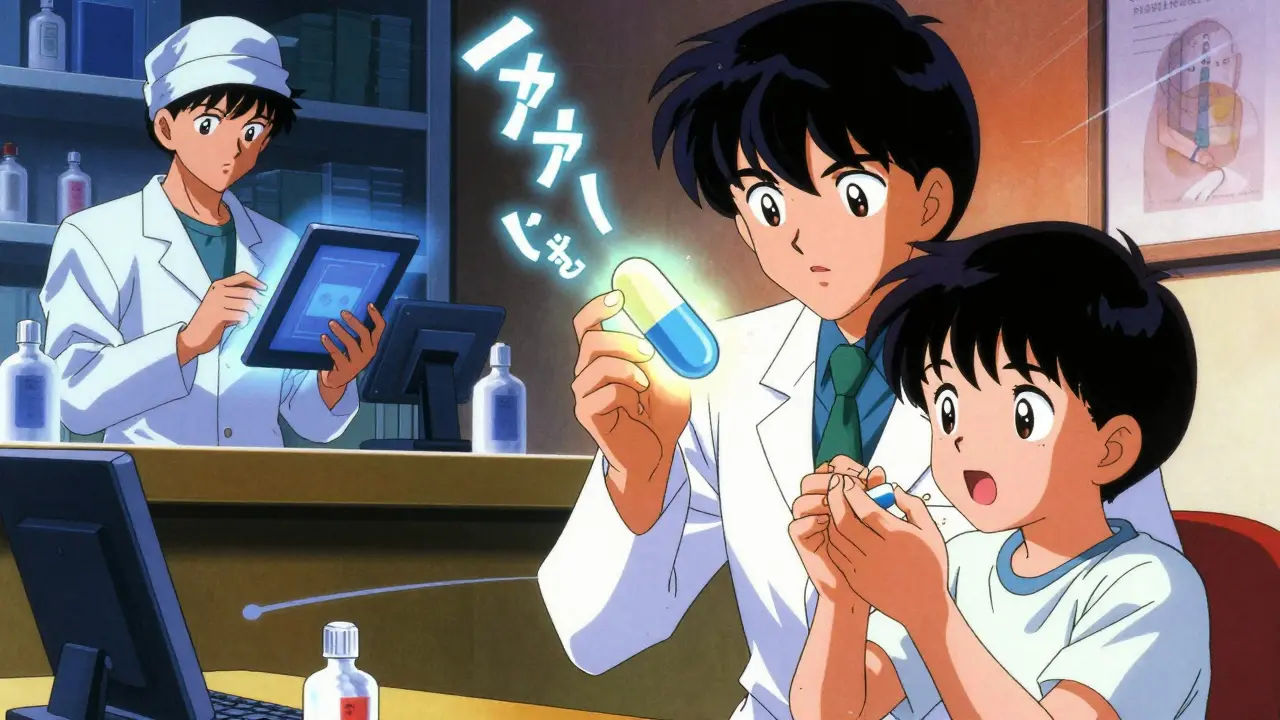
- Confirm the physical appearance - Show the patient the medication. Ask: "Does this look like what you’ve taken before?" This catches 29% of look-alike errors. Insulin pens, opioids, and anticoagulants are especially risky. One patient noticed their new blood thinner was smaller than before. The pharmacist found the wrong dosage had been dispensed.
- Review interactions and allergies - Ask: "Are you taking anything else?" Even if the system says no, patients forget. They might be taking OTC painkillers, herbal supplements, or a friend’s leftover antibiotic. This step catches 42% of drug interaction errors, especially in older adults.
Who Benefits the Most From This?
Not every patient needs the same level of counseling-but some absolutely do. The biggest risk groups are:- Patients over 65 - They’re 3.7 times more likely to suffer harm from a dosing error. Many take five or more medications. A simple mix-up between lisinopril and losartan can send them to the ER.
- People with low health literacy - 42% of undetected errors happen here. If a patient says, "The doctor said take one when I feel bad," they don’t know what "once daily" means. Counseling turns confusion into clarity.
- Those starting high-alert meds - Insulin, warfarin, opioids, and chemotherapy drugs are the most common culprits in serious errors. The ISMP says 1 in 5 mistakes involve these. Counseling is non-negotiable here.
- New prescriptions - You catch 91% of errors on new meds. Refills? Only 33%. Patients assume it’s the same. But what if the generic switched? Or the dose changed? They won’t notice unless you ask.
Why Pharmacists Don’t Always Do It Right
The data is clear. Counseling works. But in real life, many pharmacists only spend 1.2 minutes per patient. The recommended time? 2.3 minutes. Why the gap? Corporate pressure. Staff shortages. Long lines. In 2022, a Reddit thread from pharmacy techs revealed 63% said they were told not to "slow down the line." One pharmacist in Texas told a reporter, "I want to do it right. But if I spend three minutes with each patient, I’ll be 12 hours behind by noon." Independent pharmacies do better. They hit 78% counseling compliance. Chain pharmacies? Only 62%. But here’s the twist: independent pharmacies that use structured counseling saw their malpractice insurance premiums drop 19%. That’s real savings. And it’s not just about money. Patients notice. A 2023 analysis of 1,247 reviews on Healthgrades and Yelp showed 89% appreciated thorough counseling. One wrote: "The pharmacist caught that my new blood thinner was the wrong strength when I said it looked smaller than before." That’s trust. That’s loyalty.How to Make Counseling Work in a Busy Pharmacy
You can’t fix staffing overnight. But you can make counseling more efficient:- Use pharmacy technicians for prep - In 42 states, techs can do the first part of counseling: confirming name, date of birth, and medication name. That frees up the pharmacist to focus on the critical questions: purpose, appearance, and interactions.
- Use digital tools - New software like Surescripts’ "Counseling Checkpoint" lets pharmacists click through a checklist while talking. It logs the verification steps automatically. Early adopters cut counseling time by 22% without losing accuracy.
- Document everything - NABP’s 2022 standards say you must record what was discussed. Pharmacies that did this reduced liability claims by 44%. If a mistake slips through, your documentation proves you tried.
- Train for health literacy - Don’t assume patients understand "once daily" or "take with food." Use plain language. Show pictures. Ask them to repeat it back. It’s not condescending-it’s safety.
The Future Is Already Here
Regulators are catching up. CMS now ties 8.5% of Medicare Part D payments to counseling quality. Thirty-four states require documented counseling for new opioid scripts. The proposed 2024 Federal Pharmacy Safety Act would make it mandatory for all high-alert meds. The American Society of Health-System Pharmacists aims to raise error detection through counseling from 83% to 90% by 2025. That’s not a dream. It’s a plan. And it’s working. Pharmacies with strong counseling protocols have 3.2 fewer errors per 10,000 prescriptions. That’s over $1.7 million saved per pharmacy annually in avoided hospitalizations and lawsuits. And patients? They’re voting with their feet. Eighty-three percent say they prefer pharmacies that take the time to talk. In a world of automated kiosks and AI chatbots, the human touch isn’t outdated-it’s the most powerful safety tool we have.Frequently Asked Questions
Can patient counseling really prevent serious medication errors?
Yes. Studies show that 83% of dispensing errors are caught during patient counseling before the patient leaves the pharmacy. This includes mistakes like wrong dosage, wrong drug, or wrong patient. For example, patients have caught insulin pens with the wrong concentration, blood thinners with incorrect strength, and antibiotics prescribed for the wrong condition-all because a pharmacist asked them to describe what the medicine was for or how it looked.
How long should a counseling session take to be effective?
Research shows a minimum of 2.3 minutes per patient is needed to catch most errors. Each additional 30 seconds reduces error rates by 12.7%. A structured 2-minute-40-second protocol-covering identity, purpose, appearance, and interactions-is proven to increase detection rates from 61% to 85%. Shorter sessions miss critical details, especially with complex medications or older patients.
Why are open-ended questions better than yes/no questions?
Closed questions like "Is this for your blood pressure?" let patients say "yes" even if they’re wrong. Open-ended questions like "What is this medicine supposed to do?" force them to explain in their own words. This reveals misunderstandings. One patient said they were taking a pill for "chest pain," but the script was for high cholesterol. The pharmacist caught the mismatch because the patient described the symptom, not the drug name.
What if a patient refuses counseling?
About 18.7% of patients decline counseling. That creates a safety gap. Pharmacists should politely explain that counseling helps prevent mistakes and is part of standard care. If they still refuse, document the refusal clearly in the record. For high-risk medications like opioids or insulin, counseling is legally required in many states, and refusal may require escalation to a manager or provider.
Can pharmacy technicians help with counseling?
Yes-in 42 states, pharmacy technicians are allowed to perform preliminary counseling: confirming patient identity, verifying the medication name, and checking the prescription details. The pharmacist then follows up with the critical questions about purpose, appearance, and interactions. This approach increases effective counseling time by 37% and helps manage workload without sacrificing safety.




Comments
Jenci Spradlin
January 9, 2026Man, I’ve seen this firsthand. My grandma got the wrong blood thinner last year-same color, different strength. The pharmacist asked if it looked right and she said, ‘This one’s smaller than last time.’ He stopped everything, checked the script, and caught it. That’s why I won’t go anywhere else. Just talk to people, man. Not just scan barcodes.
Heather Wilson
January 10, 2026While the anecdotal evidence presented here is emotionally compelling, one must interrogate the methodological rigor of the cited studies. The 83% error detection rate appears to conflate self-reported patient observations with clinically validated outcomes. Moreover, the absence of control groups in the CVS pilot data renders causality untenable. One wonders if the observed effect is not merely a Hawthorne effect-patients altering behavior due to perceived scrutiny. The economic incentives cited, while intriguing, do not constitute empirical validation. This is not to dismiss the value of human interaction, but to insist upon evidence-based practice over narrative-driven advocacy.
Chris Kauwe
January 10, 2026Let’s be clear: the decline of American pharmacy is not due to corporate greed-it’s due to the erosion of professional sovereignty. We’ve outsourced judgment to algorithms and let technicians dilute the sacred act of counseling. This isn’t about time-it’s about identity. The pharmacist was once the gatekeeper of pharmacological wisdom. Now, we’re order-takers with stethoscopes. The real crisis isn’t dispensing errors-it’s the surrender of epistemic authority to corporate KPIs and state-regulated mediocrity. If you want to fix this, stop talking about ‘efficiency’ and start restoring the dignity of the profession.
Meghan Hammack
January 12, 2026OH MY GOODNESS. THIS IS SO IMPORTANT. I cried reading this. My uncle almost died because no one asked him what the pill was for-he thought it was for his knee pain but it was for his heart. The pharmacist didn’t even look up. Please, if you’re a pharmacist-STOP SCANNING AND START TALKING. Your words might save someone’s life. And if you’re a patient-speak up! Say ‘this looks different.’ Say ‘I don’t understand.’ You’re not being annoying-you’re saving yourself. I’m telling every pharmacist I know this story. You’re heroes. 💪❤️
RAJAT KD
January 13, 2026Agreed. In India, we don’t have the infrastructure, but even in small clinics, pharmacists ask patients to describe symptoms before dispensing. It’s basic. If a patient says ‘for fever’ but the drug is for hypertension, it’s obvious. This isn’t rocket science-it’s common sense. The data proves it. Why are we still debating this?
Matthew Maxwell
January 14, 2026It’s pathetic. We’ve turned healthcare into a customer service job. Pharmacists used to be trained professionals who knew the science. Now, they’re expected to be therapists, detectives, and cheerleaders-all while being yelled at by impatient customers. This isn’t safety. This is performance art. And don’t get me started on ‘health literacy’-if patients can’t understand ‘once daily,’ maybe they shouldn’t be managing their own meds. The real solution? Better education. Not more hand-holding.
Ian Long
January 14, 2026Heather, I hear your skepticism-but the 1,200+ errors caught in CVS alone aren’t flukes. And Chris, you’re right about the loss of professional identity, but blaming corporate culture without offering solutions just fuels cynicism. What if we reframe this? What if counseling isn’t a burden, but a brand differentiator? Patients remember the pharmacist who asked questions. They tell their friends. That’s loyalty. That’s revenue. Maybe the answer isn’t resisting change-it’s owning it. Tech handles the scan. Humans handle the sense. That’s not weakness. That’s evolution.
Pooja Kumari
January 15, 2026Ugh, I’ve been through this so many times. I work in a pharmacy and I’m exhausted. We’re told to do counseling but we have 20 people waiting. I try to ask the questions, but people just say ‘I’m fine’ and walk away. Then they come back angry because the pill made them sick. I’m not a mind reader. And when I try to explain, I get yelled at for taking too long. And then the manager says ‘just do the minimum.’ So I do. And I feel guilty every single day. I want to do better. I really do. But no one gives us the time, the tools, or the support. It’s not that we don’t care. It’s that we’re drowning. And nobody sees it.
Write a comment