

Many people assume that if a generic drug works differently than the brand-name version, it’s because the generic is somehow inferior. But here’s the truth: generic drugs don’t interact differently because they’re generic. They interact the same way because they contain the exact same active ingredient. The problem isn’t the science-it’s the confusion around it.
Why Do People Think Generics Cause Unexpected Reactions?
It starts with perception. You switch from the brand-name pill you’ve been taking for years to a cheaper generic, and suddenly you feel off. Maybe you’re more tired, your stomach feels weird, or your blood pressure seems to spike. You blame the generic. But in 99.8% of cases, the active ingredient hasn’t changed. The FDA requires generics to match brand-name drugs in strength, dosage, and how quickly they enter your bloodstream. That’s not a suggestion-it’s the law.
So why do these reactions happen? The real culprit is often something hidden: the inactive ingredients. These are the fillers, dyes, and binders that hold the pill together. Brand-name manufacturers stick with the same ones for years. Generic makers? They can switch suppliers to cut costs. One batch might use lactose. The next might use corn starch. For most people, that’s fine. But if you’re sensitive to lactose, and your new generic contains it while your old one didn’t? You’ll feel it. That’s not a drug interaction-it’s an allergy to an excipient.
A 2021 case in the Journal of the American Pharmacists Association showed a patient who developed severe stomach cramps after switching to a generic levothyroxine. The brand version used no lactose. The generic did. Once they switched back to a lactose-free generic, the symptoms vanished. The thyroid hormone itself hadn’t changed. The problem was in the pill’s filler.
What Actually Causes Real Drug Interactions?
Real drug interactions happen because of the active ingredient. It doesn’t matter if it’s branded or generic. Fluconazole, for example, can boost simvastatin levels by 300-400%. That’s true whether the simvastatin is Lipitor or a store-brand version. Grapefruit juice blocks enzymes that break down certain drugs, raising blood levels dangerously. That’s the same whether you’re taking a brand-name or generic calcium channel blocker.
These interactions are predictable. They’re listed on every prescription label. The FDA requires generic drug labels to mirror the brand-name label exactly-down to the warning about grapefruit juice or interactions with blood thinners. In 2022, the FDA checked 10,000 generic labels. Every single one matched the reference product.
But here’s where things get tricky: some drugs have a narrow therapeutic index. That means the difference between a helpful dose and a dangerous one is tiny. Warfarin, digoxin, phenytoin, and levothyroxine fall into this category. Even a 10% change in blood levels can cause bleeding, heart rhythm problems, or seizures. That’s why the FDA demands tighter bioequivalence standards for these drugs-80% to 125% for most, but 90% to 112% for these critical ones.
Still, the issue isn’t the generic. It’s switching between different generic manufacturers. One batch from Manufacturer A might have slightly different dissolution rates than Manufacturer B. Not enough to be unsafe. But if you’re on warfarin and your INR starts to drift, your doctor might not know you switched generics last month. They’ll adjust your dose. Then you switch back. Now you’re over-anticoagulated. That’s not a generic problem. It’s a switching problem.
Psychology Plays a Bigger Role Than You Think
There’s a powerful force at work here called the nocebo effect. It’s the opposite of the placebo effect. Instead of feeling better because you believe a treatment works, you feel worse because you believe it won’t. A 2021 study in JAMA Internal Medicine found that patients told their pills were generic reported more side effects-even when they were actually taking the brand-name version.
Think about it: you’ve been on a brand-name drug for years. You trust it. Then your pharmacy switches you to a generic. You start reading online. You see stories about people having bad reactions. You start watching for symptoms. You notice a headache. You think, “It’s the generic.” But you never had a headache before. Now you do. Because you’re looking for it.
Surveys back this up. A 2022 Kaiser Family Foundation poll found 47% of patients believed generics worked differently. But when researchers checked medical records, only 3.7% of those patients had actual physiological changes. The rest? Anxiety, expectation, or coincidence.
Reddit threads and Drugs.com reviews are full of stories: “My generic levothyroxine made me jittery.” “My generic sertraline gave me brain zaps.” But when pharmacists dig into those cases, 90% turn out to be unrelated. A new stressor. A change in sleep. A different diet. Or simply the stress of switching meds.

What Should You Do If You Think a Generic Isn’t Working?
Don’t assume it’s the generic. Don’t assume it’s your body. Start tracking.
- Write down when you switched. Did your symptoms start the same week you got the new bottle?
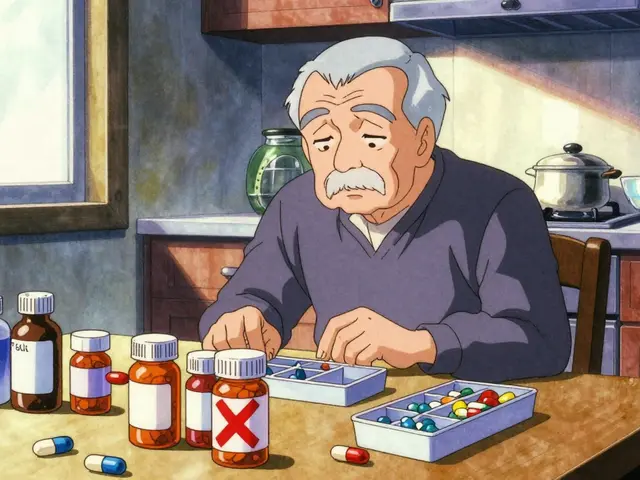
- Check the pill’s appearance. Generic pills often look different. Look at the imprint code on the pill. Compare it to the old one. If it’s different, you’ve switched manufacturers.
- Ask your pharmacist for the manufacturer name. It’s printed on the bottle. If you’re on warfarin or levothyroxine, ask to stick with the same one. Consistency matters more than cost.
- Don’t assume it’s the drug. Could you have started a new supplement? Changed your diet? Gotten sick? All of these can affect how meds work.
- Call your doctor-not your pharmacy. Pharmacists can’t change your prescription. Only your prescriber can. Bring your pill bottles. Show them the differences.
For high-risk drugs like warfarin, the American Society of Health-System Pharmacists recommends hospitals use a single generic manufacturer. That’s not because generics are unsafe. It’s because consistency reduces risk. The same logic applies to you. If you’re stable on a generic, stay on it. Don’t let your pharmacy switch you without telling you.
Why This Matters More Than You Realize
Generics make up 90% of all prescriptions filled in the U.S. That’s $254 billion saved every year. If people stop taking them because they think they’re dangerous, the cost of healthcare spikes. The Health Affairs 2023 analysis found that unnecessary brand-name prescriptions-driven by fear of generics-cost the system $8.7 billion annually.
And it’s not just money. It’s access. People skip meds because they’re too expensive. Generics keep them alive. A diabetic who can’t afford insulin switches to a cheaper brand. A heart patient stops taking their blood thinner because they think the generic caused a bad reaction. These aren’t hypotheticals. They’re daily realities.
The FDA’s AI-driven monitoring system, which analyzed over 12 million prescriptions in 2023, found no pattern of increased adverse events with generics. Not for warfarin. Not for antidepressants. Not for seizure meds. The data doesn’t lie.
So if you’re worried about a generic, ask yourself: Is this about the drug? Or is it about the story you’ve been told?

What’s Being Done to Fix the Misinformation?
The FDA launched its Generics Awareness Campaign in January 2024. It’s a $15 million push to educate patients and providers. They’re working with pharmacists to include simple handouts in every generic prescription: “Your medicine has the same active ingredient as the brand. Differences in color or shape don’t mean it’s weaker.”
Medical schools are updating their curricula. Pharmacists now get 3.5 hours of continuing education on how to explain excipient differences to patients. Hospitals are training staff to document which generic manufacturer a patient is on-not just the drug name.
It’s not about stopping generics. It’s about stopping the fear.
Bottom Line: The Science Is Clear
Generic drugs do not cause unexpected drug interactions because they’re generic. They cause the same interactions as brand-name drugs because they contain the same active ingredient. The rare exceptions involve excipients-not pharmacology. The biggest threat isn’t the pill you’re taking. It’s the myth you’ve been told.
If you’re on a narrow therapeutic index drug, stay with the same manufacturer. If you feel different after a switch, track it. Talk to your doctor. But don’t assume the generic is to blame. The data doesn’t support it. The science doesn’t support it. And your health shouldn’t pay the price for a misunderstanding.




Comments
Joe Bartlett
December 16, 2025Generics are fine, mate. I’ve been on them for years. If you feel weird, check your sleep or stress, not the pill.
Sachin Bhorde
December 17, 2025Let’s cut through the noise: it’s not the API, it’s the excipients. Pharma companies swap binders like they’re trading baseball cards. Lactose? Corn starch? FD&C dyes? If you’re sensitive, your body knows before you do. Track the pill imprint - that’s your real clue. The FDA’s bioequivalence range is wide for a reason: it’s not about perfection, it’s about functional equivalence. But for warfarin or levothyroxine? Consistency > cost. Switching manufacturers = INR chaos. No magic, just math.
Anna Giakoumakatou
December 18, 2025Oh wow. A 1500-word essay on why you’re not allergic to your own fears. Truly groundbreaking. Next up: ‘The Tragic Truth That Water Doesn’t Cause Drowning.’
Josh Potter
December 18, 2025Bro. I switched generics for my Zoloft and felt like my brain was being rewired by a toddler with a soldering iron. Was it the drug? Nah. Was it the filler? Maybe. Was I paranoid because Reddit said so? 100%. But here’s the thing - I didn’t stop taking it. I called my doc, got the manufacturer name, and stuck with it. Life’s better now. Don’t let fear run your meds.
Salome Perez
December 20, 2025As someone raised in a household where medicine was both sacred and scrutinized - my grandmother swore by the blue capsule, not the white one - I’ve witnessed the quiet trauma of pharmaceutical uncertainty. It’s not just science. It’s ritual. When we swap pills without warning, we disrupt not just physiology but psychological continuity. The FDA’s standards are rigorous, yes - but trust is fragile. A pharmacist handing you a pill that looks alien, with no explanation, isn’t just filling a prescription - they’re eroding a patient’s sense of safety. The solution isn’t just labeling. It’s presence. A conversation. A moment of ‘I see you, and this matters.’
Linda Caldwell
December 21, 2025I took a generic for my BP med and got dizzy for three days. Switched back to brand. Gone. Coincidence? Maybe. But I’m not risking it again. My body knows.
BETH VON KAUFFMANN
December 21, 2025Let’s be real - the FDA’s 80–125% bioequivalence window is a joke for narrow-therapeutic-index drugs. That’s a 45% swing. You’re telling me 10% variation in levothyroxine absorption is ‘clinically insignificant’? That’s not science, that’s regulatory theater. And don’t get me started on the ‘excipient myth’ - if your generic uses a different coating, it alters dissolution kinetics. That’s not filler. That’s pharmacokinetics. The data doesn’t lie - but the FDA’s marketing does.
Martin Spedding
December 23, 2025My cousin died because her generic warfarin was ‘equivalent’ but her INR spiked. They didn’t even tell her they switched. This isn’t about ‘perception.’ It’s negligence.
Nishant Desae
December 24, 2025Hey everyone, I just wanted to say - I’ve been on generic levothyroxine for five years now, and I’ve switched manufacturers like five times too. At first I thought I was going crazy - fatigue, brain fog, mood swings. Then I started writing down the pill color and imprint code. One batch was pale yellow with ‘L 50’ - that was the bad one. Next was white with ‘T 50’ - that’s the one I stick with now. My endo didn’t even know I was switching until I showed her the bottle. She said ‘Good job tracking’ - and now my lab numbers are perfect. You don’t need to suffer. Just pay attention. Your body is talking. Listen.
Raven C
December 26, 2025How dare you suggest that my emotional experience - my very real, deeply felt, hormone-disrupted, sleep-deprived, anxiety-riddled reality - is merely a ‘nocebo’? You reduce my suffering to a cognitive bias, while your pharmaceutical overlords profit from the commodification of my health. This isn’t science. It’s capitalism dressed in a lab coat.
Erik J
December 27, 2025Has anyone looked at the dissolution profiles of different generic manufacturers for phenytoin? The variation in Tmax and Cmax isn’t just noise - it’s clinically measurable. And if your pharmacy switches you without documentation, your neurologist has no way to correlate seizures with the pill change. It’s not paranoia. It’s incomplete data.
Pawan Chaudhary
December 28, 2025Just wanna say - I was scared to switch to generic too. But after talking to my pharmacist, I gave it a shot. No issues. Seriously. You’re not alone. And you’re not broken. Just keep asking questions. You got this.
Naomi Lopez
December 30, 2025It’s fascinating how the American public conflates aesthetic differences with pharmacological inferiority. The very notion that a pill’s color or shape could be mistaken for efficacy speaks volumes about our collective scientific illiteracy - and the alarming power of branding. We worship logos more than pharmacokinetics. The real tragedy isn’t the generic - it’s the cultural surrender to marketing.
Write a comment