
You might have noticed a generic version of a medication at your pharmacy that looks almost identical to the brand name, but it isn't produced by a typical generic company like Teva or Sandoz. Instead, it's an authorized generic is a prescription drug produced by the original brand-name manufacturer but sold under a different label at a lower price. While most generics are competitors trying to replicate a formula, authorized generics (AGs) are basically the brand-name drug in a different outfit. This creates a confusing scenario: if it's a generic, why is the original company making it? The answer lies in a strategic mix of patent law, market control, and manufacturing shortcuts.
The Secret Behind Who Actually Manufactures AGs
When you ask who actually makes these drugs, the answer is usually the NDA holder-the company that owns the original New Drug Application. Unlike traditional generics, which are made by third-party companies after a patent expires, AGs are born from the original creator's own labs. In fact, about 68% of authorized generics are produced in the exact same facilities as the brand-name version. This means the pills come off the same assembly line, use the same raw materials, and undergo the same quality checks.
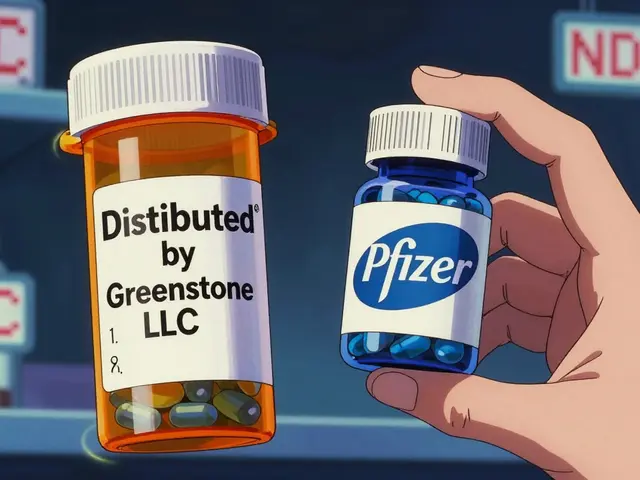
There are three main ways these drugs hit the market. First, the brand company just slaps a different label on their existing stock and sells it as a generic. Second, they use a wholly-owned subsidiary. A great example is Greenstone LLC, which is owned by Pfizer Inc.. Greenstone has been pumping out authorized generics for Pfizer since 1998, handling over 70 different medications using the same processes as the branded versions. Finally, some companies hire a third-party contract manufacturer. Even then, the brand company keeps a tight grip on the recipe, ensuring the active ingredients are identical.
| Feature | Authorized Generics (AGs) | Traditional Generics |
|---|---|---|
| Manufacturer | NDA Holder or their partner | Independent Generic Firm |
| FDA Pathway | Original NDA | ANDA (Abbreviated NDA) |
| Bioequivalence Tests | Not required (already proven) | Strictly required |
| Facility | Often the same as brand-name | Separate manufacturing plants |
| Market Entry | Can enter before patent expiry | Typically after patent expiry |
The Two Regulatory Paths to Production
Manufacturing an AG isn't just about printing a new label; it's about following specific FDA rules. There are two primary regulatory pathways a company can take. The first is the "direct" path. The manufacturer uses the exact same formulation and site listed in their original application. Because the drug is already approved, they just file an annual report and can start selling almost immediately. It's the fastest way to flood the market with a cheaper version of their own drug.
The second path is a bit more complex. This happens when the brand company wants someone else to do the heavy lifting. They sign a contract with another manufacturer to produce the drug using the same protocols. However, the NDA holder has to add that new site to their original application. This usually requires a Prior Approval Supplement (PAS), which can take an average of 22 months to get the green light. It's a slower process, but it allows brand companies to scale up production without building new factories themselves.
Why Brand Companies Play This Game
You might wonder why a company would intentionally lower the price of its own product. It's all about the Hatch-Waxman Act and the battle for market share. When a traditional generic company challenges a patent, the brand company risks losing everything. By launching an authorized generic, the brand owner can capture part of the generic market themselves. They essentially compete against the other generic players while maintaining total control over the product's quality.
Think of it as a defensive move. If a brand company knows a competitor is coming, they launch an AG to keep a foothold in the "budget" sector of the pharmacy. For instance, AstraZeneca used this strategy with Nexium, creating a subsidiary called Az generici to handle the authorized version, which raked in about $1.2 billion in 2022. It allows them to keep the lights on for their manufacturing plants even when the high-priced brand sales start to dip.
Quality Control and Real-World Examples
One of the biggest advantages of AG manufacturing is the consistency. Because AGs are linked to the original NDA, they don't need to prove they are "bioequivalent" to the brand-they *are* the brand. This eliminates the risk of slight variations in how a drug is absorbed by the body, which can sometimes happen with traditional generics.
Take the case of the drug entacapone. When Novartis launched an authorized generic of Comtan, they didn't change the active pharmaceutical ingredient (API) or the way the drug was mixed. They only changed the packaging. Similarly, when Teva launched an AG for Copaxone, they had to ensure the glass vials and the freeze-drying (lyophilization) process remained identical. These are high-stakes requirements; a single change in the vial glass could alter the drug's stability, which is why these companies invest heavily in dedicated packaging lines just for AGs.
The Future: More Transparency and Big Expirations
For a long time, it was hard to tell who was actually making these drugs. But as of January 1, 2024, the FDA has started requiring companies to disclose if an authorized generic is made in the same facility as the brand-name drug. This is a huge win for transparency, as patients and doctors can now know exactly where their medication originates.
Looking ahead, we're seeing a massive shift. With billions of dollars in patents expiring over the next few years, more companies are leaning into wholly-owned subsidiaries. A prime example is the upcoming 2025 patent expiration of Humira. AbbVie has already set up a manufacturing arrangement with its subsidiary, Soliris Generics, to ensure they have a strong AG presence the moment the patent drops. As these patterns continue, we can expect AGs to represent a larger slice of the generic market, moving beyond just cardiovascular and CNS drugs into more complex biologics.
Is an authorized generic the same as a regular generic?
Not exactly. While both are cheaper alternatives to brand-name drugs, a regular generic is made by a different company that had to prove to the FDA that its version works the same way. An authorized generic is the actual brand-name drug, just sold under a generic name. It is produced by the original manufacturer or their direct partner.
Why are authorized generics more expensive than some traditional generics?
Brand companies often price their AGs slightly higher than the lowest-cost traditional generic. Since the AG is identical to the brand, the company may feel they can charge a small premium for that guaranteed quality and consistency, even though it's marketed as a generic.
Do authorized generics require new FDA approval?
No, they don't need a new Abbreviated New Drug Application (ANDA). They are marketed under the existing New Drug Application (NDA) of the brand-name drug. The company only needs to notify the FDA and get the new labeling approved.
Who benefits most from authorized generics?
It's a mixed bag. Brand companies benefit by keeping market share and controlling quality. Some patients benefit from having a cheaper version of a drug that is guaranteed to be identical to the brand. However, some health economists argue that AGs can actually slow down price drops by limiting the competition from traditional generic firms.
Can a brand company change the formula for an authorized generic?
Generally, no. The value and regulatory ease of an AG come from it being identical to the brand-name version. If they changed the formulation, they would likely have to go through a much more rigorous approval process, defeating the purpose of the AG pathway.


Write a comment